Day: November 25, 2024

  • Africa Prosperity Network to hold international symposium on advancing interoperability in Africa

    Africa Prosperity Network to hold international symposium on advancing interoperability in Africa

    Africa Prosperity Network (APN), organisers of Africa Prosperity Dialogues (APD), in collaboration with the Africa Continental Free Trade Area (AfCFTA) secretariat headquartered in Ghana, is set to organise an international symposium on advancing interoperability on the African continent.
    The symposium, which will take place on 5 July 2024, in Accra, at the Labadi Beach Hotel, will be held under the theme: “Scaling Up Interoperability: Using Mobile Money to Buy & Sell Across Africa.”

    (more…)
  • Africa Prosperity Dialogues 2025 to focus on bridging continent’s infrastructure gap

    Africa Prosperity Dialogues 2025 to focus on bridging continent’s infrastructure gap

    Africa Prosperity Dialogues (APD 2025) will focus on unearthing innovative ways through which African heads of state, business leaders, and the private sector, can combine forces to bridge the continent’s infrastructure deficit and shore up the levels of intra-Africa trade. 

    The APD 2025 will be held in Accra, Ghana from Thursday, 30 January to Saturday, 1 February 2025, on the theme; “Delivering Africa’s Prosperity Through Infrastructure: Invest, Integrate, Connect,” and it is expected to attract over one thousand participants from across the continent. 

    Africa’s future

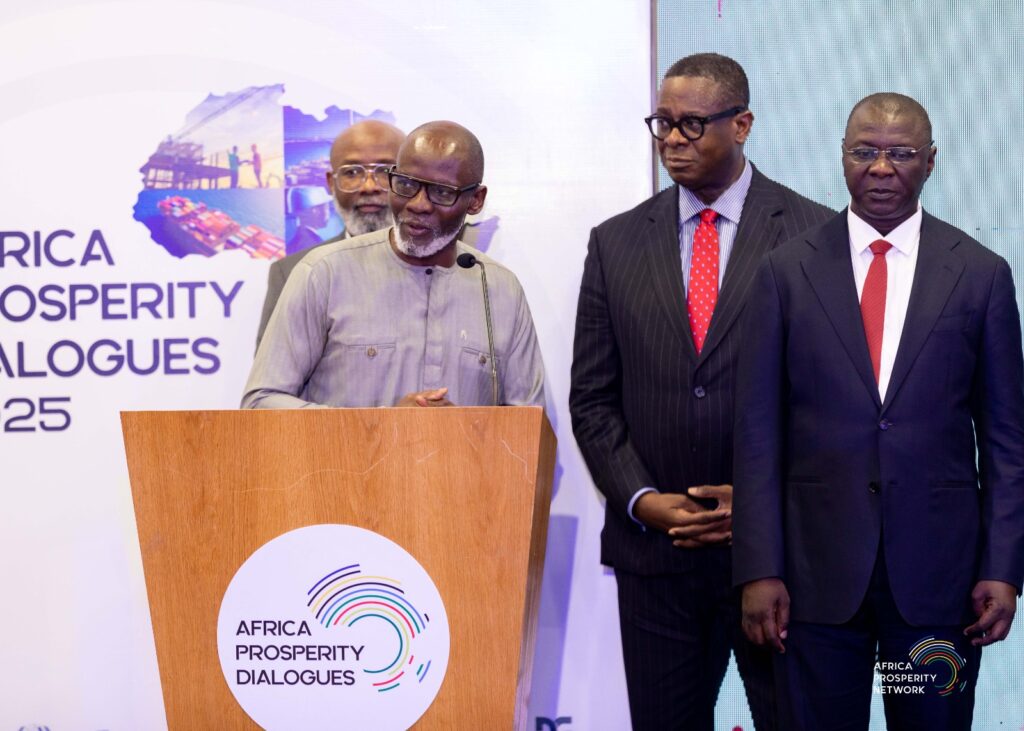
    Addressing participants at the launch of the Africa Prosperity Dialogues 2025 at the Secretariat of the Africa Continental Free Trade Area (AfCFTA), Africa Trade House, in Accra on Monday, 13 May 2024, Executive Chairman of Africa Prosperity Network (APN), organisers of the Africa Prosperity Dialogues (APD), Gabby Asare Otchere Darko, said investing in continent’s infrastructure space is pivotal to achieving the vision set out in the AfCFTA agreement.   

    “Despite the continent’s potential, its infrastructure gap serves as a more potent blockade. The success of AfCFTA hinges on key enablers, such as energy, water, R&D, ICT, transport & logistics, and the digital economy. This calls for substantial investments in infrastructure, that will yield even greater rewards, enabling our efforts to create a larger pool of good jobs with good pay. 

    “We stand at a critical juncture in history, where unlocking prosperity, now more than ever, depends on prioritising investment in infrastructure, connecting our people through infrastructure, and integrating our economies to create and spread opportunities and prosperity to every community,” Mr Otchere-Darko said in his opening statement.

    “This is where we must now direct our collaborative efforts if we are serious about allowing Africans to do business across Africa and for our young people, who will build Africa, to see their future in Africa. At APN, we envision an Africa where every bridge built serves as a flyover to opportunity, and every road paved leads to prosperity. 

    “[We intend] to use the next APDs to show what is being done, what has to be done, and what we must commit to having done in the areas of infrastructure to facilitate the free movement of people, goods, and services. Our future as a people rests heavily on our ability to reimagine how to fund and link infrastructural developments and our boldness to get on with it” Otchere-Darko added.

    Continental Challenge

    Dr Mohammed Amin Adam, Ghana’s Minister for Finance in his remarks at the launch ceremony pointed out that “an estimated 546 million people are now living in poverty, and 149 million “non-poor” Africans are at risk of falling into it. 

    Furthermore, Dr Amin Adam said the UNECA estimates that the annual Sustainable Development Goal financing gap for developing countries has increased by $1.7 trillion” and these indicators demonstrate the fact that the continent’s work is cut out for her. 

    “The challenges we face, from infrastructure deficits to economic disparities, require collective action and partnership on a continental scale. Therefore, the theme of next year’s Africa Prosperity Dialogues, “Delivering Africa’s Prosperity through Infrastructure: Invest. Integrate. Connect.” resonates deeply with Ghana’s vision for a more interconnected and prosperous Africa and AU agenda 2063.

    “Africa’s infrastructure deficit impedes economic growth and development. Inadequate networks of road, rail, air, and waterways make transport costs in Africa among the highest in the world. The African Development Bank estimates that closing the continent’s infrastructure gap will require a minimum of $130 billion annually,” Mr Mohammed Amin Adam, remarked. 

    “Moreover, deficient infrastructure in today’s Africa has been found to sap growth by as much as 2% a year. Quite frankly, we have a continental problem that requires a continental solution. As such, we must redouble our efforts to invest in critical infrastructure projects, including transportation, energy, and digital connectivity, to unlock Africa’s full potential for trade and investment,” Ghana’s Finance Minister further remarked. 

    The financing gap

    The president for Private Sector, Infrastructure & Industrialisation at the African Development Bank Mr Solomon Quaynor, in his key partner message at the launch of APD 2025 indicated that to address the African continent’s infrastructure shortfall, the continent needs about US$130 to US$170 billion a year with a financing gap of US$70 to a US$110 billion.

    “This financing gap is increased as we aim to ensure that all infrastructure today is climate change resilient or compliant. So, closing this gap remains the single important step we can take to structurally boost our economic development, make it more inclusive and competitive, and attain the Africa we want,” Mr Quaynor said.     

    Funding resources

    The United Nations (UN) Resident Coordinator for Ghana, Mr Charles Abani, on his part, observed that Africa must find the funding resources to be able to bridge the 170 billion dollar financing gap that is currently the reality of the continent of Africa. 

    The African continent, according to Mr Abani, must prioritise projects that have a high impact on economic growth, job creation, and poverty reduction. 

    “We must leverage technology and innovation to drive efficiency, sustainability, and importantly, inclusivity in our infrastructure development and lastly, we must bring everybody on board. If you want to go fast, they say, go alone, if you want to go far, go together,” Mr Abani said.   

    Digital infrastructure

    High Commissioner of Rwanda to Ghana, H. E. Rosemary Mbabazi in her statement noted that African countries must prioritise the development of digital infrastructure to boost digital trade on the continent. 

    Ms Mbabazi observed that while it is important to build all the other infrastructure needs of all the continent, digital infrastructure if developed, can serve as a critical launch pad to propel trade in Africa. 

    She pointed out that to achieve the levels of digital trade required, several key elements should be given attention. First, is the regulatory environment, second, is connectivity that will ensure widespread access to high-speed internet, particularly in rural areas. 

    Third, digital Identity infrastructure, fourth, digital payments, and lastly, establishing a robust cyber security environment on the continent that will protect businesses and their customers against cyber threats.     

    Panel discussion

    As part of the launch, a three-member panel conversation on the theme; “The Infrastructure Gab – Addressing the Bane of Africans Doing Business within Africa,” was held. 

    The panel comprised the Group CEO of Telecel, Mr Moh Damush; Executive Director/CEO Africa for United Bank for Africa, Mrs Marufatu Abiola Bawuah, and Director General of the Social Security and National Insurance Trust (SSNIT), Ghana, Mr Kofi Osafo-Marfo; and Ghana’s Minister for Railway Development. Mr John Peter Amewu.

    The panel of experts in their submissions pointed out that to make progress in the continent’s quest to build its infrastructure, there is a need for a joint effort on the part of all stakeholders such as government, businesses, the private sector, and the investor community, to bridge the infrastructure gap.  

    Africa Prosperity Network (APN)

    The Africa Prosperity Network (APN) is a non-profit organisation founded to advance the vision of “The Africa We Want” as outlined in the African Union’s Agenda 2063, striving to promote Africa’s progress, independent of external aid.

    Africa Prosperity Dialogues (APD)

    The Africa Prosperity Dialogues series offers a strategic platform where the movers and shakers of the African economy elevate the economic integration objectives from ambitions to real actions. 

    Set in Accra, Ghana, the APD is a one-of-a-kind event where African leaders from diverse areas of national endeavour gather each year to expedite, among other things, the implementation of the agreed initiatives within the AfCFTA trade bloc, and shape the Africa Agenda for Action. 

    APD brings into practical focus, the continent’s critical challenges and industrialisation priorities and advance aggressively the commercial and infrastructural interventions to achieve the vision of an Africa Beyond Aid.

  • APD 2024: Business leaders, governments, others, commit to pursue production, value-addition, trade-enhancing policies

    Business leaders on the African continent and a representative number of heads of state and high-ranking state officials in Africa have committed to pursuing policies that will enhance the production of manufactured goods, boost value-addition to raw materials, and increase intra-African trade.

    Africa’s leading businessmen and women, governments, and development partners made the commitment at the 2024 Africa Prosperity Dialogues (APD) organised by the Africa Prosperity Network (APN), the Africa Continental Free Trade Area (AfCFTA), and under the auspices of the government of Ghana at the Peduase Presidential Lodge, Aburi Hills, Eastern Region, from Thursday, 25 to Saturday, 27 January 2024.


    High-level sessions

    The three-day dialogues were held under the theme, ”Delivering Prosperity in Africa: Produce, Add Value, Trade.”  Overall, there were eight (8) high-level sessions. Panel members who participated in the sessions brought multiple perspectives to bear on various topics.

    Among the topics that were considered and discussed were; Doing Business Differently – Adding Value to What We Produce, Unleashing Africa’s Food and Agribusiness Potential, getting on the Global Value Chain of Africa’s Natural Resources, and Accelerating Intra-African Trade through Enhanced Transportation and Logistics.

    The rest are Critical Enablers for Single Market Success – Leveraging Infrastructure, Innovation, and Technology, Critical Enablers for Single Market Success – Strategic Financing and Investment in Infrastructure, Scaling Up Mobile Interoperability to Deepen Financial Inclusion and Intra-African Trade, and Critical Enablers for Single Market Success through Manufacturing – Smart Market Access Strategies and Enabling

    Incentives.


    Context Setting

    Ahead of each of the high-level panel discussions, leading business personalities and industry players set the context by bringing issues into perspective and setting the stage for the deliberations. Among the context setters were Briggette Harrington, President & CEO, Igire Coffee, Josefa Leonel Correia Sacko – AU Commissioner, Agriculture, Rural Development, Blue Economy, and Sustainable Environment, and Abu Jinapor, Minister of Lands and Natural Resources, Ghana.

    The remaining context setters were Ousmaila Joof – Minister of Trade, Industry, Regional Integration, and Employment, Solomon Quaynor – Vice President, Private Sector, Infrastructure, and Industrialisation, African Development Bank (AfDB), Dr. Sidi Ould Tah – President, Arab Bank for Economic Development in Africa (BADEA), Dr. Ernest Addison – Governor, Bank of Ghana, and Serge Ekué – President, West African Development Bank (BOAD).


    Business Leaders

    Top business leaders who participated in the dialogues after their extensive deliberations committed to five major endeavours. First, was to collaborate with central banks, financial institutions, and key stakeholders to bolster investments in technology, ensuring the interoperability and standardisation of payment systems across the continent, while actively pursuing enhanced efficiency and consistency in the payment ecosystem.

    Second, enhance the production of diversified and value-added manufacturing goods to elevate African nations along the value chain, and third, increase investments in digitalisation and technology to bolster integration within regional and global value chains.

    The fourth commitment was to embrace technologies that enhance agribusinesses through the adoption of modern agricultural practices, including precision farming, drone technology, and Internet of Things (IoT)-based solutions, aiming to significantly improve productivity, efficiency, and sustainability within the agricultural sector. 

    Lastly, business leaders and captains of industry pledged to prioritise investments in critical minerals essential for various emerging technologies while ensuring environmentally sustainable mining practices.


    Heads of governments

    The heads of state and representatives of various governments across the African continent who participated in the dialogues included Nana Addo Dankwa Akufo-Addo, President of Ghana, Dr. Mohamed Irfaan Ali, President of Guyana, and Sahle-Work Zewde, President of Ethiopia.

    The rest are Adriano Maleiane Prime Minister of Mozambique, Tiémoko Meyliet Koné, Vice President of Côte d’Ivoire, Mr Ibrahim Boughali, Speaker of the People’s National Assembly of Algeria, Mohamed M. Abou El Enein – Deputy Speaker of Egypt’s House of Representatives and Chairman & Founder, Cleopatra Group, Egypt.

    After their summit with business leaders on the third day of the dialogues, the heads of state and government representatives committed to thirteen (13) strategic policies.

    The first was, to “leverage public-private partnership (PPP) arrangements to increase investments in infrastructure development, with a specific focus on transportation, logistics, and digital infrastructure, while fostering deeper intra-African trade and enhancing connectivity for African countries to global markets.

    Second, “incentivise financial institutions to increase their support for businesses in the manufacturing sectors to charge favourable interest rates. These institutions can provide loans to manufacturers for capital investment, expanding production facilities, or acquiring machinery and equipment.”

    Third, “oil-rich African nations would actively foster the development of integrated refineries by leveraging innovative financing mechanisms and private sector participation. The adoption of such integrated operations aims not only to diminish reliance on imported petrochemicals but also to relieve pressure on the country’s constrained foreign exchange reserves, ultimately contributing to improved macroeconomic stability.”

    Fourth, “enhance trade facilitation by simplifying customs procedures, reducing trade barriers, and standardising regulations and simultaneously, strengthen Africa’s integration into regional and Global Value Chains.”

    Fifth, “establish an enabling environment for industrialisation by promoting diversified and value-added manufacturing, fostering innovation, skill development, and investments in sectors beyond primary commodities, both within and beyond the Global Value Chains.

    Sixth, “deepen regional integration efforts and leverage the AfCFTA agreement to integrate into regional and global value chains and utilise regional economic communities to enhance intra-African trade, creating larger markets and economies of scale.”

    Seventh, “formulate and implement policies that bolster African companies, including start-ups, enabling their integration at higher levels within regional and global value chains. The overarching goal is to achieve substantial economic growth, prosperity, poverty reduction, and sustainability in the social sector.”

    Eight, “increase investments in agriculture to significantly support smallholder farmers, providing them access to modern farming techniques, high-quality seeds, fertilisers, irrigation systems, and essential agricultural infrastructure. This will enhance food production and increase productivity.”

    Ninth, “promote climate-smart agricultural methods, encompassing conservation farming, agroforestry, and the cultivation of drought-resistant crop varieties and provide support to farmers in adapting to shifting climate patterns and mitigating crop losses caused by extreme weather events.”

    Tenth, “emphasise the value addition of natural resources through a strategy of refining, manufacturing, and producing finished or semi-finished goods to attract higher prices in global markets” and eleventh, “ensure that mining practices are environmentally sustainable, with costs aligned with global standards, and implement stringent enforcement measures.”

    Twelve, “utilise innovative financing mechanisms to mobilise the necessary funding for addressing the infrastructure gaps on the continent, including advancing road transportation and services, energy, railway, air, and maritime transportation systems.”

    Thirteen, “nurture the development and uptake of innovative financial technologies (FinTech), including mobile payments, digital wallets, and online payment platforms. Also, to enhance telecommunication networks, expand internet accessibility, and establish resilient financial infrastructure to support electronic transactions efficiently.”


    Interoperability

    Interoperability, which is referred to as the basic ability of different computerised products or systems to readily connect and exchange information, was one actionable item that resonated throughout the dialogues among business leaders, heads of state, and industry players.

    Selorm Adadevoh, Group Chief Commercial Officer of MTN, Patricia Obo-Nai, Chief Executive Officer, Vodafone Ghana, Dr Ernest Addison, Governor of the Bank of Ghana, and President Akufo-Addo, in their various submissions at the dialogues, supported the concept and called on decision-makers on the African continent to give interoperability and the architecture needed to implement it all the attention it deserves.


    AfCFTA

    The Africa Continental Free Trade Area (AfCFTA) Secretariat on their part promised to “provide support to member States of the African Union that have not ratified the agreement, encouraging them to do so and to pursue “progress from the Guided Trade Initiative and implement comprehensive trading among all state parties under the AfCFTA agreement.”

    Development Partners

    Multilateral Development Banks, Regional Development Finance Institutions, commercial banks, investors, and other financiers noted that they are committed to continuing “to collaborate with governments and the private sector to make available attractive and affordable trade finance, supporting private sector engagement with the AfCFTA market.”

    Development partners, such as UNECA, UNDP, Africa Development Bank, Afriexim Bank, and others, during the dialogues, note that they will continue to provide coordinated support to governments, businesses, and the AfCFTA Secretariat, to expedite the full implementation of the AfCFTA.

  • Seven distinguished personalities receive the Africa Prosperity Champions Awards

    Seven distinguished personalities receive the Africa Prosperity Champions Awards

    Seven distinguished African personalities have received awards at the maiden edition of the Africa Prosperity Champions Awards organised by the Africa Prosperity Network (APN) as part of the 2024 edition of Africa Prosperity Dialogues (APD).

    The award ceremony was held at the Kempinski Hotel Gold Coast City on Friday, 26 January 2024, under the distinguished patronage of the President of the Republic of Ghana, Nana Addo Dankwa Akufo-Addo, and several other dignitaries from across the African continent.

    All the award recipients registered their pleasure to Gabby Asare Otchere-Darko, founder and executive chairman of the Africa Prosperity Network, organisers of the Africa Prosperity Dialogues (APD) and Africa Prosperity Champions Awards (APCA) for the honour done to them.

    They pledged to continue in their various endeavours which led to the recognition and to continue to spearhead the transformation agenda of the African continent and in their individual sectors of activity to achieve the prosperity of Africa and her peoples.

    The first award category, the “Social Infrastructure Award,” went to Julius Mwale, Principal of Mwale Medical and Technology City (MMTC) in Kenya.

    The MMTC is a USD 2 billion community-owned sustainable city with 35,000 residents and serves as proof of concept for the development of sustainable smart cities across Africa. Construction of the MMTC began in 2014 and includes the 5000-bed Hamptons Hospital among other facilities.

    The second award, the “Young Entrepreneur Award,” was received by Oluwatosin Oluwole Ajibade, better known by his stage name, Mr Eazi. Eazi is a Nigerian singer, songwriter, and record executive. He is the pioneer of Banku music, a fusion of sound he describes as a mixture of Ghanaian highlife and Nigerian chord progressions and patterns.

    The “Nation Builder Award,” the third of the day, was given to Alassane Ouattara, President of Côte d’Ivoire, and presented by John Agyekum Kufuor, former President of the Republic of Ghana.

    Alasane Dramane Ouattara has been president of Côte d’Ivoire since 2010. An economist by profession, Ouattara worked for the International Monetary Fund (IMF) and the Central Bank of West African States and he was the Prime Minister of Côte d’Ivoire from November 1990 to December 1993, appointed to that post by President Félix Houphouët-Boigny.

    Professor Benedict Okechukwu Oramah picked up the “Financial Leadership Award,” which was presented by Wamkele Mene, Secretary General of the African Continental Free Trade Area (AfCFTA) Secretariat. Dr. Benedict Oramah assumed the position of president and chairman of the Board of Directors of the African Export–Import Bank (Afreximbank) on 21 September 2015.

    Under his tenure as president and chairman of the Board of Directors of Afreximbank, Professor Oramah has supervised extraordinary financial investments on the African continent across various sectors of the economies of member states. Under Professor Oramah’s leadership, Afreximbank has recently established offices in the Caribbean as it expands its activities to include Global Africa, Africa’s sixth region.

    The “Global Africa Leadership Award,” went to Mohammed Irfaan Ali, the ninth President of the Co-operative Republic of Guyana. Dr Mohamed Irfaan Ali was sworn in as Guyana’s executive president on 2 August 2020.

    The sixth award, the “Global Africa Champion Award,” was given to Baroness Patricia Scotland of Asthal. The Rt Hon Patricia Scotland KC is the 6th Commonwealth Secretary-General. She is the second Secretary-General from the Caribbean and the first woman to hold the post.

    The last award category, “Industrialist of the Year Award,” went to Mohamed M. Abou El Enein. The award was presented to him by Mr Ibrahim Mahama, founder, Engineers, and Planners, and CEO of Dzata Cement Ltd.

    Mohamed M. Abou El Enein is a renowned Egyptian businessman, investor, public figure, and accomplished politician. He is the founder and chairman of Cleopatra Group, a company that has established many major projects spread all over Egypt. He is also Deputy Speaker of Egypt’s House of Representatives.

  • Lighting of the Africa Trade Torch moved permanently to Africa Prosperity Dialogues

    Lighting of the Africa Trade Torch moved permanently to Africa Prosperity Dialogues

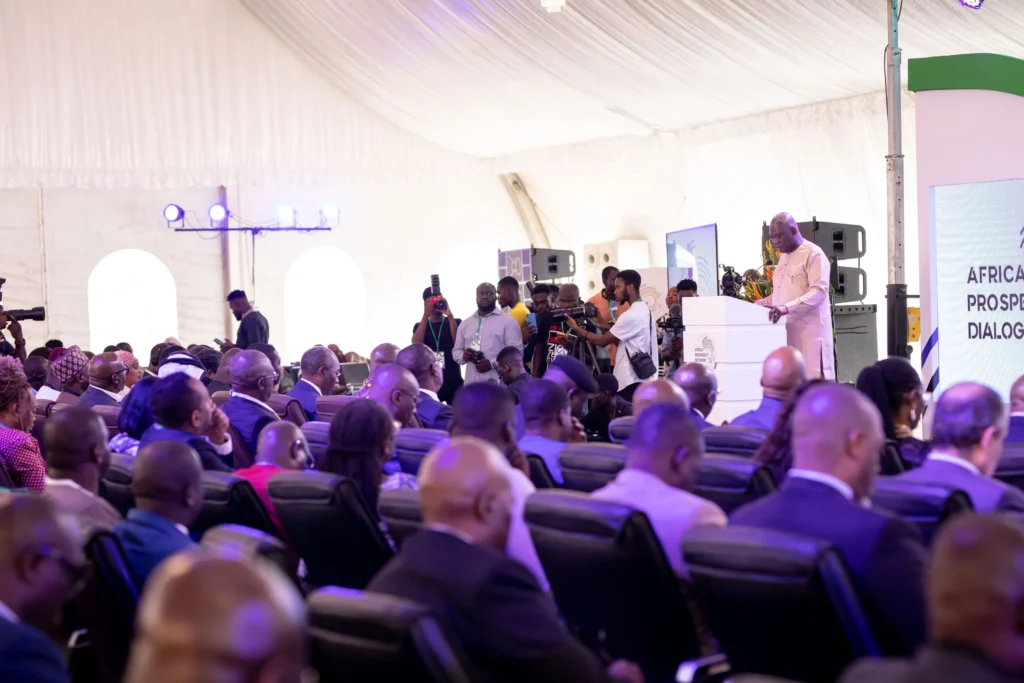
    The lighting of the symbolic Africa Trade Torch (ATT) has been moved to the Africa Prosperity Dialogues (APD) by the Africa Business Council (ABC), initiators of the ATT.
    The ATT is a private sector initiative to popularise the idea of the AfCFTA among African peoples and the African private sector, including owners of small and medium-sized enterprises, women, and the youth.

    ATT is an opportunity for the private sector to show its commitment to the operationalisation of the AfCFTA.

    The lighting of the ATT, which is under the auspices of the Africa Business Council, led by its president, Amany Asfour, has been carried out on 20 January each year for the past two years.

    However, the Africa Business Council has decided to hold the ceremony this year and in the years ahead at the Africa Prosperity Dialogues.

    President Irfaan Ali of Guyana, Joaquim Alberto Chissano, the former president of the Republic of Mozambique and chairman of the Africa Forum, supported by President Akufo-Addo and other heads of state and government, took part in the lighting of the Africa Trade Torch together with Wamkele Mene, Dr Asfour and other dignitaries on Saturday, 27 January 2024 during the closing ceremony of the 2024 Africa Prosperity Dialogues.

    Several African heads of state and another from the Caribbean, as well as several top business and thought leaders from across the African continent and the diaspora, participated in the second edition of the Africa Prosperity Dialogues (APD), which took place from Thursday, 25 to Saturday, 27 January 2024.

    APD 2024

    APD 2024 was organised by the Africa Prosperity Network (APN) and the African Continental Free Trade Area (AfCFTA) Secretariat, based in Accra, with support from the Government of Ghana.

    Among the heads who attended the APD 2024 were the host, Nana Addo Dankwa Akufo-Addo, President of the Republic of Ghana, as well as Their Excellencies Mohammed Irfaan Ali, President of the Co-operative Republic of Guyana; and Sahle-Worķ Zewde, President of Ethiopia.

    Other top government officials who will grace the occasion are the prime minister of Mozambique, His Excellency Adriano Maleiane; the vice-president of Côte d’Ivoire, Tiémoko Koné; the Speaker of the People’s National Assembly of Algeria, Ibrahim Boughali; and the secretary general of the AfCFTA Secretariat, Wamkele Mene.

    Business leaders

    Heads of leading businesses and institutions on the African continent who have also confirmed their participation are Professor Benedict Okey Oramah (president of Afreximbank); Mohamed Abou EI Enein (chairman and founder, Cleopatra Group); Sidi Ould Tah (director general of the Arab Bank for Economic Development in Africa/BADEA); Ahunna Eziakonwa (assistant secretary of the regional bureau for Africa at UNDP); Solomon Quaynor (vice-president of the African Development Bank/AfDB); and Bridgette Radebe (president of the South African Mining Development Association).

    Others guests are Cherif Abdallah (chairman of the CONEX Group of Companies, Liberia); Precious Moloi-Motsepe (Chancellor of the University of Cape Town); Ernest Addison (Governor of the Bank of Ghana); Marufatu Abiola Bawuah (chief executive officer of UBA Africa); Alex Dadey (chairman of KGL); Julius Mwale (principal behind Mwale Medical and Technology City in Kenya); and Lacina Koné (chief executive of Smart Africa).

    Also among the panellists and speakers will be Wale Tinubu (chief executive officer of Oando pIc); Yofi Grant (chief executive of the Ghana Investment Promotion Centre/GIPC); Serge Ekué (president of the West African Development Bank/BOAD); Opoku Ahweneeh Danquah (chief executive officer of Ghana National Petroleum Corporation); and Ebenezer Asante (senior vice-president in charge of markets for the MTN Group).

  • Media in Africa Called Upon To Own The AfCFTA and Its implementation

    Media in Africa Called Upon To Own The AfCFTA and Its implementation

    Accra, 19 December 2024 — Top media personalities across Africa have called for the formation of a pan-African group of trade journalists who will champion the AfCFTA agenda as well as an African Chamber of Commerce led by individual countries.

    The group of journalists were of the view that the formation of such a body is the surest way to sensitise the continent on the merits of the AfCFTA.

    They spoke at a webinar hosted jointly by the African Prosperity Network (APN), organisers of the Africa Prosperity Dialogues (APD), and the Africa Continental Free Trade Area (AfCFTA) secretariat in Ghana on Tuesday (December 19, 2023).

    The objective of the webinar was to champion the propagation of the AfCFTA concept and all its economic benefits across the continent, as well as explore and strategise on how African media can engage people and promote information-disseminating services across the continent.

    The webinar comes a month ahead of the next APD, slated to take place from January 25 to 27, 2024 at the Peduase Presidential Lodge at Aburi Hills, Ghana.

    In his opening remarks, the Founder/Executive Chairman of the Africa Prosperity Network (APN), Gabby Otchere-Darko, said that “the AfCFTA is arguably the biggest project for Africa” and every effort must be made to ensure its full implementation as seamlessly as possible.

    In his opinion, “the small trader in Lagos must understand the significance of being able to sell, especially with the support of technology, what she trades in another country on the African continent without having to pay any duties and other charges”.

    For Africans to own the whole concept of free trade and to understand how relevant or impactful it can be to their livelihoods, Mr Otchere Darko underscored the important role of the media, saying, “This is where the media comes in and how we can get the media to unpack this free trade story of the continent is really what this conversation is all about”.

    “It took a powerful media to get one country to leave a single market and I am talking about Brexit. In the same vein, it will take a powerful media on this (African) continent to understand that if we come together to this single market, it will benefit all of us,” he added.

    The webinar focused on four (4) thematic areas through which the media can support the continental drive toward the full implementation of the AfCFTA. They were: “opportunities and challenges in the AfCFTA; the media’s role in engaging citizens; beyond blocks ― talking to each other, and making information regarding the AfCFTA, flow freely throughout the continent.

    Opportunities/Challenges

    Speaking on the opportunities and challenges in creating a single African market, Dr Tsotetsi Makong, chief technical advisor, at the AfCFTA Secretariat and Charles Onyango-Obbo, author/columnist at the Nation Media Group, East Africa, observed that the major challenge facing the continent was youth unemployment.

    They said the problem could be resolved or exacerbated depending on what the continent does or does not do with the AfCFTA.

    Dr Makong was of the view that the trade volumes between the African continent and countries like China, the United States of America (USA), the European Union (EU), India, and the United Kingdom (UK), among others, are out there already.

    What is now important is how the continent can shift this phenomenon to reflect trade between fellow African countries, he stated.

    The African continent, according to Dr Makong, “is not trading with the world, but the world is trading with us (the African continent) and if this script continues in this manner, it will certainly go against the economic fortunes of the African continent, Dr Makong posited. 

    “Having a pan-African chamber of commerce is absolutely essential for the success of the AfCFTA. Considering the amount of distrust between African trade and investment counter-parties, the unavailability of a credible institution to do due diligence of potential partners would prevent intra-African transactions from being consummated”, said Toma Imirhe.

    “A pan-African chamber of commerce working in partnership with a continental media group would spur the needed action for stickiness of the AfCFTA. “We need a clear series of master messages that the Free Trade Area wants to get across, and so there should already be a network of journalists across Africa that are regularly working on the issues of the organisation”, said Kojo Mensah.

    Continent of choice

    Yofi Grant, chief executive officer (CEO) of the Ghana Investment Promotion Council (GIPC) a strategic partner of the Africa Prosperity Dialogues, observed that the rest of the world is meeting with Africa or coming to Africa because the continent is where the opportunities are.

    He identified three of the several opportunities that existed on the continent and mentioned the “huge deposits of mineral resources that are a requirement for the energy transition the world is tilting towards, as a major attraction”.

    Another major point of interest, Mr Yofi Grant stated, was that not less than 40% of the world’s minerals were in Africa.

    Furthermore, he identified Africa’s population, which is being touted as the fastest growing in the world, with approximately 1.4 billion as another global attraction.

    He said a significant proportion of that demography is young, under the age of 35 years, and that in itself is a major consumer market waiting to happen and a very important source of human capital for the world’s next development and growth.

    Additionally, he said “Africa is home to 60% of the world’s remaining arable land left for cultivation, so, if you are looking at food security globally, you cannot have that conversation without talking about Africa.

    “Indeed, Africa is where the next bulk of the world’s food should come from,” Mr Grant said.

    On the strength of these resources, Mr Yofi Grant stated that the AfCFTA is a journey that the continent must embark on together if the continent is to get out of the bottom of the pile regarding development. The media, he said, must be the pivot around which the continent must pursue this agenda. 

    Other speakers present at the webinar were Patrick Smith Editor-in-chief of The Africa Report, Ferial Haffajee Associate Editor of Daily Maverick (South Africa), George Jahraa(“Ashikele”) Singer/Songwriter Charles Onyango-Obbo Writer and Columnist Nation Media Group

    Africa Prosperity Dialogues (APD)

    is organised by the Africa Prosperity Network (APN) in collaboration with the Africa Continental Free Trade Area Secretariat. Next January’s dialogues will be hosted by the President of Ghana, who has invited several of his fellow African Heads of State, plus the President of the Cooperative Republic of Guyana, President Irfaan Ali.

    APD 2024 retreat will take place from 25-27 January 2024, at Peduase Presidential Lodge, Aburi Hills, in the Eastern Region of Ghana. There will be a presidential dinner gala and the Africa Prosperity Champions Awards ceremony on the night of January 26 at the Kempinski Gold Coast City Hotel in Accra.

    To register for the Africa Prosperity Dialogues 2024, Please go to: https://events.africaprosperitynetwork.com

    Africa Prosperity Network

    Communication Directorate

  • Business and Political Leaders gear up for 2024 edition of Africa Prosperity Dialogues

    Saturday, 25 November 2023, Accra — Heads of institutions with strong representation on the African continent, captains of industry, top government officials, and members of the diplomatic community have signaled their readiness to attend and contribute to the success of the second edition of the Africa Prosperity Dialogues (APD 2024) which will take place in Ghana from Thursday, 25 to Saturday, 27 January 2024.

    APD 2024, will be hosted by the President of the Republic of Ghana, Nana Addo Dankwa Akufo-Addo under the theme; “Delivering Prosperity in Africa: Produce, Add Value, Trade.” The Dialogues will be held at the Peduase Lodge, Aburi Hills in the Eastern Region of Ghana.

    Ahead of the APD, organizers of the dialogues, Africa Prosperity Network, hosted a partners and stakeholders’ cocktail on Thursday, 23 November 2023, barely two months before the main event to bring partners and stakeholders up to speed on preparations and direction of the three-day event.

    In a brief address to attendees of the cocktail, the Executive Chairman of the Africa Prosperity Network, Gabby Asare Otchere-Darko, observed that (APD 2) “will see heads of businesses on the African continent come together, think together, plan together, and work together with the political leadership of the continent on how to make the single market trade a reality.”    

    “We are not just going to have conversations, we will see deliverables from there [the APD] and whatever comes out of the dialogues, there will be a compact that will be presented to the AU for their consideration,” Gabby Otchere-Darko remarked.

    AfCFTA

    Chief Staff at the Africa Continental Free Trade Area (AfCFTA) Secretariat, Silver Ojakol, on behalf of Wamkele Mene, the Secretary General of the AfCFTA, described the AfCFTA secretariat’s partnership with APD as a strategic development that will go a long way to influence the ability of the AfCFTA to deliver the much-needed prosperity the Africa continent so desperately needs.

    “The theme for next [year’s APD, “Delivering Prosperity in Africa: Produce, Add Value, Trade”], is very much aligned with the pillars that we [AfCFTA] have developed from the policy perspective.

    “The pillars of regional value chain development, value addition, increased production on the continent in order that we can trade more with each other, and the pillar of trading, even trading across our borders.   

    “The AfCFTA secretariat is very much committed to ensuring that this process (the Africa Prosperity Dialogues), moves forward and delivers prosperity for the continent,” Silver Ojakol said.

    UN

    Charles Abani, a seasoned international development practitioner and the United Nations (UN) resident coordinator in Ghana emphasized that the UN through all its agencies such as the United Nations Development Programme (UNDP) considers the shrift from poverty in Africa and its management to seeking real and tangible prosperity for the continent is a refreshing development.  

    He indicated that to achieve the 17 UN Sustainable Development Goals (SDGs) in Africa, initiatives such as the Africa Prosperity Dialogues, which is aimed at rallying the private sector to lead the efforts of the continent to raise the requisite finances for the development of the continent and for the establishment a strong intra-continental trade portfolio through the AfCFTA, are critical and powerful tools to achieve goals.

    “Unless we produce more, unless we add more value and actually trade, all of this will just be talk. The UN stands ready with the multiplicity of agencies to provide support not only in Ghana but particularly, to help connect across the African continent and globally through the compact to enable this [the APD] to succeed. We look forward to the partnership” Mr Abani stated.

    Government of Ghana

    Minister for Trade and Industry, K.T. Hammond, in his remarks as the special guest for the occasion, noted that the trade ministry of Ghana, standing as the fulcrum for driving trade, industry, and private sector development, is aligned with the broader objectives of the APD 2024, which is captured succinctly in the theme for the APD, “Delivering Prosperity in Africa: Produce, Add Value, Trade.”

    Mr Hammond added that he firmly believes that a thriving production sector, through value addition, is the bedrock of economic prosperity and that is why the second edition of the Africa Prosperity Dialogues is an event he looks forward to in January 2024.

    “I’m elated that this platform unites us in a shared vision to unlock Africa’s immense potential by fostering robust partnerships and collaborations. It’s through such collaborations that we can propel the AfCFTA agenda, enabling inclusive growth, job creation, and shared prosperity for all Africans.

    “The opportunity to engage with esteemed leaders, industry experts, and visionary minds aligns seamlessly with our commitment to further elevate Africa’s economic growth,” the Trade Minister, K. T. Hammond said.

    “Together, let us persist in our efforts, united in our resolve to chart a course toward an Africa brimming with prosperity and boundless opportunities for all,” K.T Hammond added.

    APN

    Acting Chief Executive Officer of APN, Njack Kane, on his part, indicated that his team is poised to deliver a world-class event that will be a platform for business leaders to connect with each other and make tangible deals that will result in solid business outcomes.

    Kane registered how honoured and pleased he is to join and lead a tight team of professionals at the Africa Prosperity Network, all of whom are committed to helping execute the vision set out by the APN’s founder chairman, Gabby Asare Otchere-Darko.

    APD

    The first edition of the APD in 2023 resulted in the unanimous adoption of the Action Compact by the 36th Ordinary Session of the African Union in February 2023. This groundbreaking initiative forged a crucial partnership between the continent’s private sector and the implementation of the AfCFTA.

    Themed ‘The Africa Continental Free Trade Area (AfCFTA): From Ambition to Action, Delivering Prosperity through Continental Trade,’ the APD 2023 aligned seamlessly with the AU Summit’s overarching theme.

    Building on the success of APD 2023, APD 2024 offers an invaluable opportunity to engage private and public sectors, development finance Institutions, influential thought leaders, civil societies, and youth organizations in the process of syncing our economic priorities.

    The dialogues will also showcase flagship projects and initiatives that are both scalable and replicable and are ready for financing and implementation with the objective of significantly enhancing trade and investment among African nations.

    This will be done by focusing more on adding value to what is produced and also on how best to facilitate trade and investment across African markets and beyond.

    The dialogues will bring into focus the continent’s critical challenges and priorities, with a key focus on bolstering value addition and infrastructural development, championing agriculture and food security, sustainable development of natural resources, and industrialization. Technology and financing play an essential role in Africa’s prosperity narrative.

    The strategic objectives of APD 2024 under the theme “Delivering Prosperity in Africa – Produce, Add Value, Trade” are fourfold. First is, “to facilitate a comprehensive dialogue that brings together key stakeholders from government, business, civil society, and academia to discuss and develop inclusive and realistic strategies for delivering prosperity in Africa.

    The second objective is, “to promote and strengthen regional and continental integration, particularly in the context of the AU Agenda 2063 and as a means to foster intra-Africa trade, economic growth, and prosperity.

    The third objective is “to prioritize the inclusion of marginalized populations, women, and youth in Africa’s development agenda and ensure that prosperity is truly inclusive and lastly, “to provide a platform for sharing best practices, lessons learned, and innovative solutions that can be replicated across the continent”.

    Partners

    The 2024 edition of the Africa Prosperity Dialogues (APD) is being organized by Africa Prosperity Network (APN) in collaboration with the African Continental Free Trade Area (AfCFTA) Secretariat, which is situated in Accra, Ghana.

    The other partners are the United Nations Development Programme (UNDP) Africa, Africa Development Bank (AfDB), African Export-Import Bank (Afreximbank), United Nations Economic Forum for Africa (UNECA), Africa Business Council (AfBC), Africa America Institute (AAI), Arab Bank for Economic Development in Africa (BADEA), Africa Soft Power and Ghana Investment Promotion Centre (GIPC).

  • Akufo-Addo invites “Global Africans” to attend 2024 edition of Africa Prosperity Dialogues

    President Akufo-Addo has extended an open invitation to Africans leaving in the United States of America (USA) and the rest of the diaspora to attend the 2nd edition of the Africa Prosperity Dialogues (APD), a flagship event organised by the Africa Prosperity Network (APN) in Ghana.

    The Africa Prosperity Dialogues (APD) is scheduled to take place on the Akuapim Hills in the Eastern Region of Ghana from Thursday 25 to Saturday 27 January 2024 under the theme; “Delivering Prosperity in Africa by Producing what we Trade”.

    Addressing attendees of the maiden edition of the Global Africa Forum (GAF) jointly organised by the Africa Prosperity Network (APN) and the Africa-America Institute (AAI) on Thursday September 21st, 2023, on the margins of the 78th UN General Assembly in New York City, President Akufo-Addo said the APD has come bridge the gab that exist between Africa’s political establishment and her business leaders and community.

    “It was in Davos at the 2021 Economic Forum when the founding chairman of the Africa Prosperity Network and I discussed the idea of having our own permanent platform in Africa where political leaders, business leaders and generally, pan African thought leaders come together, own together and make happen together the key project of making Africa the largest and most vibrant single market that we know we have to make happen.

    “The Africa Prosperity Dialogues create an annual platform for Africa’s private sector to network with public officials on the implementation of the Africa Continental Free Trade Area (AfCFTA) which aims to create a single market across the continent” President Akufo-Addo said.

    “The decision to use this platform in New York today (21 September) to announce the second Africa Prosperity Dialogues should not be lost on us. It is to bring into focus a very critical constituency for Africa’s prosperity, the African diaspora or the global African. Africa needs her global African and her global Africans need Africa.

    “The impact of a successful Africa and the image and standing of Africans in the diaspora applies with equal force, to the image and standing of her sons and daughters who go by the name of African-Americans and indeed, to all her kith and keen in the Americas and the Caribbean. There is a lot of room for your perspectives and energies back in Africa” Akufo-Addo added.

    2024 APD

    The Africa Prosperity Network in collaboration with the African Continental Free Trade Area Secretariat will organise the Africa Prosperity Dialogues 2024 from Thursday 25th January to Saturday 27th January 2024 in the serene mountains of the Eastern Region of Ghana to be hosted by H.E. Nana Addo Dankwa Akufo-Addo, the President of the Republic of Ghana.

    The 2024 Africa Prosperity Dialogues is being organised as an annual platform dedicated to advancing the delivery of inclusive and sustainable development through a concrete manifestation of the pan-African drive for economic unity, self-determination, freedom, and collective prosperity for Africans.

    The main objectives of the 2024 APD are to “provide a unique and dedicated platform where Africa’s business, political, and social sector leaders meet annually to think, plan and work together to make intra-African trade and investment work.

    Focus on conversations and activities to commit Africa’s political and business leaders to a shared ambition of creating sustainable prosperity for Africa’s 1.4 billion people, explore themes that will elicit the continent’s critical challenges opportunities, industrialisation priorities and advance the commercial and infrastructural interventions needed to achieve the vision of a prosperous, integrated Africa Beyond Aid.

    Strengthen collaboration among African states, institutions and businesses and with Global Africans, including those in the Caribbean, North America Middle East, Asia and Europe, to create, capitalize and optimise opportunities throughout Global Africa and build partnerships among industrialists in Africa across the value chain to grow an ever-integrating Africa into a manufacturing powerhouse.

    Campaign for the integration of Africa’s financial infrastructure to facilitate trade and investment, build a strategic network among private sector decision-makers to overcome investment challenges and facilitate the free movement of people, goods, and services across Africa and to make APN a common private sector platform to champion Africa’s Prosperity Agenda.

    Maiden edition of APD

    The maiden APD held in Ghana in January 2023, was attended by over 700 leading Africans in politics, business, and the social sector. The Dialogues produced an outcome document which was presented at the 36th Ordinary Session of the African Union (AU) Assembly for adoption.

    It was presented by H.E. Nana Addo Dankwa Akufo-Addo, President of the Republic of Ghana, who was also appointed as the champion for the dialogues, especially on the protocol of free movement of trade.

  • Africa Prosperity Network launches second edition of Africa Prosperity Dialogues

    The Africa Prosperity Network (APN) successfully launched the highly anticipated second edition of the Africa Prosperity Dialogues on Sunday, 18th June 2023, at the esteemed Africa Trade House in Accra.

    The event witnessed the presence of influential figures, including the Second Lady of the Republic of Ghana, Samira Bawumia who served as the Guest of Honour.

    The gathering of key business players and stakeholders highlighted the importance of collaboration and economic growth in Africa.

    Dr. George Agyekum Donkor, President of the ECOWAS Bank for Investment and Development, delivered a compelling keynote address that emphasized the significance of closer collaboration between private sector actors across the continent.

    Dr. Donkor commended the Africa Continental Free Trade Area (AfCFTA) secretariat for their commendable work and called for increased efforts to leverage the potential of this landmark initiative.

    The AfCFTA has played a crucial role in promoting regional integration and advancing intra-African trade.

    Dr. Amany Asfour, President of the African Business Council, brought her expertise to the stage, providing valuable insights on the current business landscape in Africa.

    She emphasized the immense potential for growth and prosperity, urging businesses to embrace new opportunities and invest strategically.

    Dr. Asfour emphasized the pivotal role of the private sector in driving innovation, creating employment opportunities, and fostering sustainable development throughout Africa.

    H.E. Albert Muchanga, Commissioner for Trade and Industry of the Africa Union Commission, also addressed the audience, emphasizing the importance of the AfCFTA in enhancing Africa’s competitiveness and economic resilience.

    Commissioner Muchanga reiterated the Commission’s commitment to supporting and enabling private sector participation in the AfCFTA implementation.

    This historic agreement is poised to unlock new opportunities for businesses and entrepreneurs across the continent.

    The launch event also featured statements of support from key stakeholders, further amplifying the significance of the Africa Prosperity Dialogues.

    H.E. Maher Kheir, Dean of the Diplomatic Corps in Ghana, H.E. Wamkele Mene, Secretary General of the AfCFTA Secretariat, Hon. Francis Asenso Boakye, MP and Minister of Works and Housing in Ghana, Dr. Ibrahim Awal Mohammed, Minister for Tourism, Arts, and Culture in Ghana, and Nana Bediatuo Asante, Secretary to the President of the Republic of Ghana, all expressed their support for the initiative.

    The Africa Prosperity Network, a private and independent organization established in Ghana, serves as a continental network focused on advocating for the collective ownership of the African Union’s Agenda 2063.

    Their mission centers on fostering enhanced private sector participation in the implementation of the AfCFTA, with a sense of urgency and determination.

    The second edition of the Africa Prosperity Dialogues promises to be a pivotal platform for dialogue, collaboration, and knowledge sharing among key business players. By facilitating discussions and promoting partnerships, the event aims to chart a path towards sustainable economic development and shared prosperity throughout Africa.

  • AU Adopts Africa Prosperity Dialogues’ Action Compact On AfCFTA’s Implementation

    The Africa Prosperity Dialogues, which will take place annually, creates a dedicated platform for Africa’s private sector to network

    Heads of state of the Africa Union (AU) have unanimously adopted the Action Compact of the maiden edition of the Africa Prosperity Dialogues (APD), which took place in Ghana last January, involving which took place in Ghana last January, involving the continent’s private sector in the implementation of the Africa Continental Free Trade Area (AfCFTA).

    The Africa Prosperity Dialogues held under the theme: “The Africa Continental Free Trade Area (AfCFTA): From Ambition to Action, Delivering Prosperity through Continental Trade”, dovetailed into the theme of the 36th AU summit which was “The Year of AfCFTA: Acceleration of the African Continental Free Trade Area Implementation”.

    The Africa Prosperity Dialogues, which will take place annually, creates a dedicated platform for Africa’s private sector to network among themselves and with public officials on the process of getting Africa’s single market working quickly. The AU has fully endorsed this shared ownership approach initiated by the Africa Prosperity Network in partnership with the AfCFTA Secretariat and the Government of Ghana, the host nation of the AfCFTA Secretariat.

    AU Summit

    The 36th Ordinary Session of the Assembly of Heads of State and Government of the African Union took place from Saturday 18 to Sunday 19 February 2023. The Assembly is the AU’s supreme policy and decision-making organ. It comprises all heads of state and governments of AU member states.

    Action Compact

    Part of the Action Compact adopted by the AU reads: “We African Business Executives, Senior Policymakers, Business Associations, Government Ministers, Senior Officials from the African Continental Free Trade Area (AfCFTA) Secretariat, Technocrats, Women and Young Entrepreneurs, met at The Presidential and Business Executives Dialogue held at the Peduase Lodge, Peduase, Eastern Region, Ghana, on the 28 January 2023.

    The dialogue was convened under the auspices of H.E. Nana Addo Dankwa Akufo-Addo, President of the Republic of Ghana under the theme “AfCFTA: From Ambition to Action – Delivering Prosperity Through Continental Trade.

    We recognised that the AfCFTA Agreement would contribute significantly to sustainable economic growth, employment generation, inflow of foreign direct investment, industrial development, better integration of the continent into the global economy and prosperity for all Africans.”

    We discussed on how to overcome critical challenges impeding the promotion of intra-African trade such as inadequate infrastructure (transport, communications, energy, information technology), poor trade facilitation processes, access to finance, and free movement of persons” the Action Compact reads.

    Thematic areas

    The business leaders, according to the action compact after an exhaustive deliberation, commit to take concrete steps in four thematic areas, namely: Business Community, Government, AfCFTA Secretariat and Partners.

    Business community

    On the first thematic area which is the business community, the dialogues agreed to first, “advocate for and utilize the AfCFTA preferential regime under its various instruments.”

    Secondly, “increase investment in science technology and innovation to power value added Made-in-Africa production and industrialization”.

    Thirdly, “advocate for full ratification and implementation of the African Union Protocol of Free Movement of Persons, Right of Residence and Right of Establishment”.

    Lastly, “work closely with the Governments in the implementation of the Agreement Establishing AfCFTA. Business Community”.

    Governments

    With regard to the second thematic area, “Government”, the business and thought leaders called on African governments to “provide an enabling business and investment climate to support the utilization of the AfCFTA preferential treatment”.

    Additionally, they called on African governments to “pursue commodity-based industrialization and facilitate the production of high-quality goods and services within the African Single Market”.

    It adds, “Invest in infrastructure for multimodal transport and logistics, including air transport services, energy, communication with the support of financial institutions and the private sector to improve trade facilitation, reduce production, transport, trade, and transaction costs.

    “Establish community-level incubation centres and adopt an entrepreneurial approach to education, including Technical and Vocational Education and Training, as well as mainstream Applied science, technology and innovation in the curriculum our schools,” it continues.

    “Mobilize domestic resources including through sovereign wealth funds (SWFs), pension funds, insurance savings, private equity funds, diaspora and sovereign bonds, impact investing, green bonds and remittances”.

    The APD compact further states, “Set up special measures for women entrepreneurs to take full advantage of the AfCFTA, including supporting the #HERAfCFTA initiative and develop tailormade programmes including offering special incentives for youth–owned enterprises.

    “Provide tailormade programmes for African micro, small and medium-sized enterprises (MSMEs) with incentives to strengthen capabilities, and capacities to accelerate industrialization and trade and lastly ratify the AU Protocol on the Free Movement of people and select a champion to ensure early entry into force”.

    AfCFTA Secretariat

    Focusing on the AfCFTA Secretariat, the dialogues called on the secretariat to “support state parties in the implementation of the agreement establishing the AfCFTA through trade facilitation, collaboration with the Regional Economic Communities (RECs), quality infrastructure, advocacy and capacity building”.

    Furthermore, the dialogues called on AfCFTA to “engage with partners to mobilise adequate resources for the implementation of the AfCFTA” and to “facilitate the establishment of AfCFTA institutions, including an Intellectual Property Office (IPO), a Pan-African Trade and Investment Agency, and a Continental Competition Authority as well as a unified and integrated African Competition Regimes on IPR investment and competition”.

    They also urged the AfCFTA to “support the conclusion of negotiations on the Protocols on Digital Trade and Women and Youth in Trade by the deadline of July 2023 as set by the Assembly of heads of state and government of the African Union and to “facilitate work towards the consolidation of the Common African Market on the basis of the AfCFTA Protocols on Trade in Goods, Trade in Services, Investment, Competition Policy, Intellectual Property Rights, Digital Trade and Women and Youth in Trade”.

    Partners

    To partnering financial institutions such as Multilateral Development Banks, Regional Development Finance Institutions, commercial banks, investors, and other financiers, the dialogues urged them to “work with governments and the private sector to make available attractive and affordable trade finance to support private sector engagement with the AfCFTA market”.

    They also called on development partners, including UNECA and UNDP, to “continue to provide coordinated support to governments and businesses to ensure the full implementation of the AfCFTA”.

    The next APD

    The second edition of the Africa Prosperity Dialogues is expected to take place in the first quarter of 2024. The date and venue is expected to be announced by the Africa Prosperity Network (APN), organizers of the APD, soon.

    Reporting by Wilberforce Asare in Addis Ababa, Ethiopia