Day: November 25, 2024

  • Ghana To Host Africa’s Business Leaders At Maiden Africa Prosperity Dialogues

    Under the auspices of the President of the Republic of Ghana, His Excellency Nana Addo Dankwa Akufo-Addo, and His Excellency Wamkele Mene, secretary general of the African Continental Free Trade Area (AfCFTA) Secretariat, the maiden edition of the Africa Prosperity Dialogues series will hold from Thursday 26 to Saturday 28 January 2023 in Ghana, host nation of the AfCFTA Secretariat.

    An initiative of the Africa Prosperity Network (APN), the dialogue series are expected to bring Africa’s political and business leaders together in conference with other thought leaders on Africa. Not only will they brainstorm on the all-important single-market project for the continent, but the dialogues will also create an annual platform for the continent’s leaders to spearhead collaborative implementation of the African Continental Free Trade Agreement.

    The launch of the Africa Prosperity Dialogues is in recognition of how, for the trade agreement to work, there must be shared ownership of the AfCFTA’s objectives, particularly by businesses, whether big or small, right from the onset.

    In recent times, global geopolitical turmoil has exposed Africa’s overreliance on the global supply chain and on exports of natural resources. It has also highlighted how important it is for Africa seriously to strengthen the capacity for greater intra-African reliance and cushion herself against exogenous shocks of events beyond her control.

    The Africa Prosperity Dialogues will incorporate the launch of various platforms for political and business leaders on the continent and in the diaspora to think, plan and collaborate towards building the world’s largest single market of Africa’s 1.4 billion people. This will help to create more opportunities for African citizens and build a more prosperous Africa.

  • Ethiopia Airlines Boss, Mesfin Tasew Bekele, To Attend Africa Prosperity Dialogues

    Global business leader and Group Chief Executive Officer of Ethiopian Airlines, Mesfin Tasew Bekele and board chairman, Girma Wake have confirmed their participation at the maiden Africa Prosperity Dialogues, which is being organised by the Africa Prosperity Network and its partners, including the African Continental Free Trade Area (AfCFTA) Secretariat and the Government of Ghana, the host nation.

    Dubbed the Kwahu Summit, the first of these annual dialogues will take place from 26 to 28 January, 2023. Focusing on intra-Africa trade, the Africa Prosperity Dialogues bring together Africa’s political and business leaders to plan and work together on the all-important single market, the Africa Continental Free Trade Area (AfCFTA) project for the continent.

    Confirming his participation via email, to organizers, Mr Mesfin Tasew Bekele said it is a delight for him to join such an important dialogue series aimed at fast-tracking the implementation of the Africa Continental Free Trade Area Agreement.

    Ethiopia Airlines

    Mr Mesfin Tasew Bekele leads an organization which aims to become the most competitive and leading aviation group in Africa by providing safe, market driven and customer focused passenger and cargo transport, aviation training, flight catering, MRO and ground services by 2025.

    Additionally, Mr Tasew Bekele and his team at Ethiopia Airlines are on a mission “to ensure that Ethiopia Airlines becomes an airline of choice to its customers, employer of choice to its employees and an investment of choice to its Owner, and to contribute positively to socio economic development of Ethiopia in particular and the countries to which it operates in general by undertaking its corporate social responsibilities and providing vital global air connectivity.”

    About Mesfin Tasew


    Mr. Mesfin Tasew was appointed as Group Chief Executive Officer of Ethiopian Airlines in March 2022. He joined Ethiopian in 1984 as Associate Engineer and progressed through the ladder and served in supervisorial and managerial positions in the Aircraft Maintenance and Engineering areas.


    In 1997 and 1999, he was appointed as Director Operations & Technical Systems Support and Chief Information Officer, respectively. In 2006, he was appointed as Vice President of Maintenance and Engineering.


    Mr Mesfin also served as Chief Operating Officer of Ethiopian Airlines from 2010 – 2021, and Chief Executive Officer of ASKY Airlines from April 2021 to March 2022.


    Mr Mesfin also serves as a member of the International Air Transport Association (IATA) Board of Governors. He holds BSC and MSc Degrees in Electrical Engineering from Addis Ababa University. He also holds Master’s in Business Administration (MBA) from Open University in the UK.

    A.P. dialogues

    The Africa Prosperity Dialogues are symbolically dubbed the Kwahu Summit because the Kwahus of Ghana, the host nation, represent entrepreneurialship and trade and are known to support each other excel in business. Kwahu is also the highest elevation of habitable lands in Ghana.

    The organisers of the Kwahu Summit aim to support through enhanced intra-Africa trade, the elevation of Africa and her people to the highest summit of human living, dignity and prosperity.

    The 2023 Africa Prosperity Dialogues is the first of what will be an annual event and being organised by the Africa Prosperity Network (APN) and its partners, which include the Africa Continental Free Trade Area (AfCFTA) Secretariat located in Ghana, the Presidency of the Republic of Ghana (the host nation of AfCFTA).

    The other partners are; United Nations Development Programme (Africa), the Africa Prosperity Fund, the Ghana Investments Promotion Centre (GIPC), the Economic Commission for Africa (ECA) and the Africa-America Institute.

    The Summit will bring into practical focus the continent’s critical challenges and industrialisation priorities and advance aggressively the commercial and infrastructural interventions to achieve the vision of creating the largest single market in the world of some 1.4 billion Africans.

    Summit venues

    The Kwahu Summit is a Pan-African economic platform which brings together the great minds and mights of Africa, both in Africa and the Diaspora, to think, plan and work together to expedite the implementation of the agreed initiatives within the AfCFTA and shape the Africa Agenda for Action.

    The business and policy leaders’ dialogues which will take place on 26 – 27 January 2023, will be held at the Safari Valley Resort, in Adukrom, on the Akuapem Mountain.

    On the 28 January 2023, the Peduase Presidential Lodge in Aburi, Akuapem Mountain, will host the presidential and business executives’ dialogues.

    Source: Peacefmonline.com

  • Africa Prosperity Network At The 36th Ordinary Session of Heads of States And Government.

    The Africa Prosperity Network (APN) At The 36th Ordinary Session of Heads of States And Government, Held in Addis Ababa, Ethiopia.”

  • “Let’s move from mere negotiations to trading among ourselves” – H.E. Joao Baptista Domingos Quiosa

    The Angolan Ambassador to Ghana, H.E. Joao Baptista Domingos Quiosa has called on African leaders “to move from mere negotiations to trading among ourselves”.

    On 24 June 2022, the Africa Prosperity Network (APN) invited members of the African Diplomatic Corps to a cocktail soiree, at APN’s offices in Labone, Accra, to officially announce to them the oncoming summit of Africa’s political and business leaders scheduled to take place in Kwahu, Ghana, this October.

    The Kwahu Summit on Africa’s Prosperity is an initiative of the Africa Prosperity Network, in partnership with the Africa Continental Free Trade Area Secretariat, the Afreximbank and the Office of the President of the Republic of Ghana, among other key institutions and organisations.

    With AfCFTA tasked by the African Union to complete building the world’s largest single market of Africa’s 54 member states over this decade, the Kwahu Summit is designed to bring the leadership of Africa’s private sector fully on board this crucial transformational process.

    Speaking in Kigali, Rwanda last week at the Commonwealth Business Forum, the MTN Group President and CEO, Ralph Mupita, welcomed the Kwahu Summit as “timely, and a necessary platform to get Africa’s business leaders fully engaged (along with the political leaders) in the process of deepening intra-Africa trade,” throwing the weight of his Pan-African telecom giant “fully behind it.”

    At the cocktail for the diplomats in Accra last Friday, H.E. Joao Baptista Domingos Quiosa, the Angolan ambassador to Ghana, spoke for all the ambassadors in showing their full endorsement for the Summit. He spoke on behalf of H.E. Zagre Pingrenoma, Dean of the African Diplomatic Corps.

    He said it was about time Africans shifted from the negotiations and dialogues on Africa’s integration and trade to a more facilitative approach to implementing the AfCFTA framework and saw this meeting of minds between political and business heads as very significant to the progress of free trade in action across Africa

    “The group of African Ambassadors are glad to be a part of this program in October and will work together with Africa Prosperity Network to see that this summit is a success, because we believe in it. It’s time to move forward from just dialogues and negotiations of African trade and start putting into practice some of the things we need to do. The first thing we need to do is trade among ourselves, trade between Ghana and Togo, trade between Ghana and Angola, trade between Angola and Zimbabwe. It’s time we start trading as against the mere negations. Therefore, we the Ambassadors have decided to take the message home and to ensure this programme is a success,” H.E. Quiosa stated.

    The Kwahu Summit is scheduled to take place at the Rock City Hotel and Conference Centre in Kwahu, from 27 October to 30 October 2022. More than 15 African heads of state from all regions of the continent will attend to engage in meaningful dialogues with CEOs and captains of industry operating in Africa. Other thought leaders and influential people of African descent will attend these high-level dialogues which “will put action onto the AfCFTA agreement and expedite its implementation,” according to Executive Director of APN, Dr Nkiru Balonwu. Speaking at Friday’s soirée, Ghana’s Deputy Minister for Foreign Affairs, Hon. Ampratwum Kwaku Sarpong, expressed his joy at the “proactive move” on the part of private sector players to join the conversation that will promote intra-Africa trade and commerce and take Africa closer to economic integration

    Speaking in Kigali, Rwanda last week at the Commonwealth Business Forum, the MTN Group President and CEO, Ralph Mupita, welcomed the Kwahu Summit as “timely, and a necessary platform to get Africa’s business leaders fully engaged (along with the political leaders) in the process of deepening intra-Africa trade,” throwing the weight of his Pan-African telecom giant “fully behind it”.

    At the cocktail for the diplomats in Accra last Friday, H.E. Joao Baptista Domingos Quiosa, the Angolan ambassador to Ghana, spoke for all the ambassadors in showing their full endorsement for the Summit. He spoke on behalf of H.E. Zagre Pingrenoma, Dean of the African Diplomatic Corps.

    He said it was about time Africans shifted from the negotiations and dialogues on Africa’s integration and trade to a more facilitative approach to implementing the AfCFTA framework and saw this meeting on minds between political and business heads as very significant to the progress of free trade in action across Africa

    He reaffirmed the full commitment of the Ghana Government to making this annual dialogue not only a reality but one that will be meaningful to achieving the goal of creating prosperity across Africa through economic integration.

    Dr. Eugene Owusu, Executive Director, and Coordinator – Summit Secretariat, expressed his gratitude to the Diplomats, who had conveyed the support of the various countries. “Over 500 business personalities and political leaders will gather in Kwahu, Ghana, to discuss how the continent can best take advantage of its narrative and resources to accomplish more,” he declared.

    BACKGROUND

    The African Continental Free Trade Area (AfCFTA) is a flagship project of Agenda 2063 of the African Union – Africa’s development vision. Launched on 1 January 2021, the AfCFTA is considered an exciting game-changer and a revolutionary continental initiative aimed at setting a prosperity agenda for Africa with an inward-looking approach to its development agenda. Envisioned to be Africa’s strategy to accelerate intra-African trade and boost Africa’s trading position in the global market, the AfCFTA falls squarely in line with the philosophy behind Africa Beyond Aid. With a population of some 1.3 billion and a combined gross domestic product (GDP) valued at $3.4 trillion, the AfCFTA seeks to strengthen Africa’s common voice and policy space in global trade negotiations at such a time when much of the world is turning away from cooperation and free trade.

    Recent global geopolitical dynamics such as the Covid-19 Pandemic and the Russian-Ukrainian conflict have on one hand, exposed the inherent vulnerabilities of the African Continent and on the other hand, demonstrated Africa’s resilience and the resolve to tackle its developmental challenges.

    The Kwahu Summit, therefore, provides a unique annual platform for Africa’s key stakeholders to identify common grounds for the effective implementation of the continental initiative and shape the Africa Agenda for Action.

    Major discussions during the Kwahu Summit will center around the legal framework and dispute settlement mechanisms to underpin the free movements of people, goods and services across member states, how to overcome non-tariff barriers to free trade, industrialising Africa beyond aid, leveraging Agriculture for prosperity and food security, ease of cross-border transportation Transport, financing trade and infrastructure across Africa, the role of technology in facilitating trade, and energy security in Africa. The first of these African Prosperity dialogues is being held this year at the Rock City under the theme – “AfCFTA: From Ambition to Action- Delivering Prosperity Through Continental Trade”.

    “For four days we will host the decision makers of Africa in both business and politics and offer them a deliberate platform to think together, and plan together to work together for the prosperity of Africa and Africans. Political will backed by the commitment of business is how we achieve the vision of our founding leaders for a united, prosperous Africa, where the wealth of Africa benefits first the people and continent of Africa,” the Executive Secretary of APN, Hannah Awuku said .

    The main discussions at the summit will take place on 28 and 29 October 2022.

    More details are available on www.kwahusummit.com

  • Kwahu Summit launched – Ghana to host Africa’s Prosperity Dialogues

    The Africa Prosperity Network has, today launched the Kwahu Summit for Africa’s prosperity.

    The launch, which featured top African business leaders, political leaders, as well as local and international media took place at the Accra Marriot Hotel on the sidelines of the African Development Bank’s annual meeting in Accra, Ghana.
    Speaking at the launch, the Executive Secretary of the AfCFTA Secretariat, H.E. Wamkele Mene, emphasised the need for Africans to have impactful dialogues about Africa’s trade relations with the rest of the world in light of the state of intra-Africa trade. His Excellency Wamkele Mene declared AfCFTA Secretariat’s support for the Kwahu Summit. He further indicated that the Summit would effectively engage the full range of sustainable development actors, governments, and businesses to explore how to accelerate the AfCFTA implementation, and examine the the kind of economic development vision Africa must have for decades to come.

    On behalf of the Government of Ghana, Minister of Information, Hon. Kojo Oppong Nkrumah,  spoke about the government’s support for the thought leadership platform the Kwahu Summit creates for Africans to leverage opportunities and resources on the continent to achieve more.

    The Chief Executive Officer of the Ghana Investment Promotion Centre (GIPC), Mr. Yofi Grant, emphasised the need for Africans to proactively direct global discourses and collaborations on Africa’s development, given the share of global natural resources the continent possesses and the potential of the Continent’s demography for consumerism, leadership and labour force.

    The maiden edition of the Kwahu Summit on Africa’s prosperity will take place at the Rock City Hotel in Kwahu on 28 and 29 October 2022. The partners of the Summit are AfCFTA Secretariat, the Government of the Republic of Ghana and the Ghana Investment Promotion Centre (GIPC).

  • Global Africans Urged To Invest On The Continent To Plug Infrastructure Gap

    Global Africans Urged To Invest On The Continent To Plug Infrastructure Gap

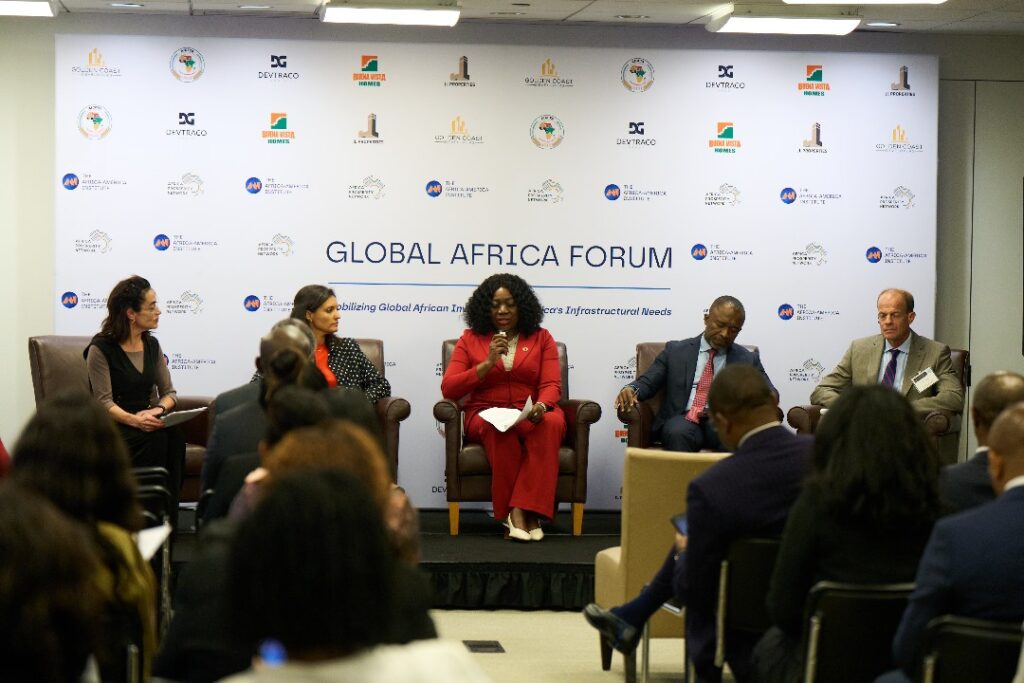
    Thursday, 26 September 2024 – Distinguished speakers and panel members at the second edition of the Global Africa Forum (GAF) have made wide-ranging appeals to Global Africans to consider channelling their financial resources and expertise towards the African continent to support ongoing governmental and continental efforts aimed at bridging the existing infrastructure gap on the African continent. 
    Organised by the Africa Prosperity Network (APN) and the Africa-American Institute (AAI), the Global Africa Forum was held on Wednesday, 25 September 2024 on the sidelines of the 79th United Nations General Assembly (UNGA) in New York City, United States of America.

    The event attracted several business leaders, thought leaders, policymakers, and influencers who brought multiple perspectives to the theme: “Mobilizing Global African Investments to Address Africa’s Infrastructure Financing Deficit.”  

    In his opening address — read on his behalf by Kwaku Sakyi Addo, member of the board of directors of the Africa Prosperity Network (APN) — the Executive Chairman of APN, Mr Gabby Otchere-Darko pointed out that it has become increasingly clear that the private sector, both in Africa and among the Global African community, has to drive the continent’s quest to plug its infrastructure gap.

    “We need to invest in roads and bridges. We must build railroads, and establish aviation and maritime links to connect our countries and move cargo and people, but the model for financing must shift from central governments to the private sector.

    “In 2023, the rest of Africa, south of the Sahara, witnessed an impressive $54 billion in remittance flows. Remittances outperformed FDI [Foreign Direct Investments] by nearly 1.5 times. Ghana’s remittances reached an impressive $4.6 billion, surpassed only by neighbouring Nigeria with $19.5 billion” Mr Otchere-Darko’s speech read.

    “We see an opportunity in establishing direct air links between Africa and the Caribbean. It’s important for unlocking new trade, tourism, and cultural exchange opportunities. We need to recreate that transatlantic bridge, even for catharsis for our collective trauma.

    “Let’s seize the opportunities presented by the African Continental Free Trade Area and Africa Prosperity Network to unlock the continent’s full potential for economic growth, regional integration, and global influence, and back it with your investment,” Gabby Otchere-Darko further remarked.

    Public Private Partnerships

    Among the business and corporate leaders who shared their understandings, being at the forefront of spearheading development on the African continent, were Oliver Alawuba, Group Managing Director, United Bank for Africa (UBA) Plc, Boris Kodjoe, actor and co-founder of Full Circle Africa, Thierno Habib Hann, Chief Executive Officer (CEO) of Shelter Afrique, Olakunle Williams, Chief Executive Officer (CEO) of Tetracore Energy, and Kwabena Nyarko Chief Executive Officer (CEO) Hospital Infrastructure Group.

    Their presentations spoke to their practical experience in various fields of endeavour, emphasising the need to mobilise private capital and expertise to position African governments and institutions on the continent to fast-track large-scale and sustainable housing and urban development projects across the continent.

    The speakers called for a strong partnership between private investors and governments as the best way to ensure the construction, speedy completion, and operationalisation of the much-needed infrastructure across the continent.

    As part of the Global Africa Forum, the Group Managing Director of United Bank for Africa (UBA), Kofi Appenteng, President and CEO of African America Institute (AAI) and Dr Fatima Elsheikh, Secretary General of the Arab Bank for Economic Development in Africa (BADEA), jointly launched the 2025 Africa Prosperity Dialogues (APD 2025).

    APD 2025 will take place in Accra from Thursday, 30 January to Saturday, 1 February 2025, under the theme: “Delivering Africa’s Prosperity Through Infrastructure: Invest, Integrate, Connect”. It is expected to attract over one thousand participants from across the continent.

    Panel discussions at GAF

    Overall, there were two high-level panel discussions and a high-level fire-side discussion at the Forum. The fireside session focused on the “Future of U.S. Policy towards Africa and its Relevance to What Africa Wants.”

    The first high-level discussion looked at “Shaping Africa’s Future, Learning from Experience,” and the second delved into “Connecting Skills, Technology, and Financial Investments of Global Africans to Support Africa’s Infrastructure.

    Kofi Appenteng, President and Chief Executive Officer of the Africa America Institute (AAI) in his closing remarks noted that the engagement in thoughtful dialogue about policy and pathways to meeting Africa’s infrastructure needs has revealed powerful ways by which the continent can bridge the gap.  

    He said: “whether in transportation, energy, or digital connectivity, the infrastructure [the African continent builds today will] lay the groundwork for a sustainable tomorrow and build [Africa’s] influence on the global stage.

    “As we advocate for increased investments, we must emphasise the importance of economic sovereignty. Each nation and region must have the agency to define its own development pathways, ensuring that investment aligns with needs and priorities,” Kofi Appenteng said.

    “Infrastructure is about more than just roads and bridges and internet cables, it’s about a shared vision that can only be developed by fostering relations, sharing knowledge, and building networks not just between governments and investors, but among ourselves as African nations, as entrepreneurs and as global Africa,” he said.

    Issued by the Communication Directorate, Africa Prosperity Network.

    25 Third Dade Walk, Labone, Accra, Ghana

    Tel: +233 30 273 7879

    P.O. Box CT 7598 – Cantonments, Accra

    Email:  info@africaprosperity.network

    Website: africaprosperitynetwork.com

    Date: Thursday, 26 September 2024

    Africa Prosperity Network (APN)

    The Africa Prosperity Network (APN) is a non-profit organisation founded to advance the vision of “The Africa We Want” as outlined in the African Union’s Agenda 2063, with a particular focus on promoting Africa’s prosperity and economic integration.

    APN is the vehicle that runs the Africa Prosperity Dialogues, an initiative committed to creating the platforms for partnerships among political and business leaders, civil society, academia, and traditional authorities in Africa.

    This is aimed at driving the rapid development of the continent through dialogues and consensus-building on issues of trade, commerce, and strengthening of African economies.

    Africa Prosperity Dialogues (APD)

    The Africa Prosperity Dialogues series offer a strategic platform where the movers and shakers of the African economy elevate the economic integration objectives from ambitions to real actions.

    Set in Accra, Ghana, the APD is a one-of-a-kind event where African leaders from diverse areas of national endeavour gather each year to expedite, among other things, the implementation of the agreed initiatives within the AfCFTA trade bloc and shape the Africa Agenda for Action.

    APD brings into practical focus, the continent’s critical challenges and industrialisation priorities and advance aggressively the commercial and infrastructural interventions to achieve the vision of an Africa Beyond Aid. The APD is an annual conference held every January.

    It is a summit of the highest political and business decision-makers in Africa, supported by various leaders, who propose practical, actionable initiatives to enhance trade in Africa and create prosperity for Africans. The Summit accelerates investment and amplifies public-private partnerships.

  • Continent-Wide Mobile Money Interoperability Is Attainable – Experts Tell African Leaders, Regulators

    Continent-Wide Mobile Money Interoperability Is Attainable – Experts Tell African Leaders, Regulators

    Experts and industry players in the financial and telecommunications sectors in Africa have made a clarion call on heads of state, heads of financial institutions as well as regulators in the financial and telecommunications industry to commit to a payment architecture that will be interoperable across all borders on the continent.
    A continent-wide system where all African countries can purchase goods and services and make payments through the use of a mobile money interoperability infrastructure, according to experts and industry leaders, is attainable, but the commitment of decision-makers is needed to make it a reality.

    The policy proposals were made at the Mobile Money Interoperability Symposium organised by the Africa Prosperity Network (APN), under the theme; “Scaling Up Interoperability — Using Mobile Money to Buy and Sell Across Africa.”

    Expert Proposals

    The experts essentially discussed financial inclusion as a catalyst for prosperity and emphasised the importance of interoperability in driving economic growth across Africa. They highlighted the potential for mobile money to bridge gaps in financial services and empower communities.

    On the subject of payment systems, industry players discussed the essential components and strategies for creating an integrated payment system to boost intra-African trade. The focus was on leveraging digital trade, regulatory support, and innovative technologies.

    Panellists at the symposium also underscored the need for regulatory harmonisation and cooperation between countries to facilitate seamless transactions, emphasising the importance of building a unified regulatory framework that supports innovation while ensuring security and compliance.

    Representatives from leading telecommunications companies shared insights on their preparedness, the technological advancements needed to support interoperability as well as the challenges and opportunities in implementing cross-border mobile money solutions.

    On what needs to be done in the short, medium, and long term to achieve interoperability in Africa, the experts and industry leaders called for continued advocacy across key policy partners.

    They proposed the finalisation of a legal framework and the constitution of a governance committee that would work with a technical working group, including a SAPA team, as well as the execution of a pilot mechanism with anchor bank, fintech and telco partners. 

    Mobile Money/Common Currency

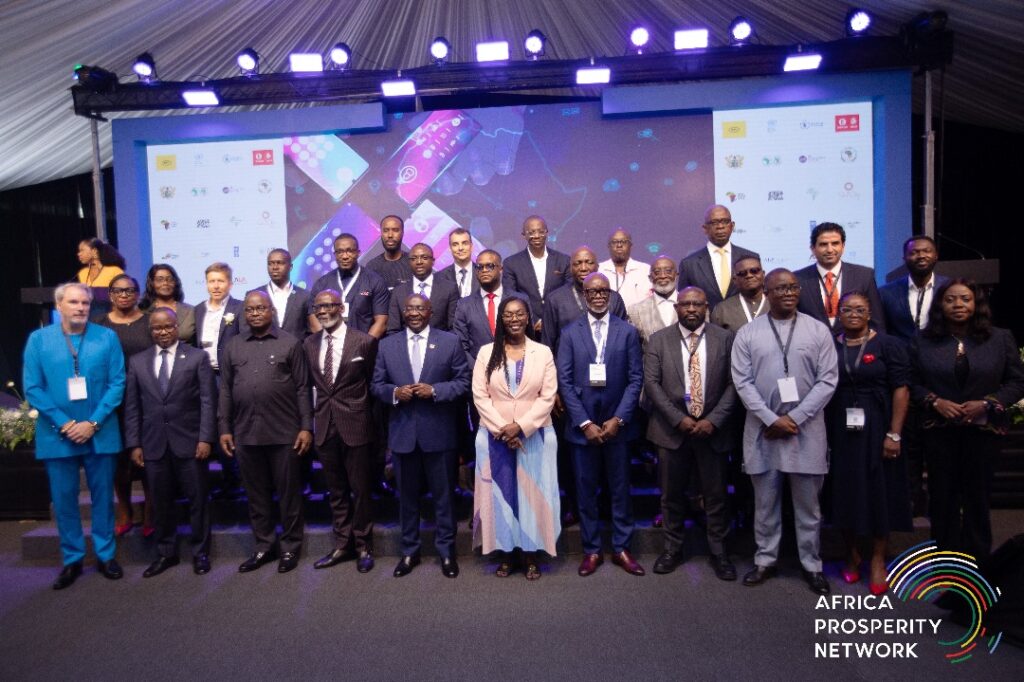
    Vice-President of the Republic of Ghana, Dr Mahamudu Bawumia, in his keynote address at the opening ceremony of the interoperability symposium, highlighted the need for central banks in Africa to put in more effort in making mobile money interoperability a reality on the continent.

    Dr Bawumia said this could replace the idea of a single currency which has been on the drawing board for decades due to the inability of several African countries to meet the convergence criteria.

    “The idea of a common currency which came in 1963 has been overtaken by the digital payment age… that today you can think about mobile money as a common currency. If we make it interoperable, we don’t need to have the common currency before we get the benefits.”

    “Making mobile money interoperable allows our citizens across the continent to trade seamlessly, and so this is where I believe as African countries we need to focus on. One of the common problems of achieving a common currency was the difficulty of our respective countries in achieving the macro-economic convergence,” the Vice President said.

    “I believe that if we are serious about it, we can work towards mobile money Interoperability at the continental stage and, therefore, we should move away in this regard from the macro-economic convergence criteria to digital payment convergence criteria,” Dr Bawumia added.

    Interoperability Agenda

    Vice-President Mahamudu, in his statement, indicated that he has decided to champion mobile money interoperability across the African continent after successfully spearheading a successful implementation of the same in Ghana.

    “We need the political will to get this done. In my own experience without political will, it is not likely to be done, because it takes a lot to pull these Telcos together to come on a common platform to get things done. I have told my boss, the President [Akufo-Addo], that after finishing with domestic mobile money interoperability, I am going to now focus on continental mobile money interoperability,” Dr Bawumia said.

     Impact of Mobile Money Payments

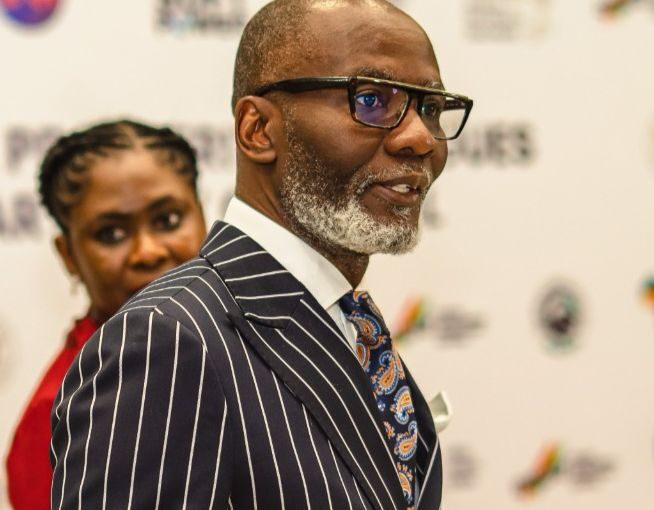
    Ahead of the experts’ discussions and deliberations, the executive chairman and founder of Africa Prosperity Network (APN), Gabby Asare Otchere-Darko, in his welcome address said that the African continent has witnessed a remarkable digital revolution in recent years, particularly in the financial sector.

    Mobile money, a service that allows people to transfer money and make payments using their mobile phones, according to Mr Otchere-Darko, now plays a significant role in the daily lives of millions of Africans and there are available statistics to justify this assertion.

    “Africa represents close to 70% of global money transaction values. In 2021, 50% of adults in Sub-Saharan Africa made or received a digital payment, up from 34% in 2017. The average annual volume of transactions increased by 47% in 2018, while the average value increased by 39%”, Gabby Otchere-Darko said.

    “For a continent where the majority of our people earn their daily wage through Micro, Small, and Medium Enterprises (MSMEs), what is absolutely and undeniably clear to us is that the future of Africa is being more and more defined by the freedom of inclusion, the abundance of opportunities and the ladder to prosperity which digital economy provides,” the Executive Chairman of APN remarked.

    Success Stories

    To this end, Mr Otchere-Darko pointed out that some countries on the continent such as Ghana, Kenya, Zimbabwe, and Botswana, among others, have been able to introduce mobile money interoperability domestically and there should not be any reason why the same cannot be achieved on the entire continent. 

    “We in Ghana appreciate the value that interoperability has brought to both our social and economic lives since our government took that significant policy step a few years ago, and that experience is now shared in several countries across Africa. There is a market of 1.4 billion or so consumers out there in our 55 nation-states.

    “Imagine what it will mean for a young Ghanaian tailor, whose clothes on Instagram can be bought by consumers in Zimbabwe using Zimbabwean dollars (not US dollars) from their Econet mobile wallet and this tailor in Tamale, receiving payment in cedis? The technology to make that happen is before us. What is required is the will to make it happen,” Mr Otchere-Darko said.

    “Currently, numerous mobile operators and financial institutions operate in silos, creating an environment of limited interoperability that constrains the continent’s economic potential.

    “Key stakeholders, including Mobile Network Operators (MTN, Orange, Telecel, Safaricom, Vodacom, and Airtel), Financial Institutions (Commercial banks, Development banks), Regulatory Bodies (Telecom Regulators, Central Banks, National Security Agencies), Trade Associations and Governments, hold pivotal roles in this ecosystem. 

    “Above all, we need the political will of African leaders and the courage and commitment of our central bank governors to make cross-border [payments a possibility],” the Executive Chairman of Africa Prosperity Network (APN) added. 

    Commendation

    Governor of the Bank of Ghana (BoG) Dr Ernest Addison commended the Africa Prosperity Network (APN) for spearheading the symposium on advancing interoperability in Africa. Governor Addison observed that effective collaboration is crucial in achieving cross-border payments and that the BoG is ready to partner all African central banks to make the laudable idea of a continent-wide mobile money infrastructure a reality. 

    “I would like to extend my sincere thanks to the organisers of this symposium for their dedication towards the launch of this initiative. Your commitment to fostering collaboration and innovation in this crucial area is commendable, permit me to also add that the initiative to scale up cross-border payment interoperability aligns with the broader financial digitisation and inclusion agenda of BoG,” Addison said.

    Africa Prosperity Network (APN)

    The Africa Prosperity Network (APN) is a non-profit organisation founded to advance the vision of “The Africa We Want” as outlined in the African Union’s Agenda 2063, with a particular focus on promoting Africa’s prosperity and economic integration.

    APN is the vehicle that runs the Africa Prosperity Dialogues, an initiative committed to creating platforms for partnerships among political and business leaders, civil society, academia, and traditional authorities in Africa.

    This is aimed at driving the rapid development of the continent through dialogues and consensus-building on issues of trade, commerce, and strengthening of African economies.

    Africa Prosperity Dialogues (APD)

    The African mobile money interoperability symposium is a follow-up to one of the main focus areas of the 2024 edition of the Africa Prosperity Dialogues (APD) and seeks to accelerate intra-African trade through the Africa Continental Free Trade Area (AfCFTA), instituted by the African Union (AU) and headquartered in Accra.

    The Africa Prosperity Dialogues series offer a strategic platform where the movers and shakers of the African economy elevate the economic integration objectives from ambitions to real actions.

    Set in Accra, Ghana, where the African Continental Free Trade Area (AfCFTA) Secretariat is headquartered, the APD is a one-of-a-kind event where African leaders from diverse areas of national endeavour gather each year to expedite, among other things, the implementation of the agreed initiatives within the AfCFTA trade bloc and shape the Africa Agenda for Action.

    APD brings into practical focus, the continent’s critical challenges and industrialisation priorities and advance aggressively the commercial and infrastructural interventions to achieve the vision of an Africa Beyond Aid. The APD is an annual conference held every January.

    APD is a summit of the highest political and business decision-makers in Africa, supported by various leaders, who propose practical, actionable initiatives to enhance trade in Africa and create prosperity for Africans. The Summit accelerates investment and amplifies public-private partnerships.

  • Using mobile money to buy and sell across Africa – A fast track to economic integration

    Using mobile money to buy and sell across Africa – A fast track to economic integration

    For over sixty decades, from the Mali Empire through to the OAU Summit of May 1963 and incrementally to date, African unity has remained but a collective dream. One that has been sustained more by a recognition of its essence rather than a conviction for its manifestation. In 2021, with the coming into being of the African Continental Free Trade Area (AfCFTA), Africa began taking clear, deliberate steps of greater conviction towards building the world’s largest single market, in terms of member states. The challenges are, of course, many and varied. 

    But, if there is one practical instrument that can now ensure that the desire to bring our 55 nations and 1.4 billion people together, then that should be our telecommunication handset. By that, I mean, the exponential heights of financial inclusion to which the technology of mobile money has  taken Africa. In short, Africa has, at long last, discovered a fast track to unification and that is the digital economy.

    Africa is witnessing a remarkable digital revolution in current times, particularly in the financial sector. Mobile money, a service that allows people to transfer money and make payments using their mobile phones, has become a necessity of daily life for millions of Africans. As of 2023, over 500 million consumers registered for mobile money across the continent, and the value of mobile money transactions reached $834 billion in 2022, according to AfDB. 

    Interoperability across different digital platforms (across mobile network providers and between telcos and financial institutions) within country has largely contributed to this astonishing growth. But imagine, how huge these transactions volumes can get if we have cross-border interoperability up and down the continent?

    Interoperability in mobile money means that users can send and receive money seamlessly across different mobile networks and financial services providers. That has been largely achieved; albeit, in country. Our focus now is how to make it regional and continental, dismantling the old colonial borders of divide and rule. This is not just a technical upgrade—it offers a game-changer of a shift to driving economic integration, reducing transaction costs, incentivising investments in transport and logistics and enhancing the efficiency and density of cross-border trade. 

    It will mean opening up a market of 1.4 billion consumers to businesses in Africa, particularly micro-small and medium-size enterprises (MSMEs).  It will create millions of job opportunities for young people in Africa. The single market offers a vital key to spreading opportunities and prosperity across Africa for Africans. And, the ability for hundreds of millions of Africans to participate in this massive market via the mere ease of one’s hand-held device will be truly revolutionary.  That is why African leaders struggling with the growing youth bulge should embrace this cutting edge solution to what young Africans see as limited opportunities on our continent.  

    The technology to make it happen exists. The supply and demand matrix to make it work is already with us. What is required is the political will among African leaders and the courage among central bank governors, especially, to make it happen.

    Imagine a trader in Accra effortlessly receiving payments in her local currency from a buyer in Nairobi, who paid with his own local currency using his mobile wallet? Or, Moroccan entrepreneurs sourcing goods from South Africa with just a few taps on their mobile phone. This vision is not far-fetched; it is within reach and the mission is to get us there. 

    You may wonder, what is the use in buying a product in Africa if the logistics to get it from seller to buyer from state to state is not there? The answer is obviously in ensuring greater investments in cross-border transport infrastructures. But, investors require incentives and there can be no greater incentive to an investor than the huge demand that can be created for African goods and services for African consumers with the facilitation of cross-border mobile interoperability.  Where there is supply and demand, investor money will follow. 

    The AfCFTA’s digital trade protocol recognises the immense opportunity of interoperability in achieving its goals. Therefore, through harmonising regulations and collaboration among member states, and with clear statements of intent from leadership, the existing protocol can facilitate an integrated digital marketplace. This is crucial for boosting intra-African trade, which currently stands at a mere 15% compared to Europe’s 68% and Asia’s 59%, according to the Afreximbank.

    Several initiatives are already underway. For example, the Pan-African Payment and Settlement System (PAPSS), launched by Afreximbank, aims to facilitate instant cross-border payments in local currencies across Africa. This system, if fully adopted, could significantly reduce the reliance on foreign currencies for intra-African trade, lowering transaction costs and mitigating exchange rate risks. 

    Also essential is the creation of sector-specific technical and operational standards. These standards will ensure that different mobile money platforms can communicate effectively and securely. Such standardisation can be driven by a coalition of stakeholders, including telecom operators, financial institutions, and regulatory bodies. Setting clear guidelines can pave the way for an integrated and efficient mobile money ecosystem. This can support the growth of small and medium-sized enterprises (SMEs), which are the backbone of African economies, by providing them with more accessible and affordable financial services.

    Collaboration is another key factor. Encouraging different sectors to share best practices and learnings from interoperability initiatives can accelerate progress. For instance, the success stories from the agricultural sector can inform strategies in the retail sector, creating a ripple effect of innovation and improvement. Customised interoperability solutions tailored to different sectors can also enhance usability and adoption. Each sector has unique requirements and challenges, and a one-size-fits-all approach may not be effective. Developing solutions that address the specific needs of each sector can ensure that interoperability initiatives are practical and impactful. 

    Finally, implementing feedback mechanisms is essential for continuous improvement. Interoperability is not a one-time achievement but an ongoing process. Achieving full interoperability requires concerted efforts from decision-makers and various stakeholders, including governments, regulators, mobile network operators, fintech and financial institutions. Policymakers must create an enabling environment  for cross-border mobile money interoperability by developing and enforcing regulations that promote free market, enhances national security, promotes both economic growth and stability and protect consumer interests. Mobile network operators and fintech companies must invest in the needed technology and infrastructure, while also ensuring that their services are secure and user-friendly.

    Scaling up interoperability in mobile money transactions across Africa can address this imbalance by democratising financial access, enabling more inclusive economic participation, and fostering intra-continental trade. Facilitating seamless transactions and reducing barriers to commerce, mobile money interoperability empowers young and enterprising Africans, especially, to harness their economic potential, access the wider market, retain more value within their communities, and reduce dependency on exploitative external systems. 

    This digital financial integration can be a powerful tool in promoting equitable growth and shared prosperity across the continent. This is the motivation that underpins the symposium that is being held on Friday, 5 July 2024 at the Labadi Beach Hotel Accra, Ghana, under the theme: “Scaling Up Interoperability — Using Mobile Money to Buy and Sell Across Africa”. The symposium is a useful  step towards unlocking the full potential of the AfCFTA.

    Perhaps even more critical after the Accra Symposium, is the African Union’s Mid-Year Coordination Meeting in Accra, also to be held this month. This year’s AU Mid-Year Summit has an agenda item promoted by the Champion of the African Union Financial Institutions and President of the Republic of Ghana, Nana Addo Dankwa Akufo-Addo. 

    President Akufo-Addo, in February 2024 championed the push for continent-wide mobile money interoperability at the 37th Ordinary Session of the Assembly of Heads of State and Government of the African Union, when he presented the ‘Peduase Action Compact 2024’ from the Africa Prosperity Dialogues (APD) 2024 held last January, to his colleague heads of state and government in Addis Ababa. 

    Again, at the maiden 3i Africa Summit 2024 held in Accra last May, we once again saw a palpable desire among speakers and participants for individuals and businesses to have the freedom and ability to make and receive payments across the African continent. 

    All these underscore the growing commitment of Africa’s political and business leaders to deepen financial inclusion and intra-African trade.  As a critical milestone towards a digitally and economically integrated Africa, the upcoming Mobile Interoperability Symposium on Friday July 5 will culminate in an outcome document to be presented at the AU Mid-Year Coordination Meeting in Accra on 21-22 June 2024. 

    The Africa Prosperity Network is calling on policymakers, industry leaders, all stakeholders, especially Africa’s large pool of MSMEs and all Pan-Africanists to join forces in the advocacy to realise what will effectively be Africa’s common currency for transactions: a continent-wide single payment system, as facilitated by mobile money interoperability.

    Together we can unlock the full potential of mobile money and deepen development and prosperity across the continent. The time to act is now, and with concerted efforts, we can build a more inclusive and prosperous Africa.

    The author is the Founder and Executive Chairman of the Africa Prosperity Network, (the organisers of the annual Africa Prosperity Dialogues), dedicated to providing a platform for Africa’s political, business and thought leaders to work together with urgency to realise the single market agenda in Africa and as a necessary pathway to promoting opportunities and prosperity across Africa for all Africans.