Category: Africa Prosperity Dialogues

  • We are not capital-poor; we are market-shallow and system-broken

    We are not capital-poor; we are market-shallow and system-broken

    By Amine IDRISS ADOUM,  Director of Economy, Infrastructure, Industrialisation, Trade and Regional Integration, AUDA-NEPAD

    Make Africa Borderless Now! must echo through AU Summits, Regional Economic Community (REC) ministerials, central bank committees, capital-market regulators’ meetings, investor forums, and every global platform where our continent’s future is debated—from Davos to the G20 to the UN General Assembly. Because what holds us back is not a shortage of priorities. It is a broken operating system: we still finance Africa like a fragmented consumer market, not like an integrated continent of producers.
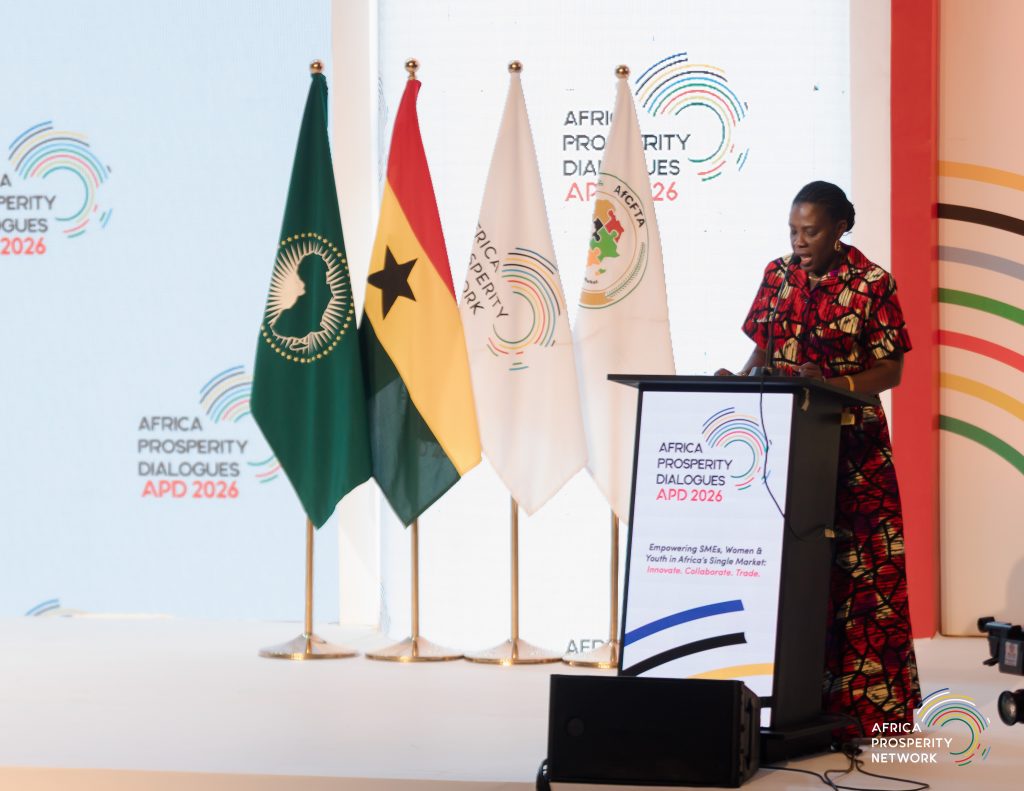
    For years, we have repeated the phrase “financing gap” as if it were a diagnosis. It is often a distraction. When we aggregate our pensions, insurance assets, sovereign wealth funds, banking pools and other public savings vehicles, we are already sitting on well over 2 trillion USD in domestic capital—before we even count diaspora resources or the vast savings and investment cycles in the informal economy. So the real question is not “where is the money?” The real question is: why can’t our money find our factories?

    The answer is uncomfortable—but liberating: our money is not missing; it is trapped. It is parked in short-term government securities and deposits not because our asset managers lack patriotism, but because our markets lack depth. We have underbuilt the mechanisms that convert savings into investment: long-tenor instruments, credible local-currency yield curves, liquid bond markets, bankable project pipelines, credit enhancement, predictable settlement systems, and crucially—a regional investment space where capital can diversify and scale. In other words, we are not capital-poor; we are market-shallow and intermediation-poor. We have the fuel, but we have not built a powerful enough engine—and we have not connected it across borders.

    That is why Africa’s most urgent reform agenda is not another declaration. It is financial depth. We need capital markets that can price risk properly, mobilise long-term savings, and finance industry. We need central banks and regulators to move from “guardians of stability” to “architects of depth”: modernise payment and settlement rails, build benchmark yield curves, enable long-tenor local-currency instruments, strengthen collateral and insolvency frameworks, and harmonise rules across regions so investors can scale beyond national silos. Without these reforms, our institutional capital will continue to behave rationally and unproductively—because there will be no safe, investable route into productive assets. And without cross-border interoperability, domestic financing will remain too small, too expensive, and too short-term to industrialise a continent.

    Borderless Africa is not poetry

    This is also why we must stop treating “borderless Africa” as poetry. Borderless Africa is the financing strategy. Capital cannot power industrial corridors if it is fenced in by regulatory islands. AfCFTA will not deliver if it remains a legal framework without an integrated investment space. Trade must become predictable so cashflows become bankable; payments must become interoperable so commerce becomes scalable; and markets must become connected so savings can move into production. A continent of makers cannot be built on 50-plus disconnected financial systems.

    Here is the good news: the African development and financing community is already shifting from talk to mechanisms. The African Union Development Agency-New Partnership for Africa’s Development (AUDA-NEPAD), Afreximbank, African Development Bank (AfDB), regional development banks, Africa50, Africa Finance Corporation (AFC), national development banks and other African Development Finance Institutions (DFIs)—working through cooperation platforms such as the Alliance of African Multilateral Financial Institutions (AAMFI, also known as the “Africa Club”) —are building the enabling architecture that turns priorities into investable assets. 

    The Luanda Financing Summit offered a clear signal: we can move from speeches about “gaps” to building balance-sheet solutions. Through AAMFI, we launched a dedicated infrastructure financing facility anchored by an initial 1.5 billion USD commitment—an African leverage platform designed to de-risk and crowd in much larger pools of domestic institutional capital. But AAMFI is not the story by itself; it is the coordination layer. The scale comes when our DFIs act as a system: aligning pipelines, co-financing, guarantees, project preparation and risk tools to create assets that African pension funds and insurers can buy—at the right tenor, in the right currency, with risk structured professionally.

    Finance, however, needs destinations. That is why our continental platforms matter. The Programme for Infrastructure Development in Africa – Priority Action Plan 2 (PIDA-PAP2) is not “a list of roads”—it is the physical internet of the African Continental Free Trade Area (AfCFTA): corridors, ports, rail, digital backbones, and border efficiency that make trade real. The Continental Power Systems Master Plan is the other half: we cannot industrialise in the dark. A borderless energy market—where power can be generated where it is cheapest and traded where it is needed—is how we lower production costs and make African manufacturing competitive. And if infrastructure is the hardware, PAIDA is the software: a deliberate push to build regional value chains, industrial clusters and processing capacity so we stop exporting jobs and importing finished goods.

    Tariffs and Compliance

    But there is a silent killer that keeps undermining our market-access promises: quality infrastructure. We often say we did not fully exploit the African Growth and Opportunity Act (AGOA) because we lacked competitiveness. The deeper truth is technical: we lacked the standards, labs, accreditation, certification, metrology and market surveillance to meet demanding requirements consistently and at scale. Tariffs were never the only barrier; compliance was. If we do not invest in quality infrastructure and harmonise standards across regions, AfCFTA will also underdeliver—because non-tariff barriers will replace tariffs as the real wall. A maker continent is built on trust, and trust is built on standards.

    We should also confront the largest balance sheet we keep ignoring: the informal economy. We treat it as a governance problem when it is also a capital-formation opportunity. Millions of Africans save, trade, lend and reinvest daily outside formal channels. The goal is not to harass them into paperwork; it is to build pathways—digital payments, identity, credit histories, simple investment vehicles, interoperable settlement—that make cashflows legible and investable. Deep capital markets do not only mobilise pensions and insurers; they can also unlock informal savings and enterprise growth by connecting everyday commerce to formal finance.

    So here is the proposition we should carry from APD 2026 to every AU Summit and every global forum: we will not industrialise by chasing external money while our own capital stays idle. We will industrialise when we complete the reforms that create financial depth and when we finish building a borderless financial machine that connects our savings to productive assets. That machine is not abstract: it is being built by the African development and financing community—AUDA-NEPAD, Afreximbank, AfDB, regional development banks and other African DFIs—coordinating through AAMFI and allied platforms; powered by continental pipelines such as PIDA-PAP2 and the Continental Power Systems Master Plan; guided by PAIDA in a truly borderless AfCFTA market; and anchored by a unified quality infrastructure ecosystem that makes “Made in Africa” competitive and tradable.

    We already have entrepreneurs. We already have demand. We certainly have capital. What we need urgently is the discipline to build depth, integrate markets, and complete the architecture that turns our money into factories. That is how we stop being described as a consumer continent and finally become what we already claim to be: a continent of makers.

  • The Era of Signing Must Give Way to the Era of Delivering

    The Era of Signing Must Give Way to the Era of Delivering

    H.E. Ambassador Amma A. Twum-Amoah, Commissioner for Health, Humanitarian Affairs and Social Development (HHSD), African Union Commission 

    Africa Prosperity Dialogues has rapidly become one of Africa’s most consequential spaces for shaping our economic future through bold thinking, practical solutions and collective resolve. The Africa Prosperity Network has been exemplary in its visionary leadership in bringing together governments, the private sector, innovators and development partners around a single purpose: to accelerate Africa’s integration and unlock its prosperity. 

    This year’s theme speaks directly to the African Union’s vision of a borderless, opportunity-driven continent. However, Free trade, in the absence of free movement, is an aspiration without substance. Goods cannot move if people cannot move. Opportunity cannot expand if entrepreneurs cannot cross borders. Integration cannot deepen if Africans remain strangers to one another. If we are serious about prosperity, then we must be equally serious about implementing the Protocol on the Free Movement of Persons.

    The call for action on the ratification of the Protocol is apt. We need all 55 Member States to ratify to make Africa truly borderless. As of now, 32 countries have signed, and only 4 have ratified. The minimum we need for the Protocol to come into force is fifteen. So I charge all of us to leave this Dialogue not merely as participants, but as ambassadors for free movement. Because when Africans move, Africa moves forward.

    Africa stands at a defining moment in its economic history. Through AfCFTA, we have created the largest single market in the world by number of countries, with over 1.5 billion people and a combined GDP exceeding 3 trillion USD. But let us remember a simple truth: Markets do not trade, people do. And, economies do not grow from policy frameworks alone; they grow from enterprises.

    If AfCFTA is the engine of Africa’s transformation, then SMEs, women and youth are its power source. Without them, the engine cannot run. Without them, integration cannot deliver prosperity. Across Africa, SMEs represent over 90 per cent of businesses and more than 80 per cent of employment. Yet too many remain local by necessity rather than continental by design. You will all agree with me that an integrated market that excludes SMEs is not integration; it is exclusion.

    We must move African enterprises from survival to scale, from informality to competitiveness and from domestic reach to continental impact. Africa is the youngest continent on earth, and African women are among the most entrepreneurial globally. This is not merely a demographic reality, but it is Africa’s greatest economic advantage. Yet financing gaps persist. Market access remains uneven. Informality continues to suppress growth.

    Empowering women and youth is not a social gesture; it is an economic strategy. When women thrive, economies expand; When youth innovate, productivity rises; When opportunity is shared, stability follows. Africa, therefore, cannot achieve prosperity while half of its potential is underfinanced and its majority underutilised.

    The African Union, working with partners such as the African Development Bank, Afreximbank and the Africa Guarantee Fund, is expanding access to finance and strengthening enterprise ecosystems. But finance alone is not enough. Prosperity requires policy coherence, infrastructure, skills, mobility, and above all, political will.

    Africa’s integration will not be defeated by a lack of ideas, only by a lack of courage to implement them. Critical AU instruments, including the Free Movement Protocol, the Single African Air Transport Market, the Pan-African Payment and Settlement System and the Protocol on Women and Youth in Trade, must now move decisively from agreement to action. The era of signing must give way to the era of delivering.

    Africa’s prosperity will not be imported but built by Africans – Built by our entrepreneurs; Powered by our innovation; and Sustained through our collaboration. History will remember our generation not for the agreements we signed, but for the opportunities we unlocked for Africa’s women, youth and entrepreneurs. If we get this right, Africa will not merely participate in global trade; Africa will help shape it.

    The future of this great continent of ours will not be written solely in Presidential palaces or corporate boardrooms. It will be written by the small business with a big idea, the young innovator bold enough to disrupt the status quo, and the woman entrepreneur transforming her community. This has to be the generation that moved Africa from fragmentation to unity, from potential to productivity, from promise to prosperity. And let history record this final truth: When Africa stood at the crossroads of integration, we did not hesitate – we chose courage, unity, and action.

  • An unwavering support for the Make Africa Borderless Now! Movement

    An unwavering support for the Make Africa Borderless Now! Movement

    by Dr George Elombi, President and Chairman, Board of Directors, African Export-Import Bank (Afreximbank)

    At a moment when Africa is seeking to accelerate growth, deepen resilience, and claim its rightful place in the global economy, we are called to confront one of the most persistent constraints on our collective progress: the barriers—visible and invisible—that continue to fragment our continent. Africa is a continent of extraordinary promise. We are home to the world’s youngest population, vast natural resources, vibrant entrepreneurs, and a shared ambition for prosperity. Yet, despite these advantages, intra-African trade remains far below its potential, and the movement of African people, goods, services, and capital across borders is still far more difficult than it should be.
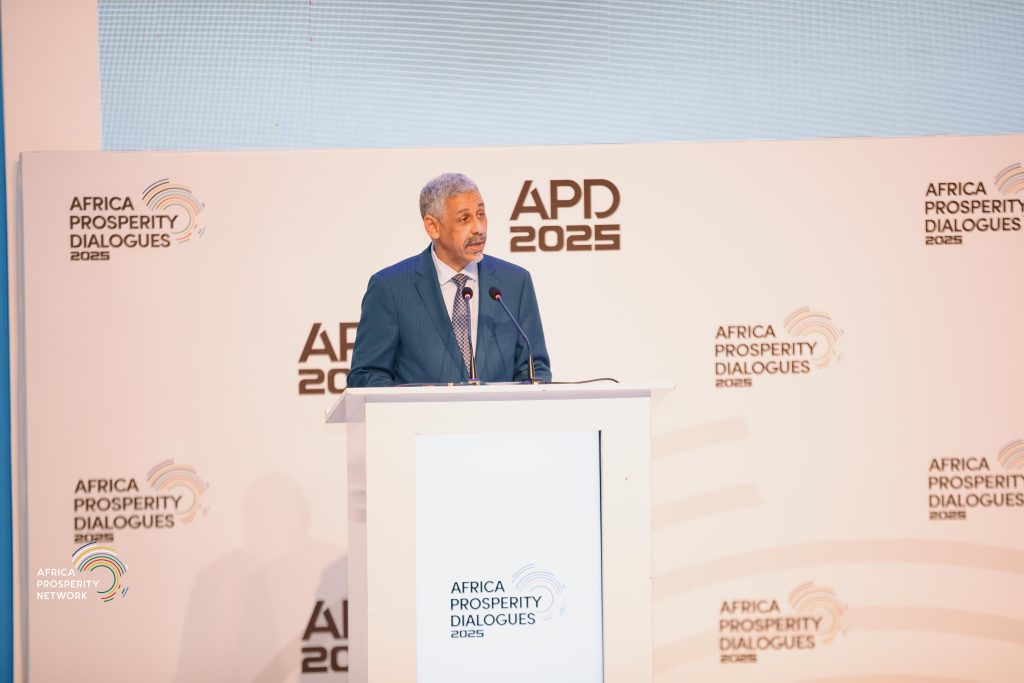
    Today, it is often easier for an African business to trade with partners outside the continent than with partners from a neighbouring country. It is sometimes easier for a non-African passport holder to move across Africa than for an African citizen. This paradox is not merely an inconvenience; it is a structural constraint on growth, competitiveness, and inclusion.

    The Make Africa Borderless Now! campaign challenges us to rethink what borders mean in the African context. Let me be clear: this campaign is not about erasing sovereignty. It is about re-imagining borders as bridges rather than barriers. A borderless Africa is one where goods move efficiently from farm to factory to market across countries, entrepreneurs scale innovations across regions without prohibitive costs, financial flows support trade rather than constrain it and where Africans can travel, work, and invest across the continent with dignity and ease.

    In short, it is an Africa where integration works in practice—not just on paper. The African Continental Free Trade Area has given us a historic framework. It is the largest free trade area in the world by number of countries, and it embodies the vision of a unified African market. But as we all know, agreements alone do not move trucks across borders, nor do they eliminate delays at ports, checkpoints, and payment systems. Implementation is where ambition meets reality. The Make Africa Borderless Now! campaign is therefore a call to action— a call to translate AfCFTA commitments into measurable outcomes that citizens and businesses can feel.

    Borders matter for business. For African businesses, especially SMEs and women- and youth-led enterprises, border frictions are not abstract policy issues. They are real costs. Delays that spoil perishable goods, documentation requirements that discourage first-time exporters, currency and payment challenges that disrupt supply chains, and regulatory inconsistencies that raise the cost of doing business. 

    When borders are inefficient, African competitiveness suffers, and the promise of regional value chains remains unrealised. At Afreximbank, our mandate is clear: to finance and promote intra- and extra-African trade. But over the years, we have learned that finance alone is not enough. Trade finance must be accompanied by efficient payment systems, harmonised regulations, trade-enabling infrastructure, and strong collaboration between governments and the private sector. This is why Afreximbank has invested not only in capital, but also in systems, platforms, and partnerships that reduce friction across borders.

    A historic opportunity to leapfrog traditional constraints

    Initiatives such as continental payment and settlement solutions, trade facilitation programmes, support for regional value chains, and capacity building for customs, banks, and businesses all share one objective: to make African trade faster, cheaper, and more predictable. The “Make Africa Borderless Now!” campaign speaks directly to this mission.

    History shows us that integration advances fastest when it is championed at the highest political level. The success of this campaign will depend on political will, policy coherence, and accountability in implementation. Presidential leadership sends a powerful signal to public institutions, to the private sector, and to Africa’s development partners – border efficiency is not a technical detail, but a strategic priority.

    Equally important is the role of the private sector. Businesses are not just beneficiaries of a borderless Africa; they are co-architects of it. We must listen to transporters navigating corridors, exporters dealing with compliance requirements, banks managing cross-border risk, and digital innovators simplifying trade processes. Their experience should inform policy, and their innovation should shape solutions.

    Technology offers Africa a historic opportunity to leapfrog traditional constraints. A borderless Africa will be built not only with roads and ports, but also with code, data, and digital trust. Digital customs systems, electronic certificates, interoperable payment platforms, and data-driven risk management can dramatically reduce border delays and costs. But digital transformation requires interoperability across countries, trust between institutions, as well as investment in skills and infrastructure. 

    Integration must be inclusive. If a borderless Africa benefits only large corporations, we will have failed. Women traders, informal cross-border traders, small manufacturers, and young entrepreneurs must experience simpler procedures, lower costs, and greater protection. A truly borderless Africa is one where small traders cross borders safely and legally, youth can scale startups across regions, and women-owned businesses access regional markets on fair terms. This is not just an economic imperative—it is a social one.

    We need boldness to make the “Make Africa Borderless Now!” movement a success, and it is imperative on us to commit to the removal of unnecessary administrative barriers while harmonising standards and procedures, investing in trade-enabling infrastructure, measuring progress transparently and holding ourselves accountable. Let us move from dialogue to delivery, from aspiration to action.

  • Empowering Africa’s SMEs, Women and Youth to Trade and Thrive

    Empowering Africa’s SMEs, Women and Youth to Trade and Thrive

    By Dr Sidi Ould Tah, President, African Development Bank Group

    Africa is, at its core, an entrepreneurial continent; innovative, resourceful, and primed to create solutions wherever gaps exist. More than 90 per cent of its businesses are Micro, Small and Medium-sized Enterprises (MSMEs). Collectively, they account for over 80 per cent of employment across the continent.
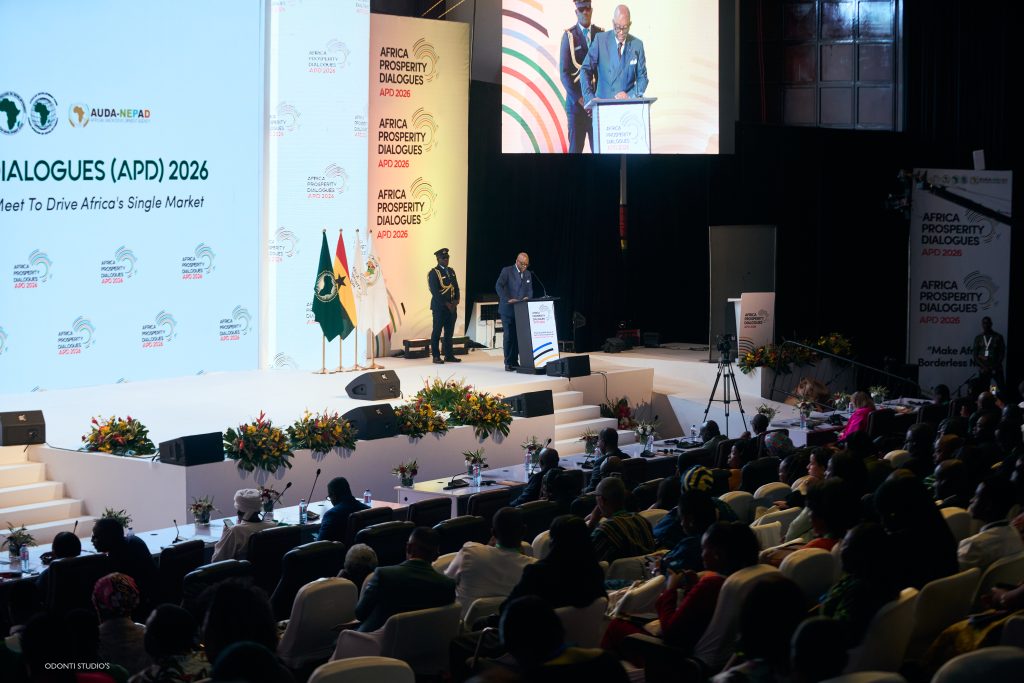
    Every day, millions of Africans rise with extraordinary ambition and confidence and dedicate themselves to their work, leveraging the tools available to them – Short Message Service (SMS), the internet, social media, point-of-sale terminals, and more to build businesses, create jobs, and generate real economic value that sustains households and entire communities.

    They do this despite formidable challenges. Giving up is rarely an option. Instead, while doing their very best, with boundless tenacity and indomitable spirit, they also look to governments, financial institutions, and development partners to provide the enabling support required for scale: securing access to affordable credit, providing reliable electricity, assisting with processes to formalise their businesses, enhancing facilitation of cross-border opportunities, and providing more transparent, less onerous tax systems.

    Often, it turns out, even modest interventions can go a very long way.

    The African MSMEs landscape is overwhelmingly young and female – yet these very demographics face the steepest obstacles. Africa is the world’s youngest continent, with half its population under 20 and nearly two-thirds under 35. By 2030, two out of every five young people in the world will be African – a clear signal that Africa’s future will shape the world’s future, and that the 21st century can indeed belong to Africa.

    Against this backdrop, we have no choice but to convert this demographic reality into an economic advantage for our young people, the continent, and the global economy. The alternative is unthinkable, as hundreds of millions of frustrated and unemployed youths pose far-reaching implications for continental and global peace and security.

    It is for this reason that the focus of the 2026 Africa Prosperity Dialogues on the intersection of youth, women, and SMEs is both timely and necessary. The Dialogues recognise a simple truth: Africa’s growth must be driven by the engines it already possesses in abundance, that is, MSMEs, youth, and women. And these engines must operate at full capacity to generate all the benefits that are available from being the world’s largest free trade area in terms of the number of participating countries. Operating at full capacity means investing in skills and education, with a focus on Science, Technology, Engineering, and Mathematics (STEM) knowledge and digital skills, preparing our youth to flourish in this rapidly evolving Fourth Industrial Revolution.

    Synergy, Scale, Speed, and Sustainability

    At the African Development Bank Group, these are all priorities we are pursuing with urgency and purpose. Guided by our Four Cardinal Points strategic vision, emphasising a “4S” approach of Synergy, Scale, Speed, and Sustainability. It is principally designed to unleash Africa’s full potential.

    The first Cardinal Point is unlocking Africa’s full capacity to mobilise and deploy capital through both traditional and innovative financial models and tapping underutilised sources of financing such as pension funds, sovereign wealth funds, and domestic savings.

    The second is rebuilding Africa’s financial sovereignty by reforming and consolidating financial systems. As capital is unlocked, we must also strengthen the frameworks that manage that capital by lowering risk, reducing borrowing costs, and ensuring Africans have greater control over how their resources are invested. Anchored to this strategic vision is the New African Financial Architecture (NAFA), a coordinated, private-sector-led ecosystem designed to support Africa in financing its own development.

    The third Cardinal Point focuses on turning the continent’s burgeoning demography into an economic dividend. As I have noted above, Africa’s youth, women, and MSMEs are not challenges to be managed; they are engines of growth to be unleashed. We must move millions of African MSMEs out of the informal sector to tap into the benefits of formalisation, which allows them to access finance and social protection while fostering a culture of domestic resource mobilisation.

    By removing barriers and providing the appropriate catalysts, we empower them to flourish, and when they thrive, the continent thrives.

    The fourth Cardinal Point is building resilient infrastructure and driving value addition. The Africa we envision rests on modern, durable transport, power networks, strong digital connectivity, robust education and health systems designed to withstand environmental threats. It also means processing and manufacturing more of what we produce, rather than exporting raw materials. For example, the African Development Bank’s African Economic Outlook projects that investing in local battery processing and manufacturing hubs could generate 32 billion USD in additional exports annually, add 24 billion USD to GDP, and create 2.3 million jobs.

    Together, these four Cardinal Points are aligned with the African Union’s Agenda 2063 and the United Nations Sustainable Development Goals (SDGs).

    They also align with the ambition of the Africa Prosperity Network to build a vibrant and self-sustaining continental market under the African Continental Free Trade Area (AfCFTA) framework – one of the surest pathways to enduring prosperity. We already know that intra-African trade remains below 20 per cent – the lowest of any continent; and that by trading more with one another and integrating our markets through the African Continental Free Trade Area, we can expand opportunity, build resilience, and loosen the grip of poverty on millions of our people.

    On a more positive note, in December 2025, the African Development Fund’s 17th replenishment (ADF-17) secured a record 11 billion USD to empower Africa’s 37 most vulnerable nations by 2028. This cycle marks a strategic evolution toward a “co-investment” platform, prioritising youth, women SMEs, and human capital as the essential pillars for the continent’s demographic and economic transformation.

    We must all do more. Under the umbrella of our envisioned new financial architecture, there is space for all who are committed to Africa’s progress.

  • SMEs, Youth and Women at the heart of Africa’s Single Market

    SMEs, Youth and Women at the heart of Africa’s Single Market

    By H.E. Alexandre Barro Chambrier, Vice-President of the Republic of Gabon

    Africa finds itself today at a decisive crossroads of its economic sovereignty. It is no longer a time for diagnoses, but a time for courageous decisions, implementation, and measurable results. The African Continental Free Trade Area is more than a trade agreement: it is a structured political choice, a project of collective sovereignty, and a generational promise made to African youth. Yet, despite this historic potential, intra-African trade still represents only about 15 – 18% of the continent’s total trade, while it exceeds 60% in Europe and over 50% in Asia. Intra-community trade within the Central African Economic and Monetary Community (CEMAC) and Economic Community of Central African States (ECCAS), remains very low and speaks to the scale of the challenge before us.

    The Africa Prosperity Dialogues have championed a progressive and coherent rise in our collective ambition. In 2023, it was about moving from ambition to action. In 2024, the focus was on the need to produce in Africa and add value. In 2025, we recognised that infrastructure is the indispensable foundation of the single market. In 2026, we are taking a decisive step by placing productive African human capital at the heart of integration.

    This trajectory echoes Kwame Nkrumah’s visionary warning that “Africa must unite or perish”. Today, this unity can no longer be only political; it must be economic, productive, and inclusive. The dialogues confirm an obvious truth: a single market without competitive SMEs, without fully integrated women entrepreneurs, and without productive youth would remain a legal architecture without a tangible economic reality.

    African SMEs represent about 80% of jobs on the continent, but less than 20% of them participate today in cross-border trade. This gap is not an entrepreneurial failure; it reflects a deficit of access. Non-tariff barriers remain numerous and in various forms, such as complex customs procedures, divergent standards and certifications, prolonged border delays, or lack of information about the rules of origin and preferential tariffs. The AfCFTA remains a legal text for many African SMEs, rather than an operational economic tool. Initiatives launched in Accra, such as direct SME-investor matchmaking spaces and dedicated negotiation mechanisms, mark a turning point. The single market is starting to function as a real market.

    The second major issue is the ratification and effective implementation of the AfCFTA protocol on women and youth. These groups constitute the majority of informal cross-border traders and continue to face limited access to public markets, persistent financing difficulties, and harassment at borders. According to available estimates, full implementation of this protocol could unlock over 15 billion USD in untapped economic value. Investing in women and youth is not a social choice; it is a rational economic choice, a choice of competitiveness, growth, and stability.

    Given that Africa is the youngest continent in the world, failure to transform this human capital into productivity would turn a strategic asset into structural vulnerability.

    Gabon is one of the pioneering countries that ratified the AfCFTA Agreement. Our country has seen an acceleration since 2023 in local transformation and is actively developing value chains around wood, manganese, and iron, with a clear ambition to make these resources an engine of sustainable, inclusive growth and job creation. To strengthen these value chains, Gabon is acting on several complementary levers, through investment in transport, energy, communication infrastructure, adoption of modern technologies to improve productivity, establishment of financing mechanisms adapted to business needs, simplification of administrative procedures, and improvement of the regulatory framework.

    Due to its geographical position, Gabon also aspires to become a major gateway to Central Africa. With an 800-kilometre Atlantic coastline, a growing role in regional maritime trade, and an affirmed vocation as an air and logistics hub for the CEMAC sub-region, our country intends to contribute fully to regional and continental integration.

    Since February 2026, the Gabonese Government has implemented a national AfCFTA strategy specifically dedicated to supporting local businesses, particularly SMEs, towards intra-African export. This development is part of the profound reshaping of the development model we have committed ourselves to since the adoption of the new Gabonese Constitution.

    Indeed, African SMEs lack neither ideas nor audacity. What they lack is effective access to financing, public markets, regional value chains, logistics, and economic information. The AfCFTA must become an accelerator for SMEs and not a space reserved for already structured large companies.

    Gabon calls for an AfCFTA resolutely oriented towards execution, an ambitious African public-private partnership, and continental cooperation based on trust, responsibility, and results. History will not judge our intentions; it will judge our ability to transform the African single market into a reality experienced by our peoples and not a deferred promise.

  • Africa’s Prosperity must go global: SMEs, Women, and Youth at the heart of AfCFTA.

    Africa’s Prosperity must go global: SMEs, Women, and Youth at the heart of AfCFTA.

    By H.E. John Dramani Mahama, President, Republic of Ghana 

    Africa stands at a historic crossroads. SMEs account for more than 80% of employment, yet fewer than 20% engage in cross-border trade. Women lead nearly 30% of registered businesses but face systemic barriers. Youth, who make up 60% of our population, are innovating daily but struggle to scale. These figures are not just statistics; they are the untapped engines of Africa’s prosperity.
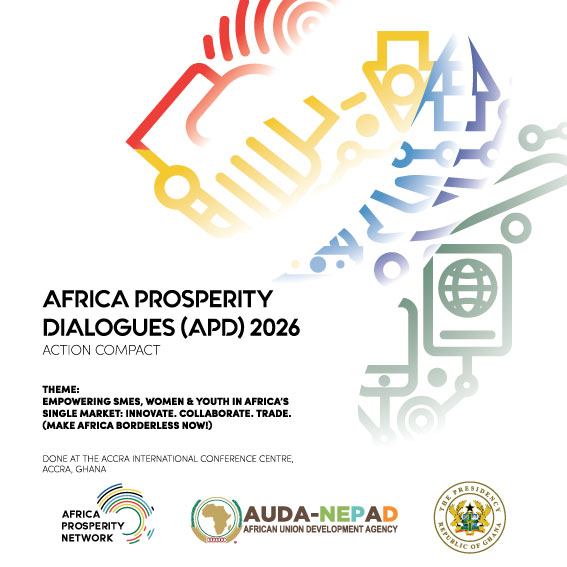
    At the Africa Prosperity Dialogues (APD) in Accra last year, I reminded leaders that AfCFTA is not merely about free trade; it is about creating an environment that supports Africa’s industries and businesses. This year, as we convene APD 2026 under the theme “Empowering SMEs, Women & Youth in Africa’s Single Market: Innovate. Collaborate. Trade,” I reaffirm that Africa’s prosperity must not only be continental, it must be global.

    SMEs are the backbone of Africa’s economy. According to UNECA, AfCFTA could increase intra-African trade by 52%. Ghana’s SMEs in agribusiness, textiles, and fintech have shown that when integrated into regional value chains, they create jobs at scale and drive industrialisation. But, the next step is global competitiveness. Our SMEs must not only trade across African borders, they must export to the world. AfCFTA must be the launchpad for Africa’s global brands.

    Women entrepreneurs are Africa’s most resilient innovators, yet they remain locked out of finance and networks. Closing gender gaps could add trillions to global GDP, but this requires bold action. That is why I have consistently championed the creation of a Women’s Development Bank (WDB) in Ghana. This institution will provide low-interest loans, financial literacy, and tailored business support to women entrepreneurs. It is designed to dismantle systemic barriers, unlock economic potential, and empower women as leaders and nation-builders. Women’s economic empowerment is often framed as a social good, but it is fundamentally an economic strategy. For AfCFTA to deliver on its promise, inclusion, particularly of women, must be non-negotiable.

    Africa’s youth are our greatest asset. With 60% of our population under 25, we hold the world’s largest youth dividend. In Ghana, I have made it clear that agriculture must be the engine that harnesses this energy. My vision is to move our agriculture sector from subsistence to a powerhouse, modernised, mechanised, and globally competitive sector. By investing in irrigation, storage, processing, and digital platforms, and by providing mentorship and capital, we will empower young farmers and agripreneurs to scale their enterprises. AfCFTA must be the ecosystem that allows Ghana’s agriculture to flourish across the continent and into global markets.

    Critics often contend that Africa’s integration agenda is overly ambitious, citing infrastructure gaps and political complexities. These concerns are legitimate, but they are not insurmountable. Ghana’s role as host of the AfCFTA Secretariat in Accra demonstrates our unwavering commitment to continental integration. The Pan-African Payment and Settlement System (PAPSS) is already transforming cross-border trade by reducing currency barriers and transaction costs. The Single African Air Transport Market (SAATM) is lowering the cost of movement and strengthening connectivity. At the same time, digital platforms are enabling small and medium-sized enterprises to reach customers far beyond national borders. Integration succeeds not by chance, but by collective political will, sustained investment, and deliberate action and Africa is moving in that direction.

    The strategic imperative before us is unmistakable: the AfCFTA must succeed; fully, inclusively, and competitively on the global stage. This demands deliberate action. Governments must align policies and dismantle the barriers that fragment our markets. Financial institutions must move beyond one-size-fits-all financing and design instruments that unlock capital for SMEs, women, and youth. Private investors must recognise Africa’s entrepreneurs not as risks to be avoided, but as partners in value, creation while civil society continues to hold us – leaders and institutions alike – accountable. Africa’s single market is more than an economic framework; it is a promise of shared prosperity. Yet that promise will remain unfulfilled unless SMEs, women, and young people are empowered not merely to participate, but to lead.

    As President of Ghana, I call on African leaders, businesses, and citizens to move decisively from aspiration to action. We must innovate boldly, collaborate intentionally, and trade seamlessly across our borders. The AfCFTA must not remain a declaration agreed in conference halls; it must become a lived reality that expands opportunity for our African people. This is how we take Africa global; by building competitive brands, resilient industries, and world-class innovations that can stand confidently on the international stage.

    Africa’s future will not be shaped by promises alone. It will be built by our entrepreneurs, powered by our women, and driven by our youth. The moment to act is not tomorrow. It is now.

    This op-ed by H.E. John Dramani Mahama, President of the Republic Ghana, draws on extracts from his speeches and public addresses delivered at key platforms including the Africa Prosperity Dialogues 2025, engagements with young entrepreneurs, and policy statements on Africa’s industrialisation and women’s empowerment.  

  • Press Release: APN Demands Visa-Free Africa as 6,530 Delegates Back 12-Point Borderless Compact

    Press Release: APN Demands Visa-Free Africa as 6,530 Delegates Back 12-Point Borderless Compact

    Accra, Ghana – 25 February 2026 – The Africa Prosperity Network (APN), organisers of the annual Africa Prosperity Dialogues, has today released the APD 2026 Action Compact, a bold 12-point blueprint demanding urgent implementation of Africa’s integration agenda. The Compact distils the outcomes of the three-day Africa Prosperity Dialogues held from 4–6 February 2026 at the Accra International Conference Centre.

    Among its key demands is visa-free travel for Africans across all African Union (AU) member states. It also calls for seamless cross-border trade, including enabling Africans to buy and sell across borders using mobile money wallets, which the SMEs stressed would be a major, practical step to significantly boost intra-African trade.

    The Compact emerged from high-level Presidential and Business Leaders Dialogues, plenary sessions, roundtables, panel discussions, and 12 executive breakfast meetings, specifically tailored to address the concerns and aspirations of SMEs, women and youth entrepreneurs. They were all convened under the official theme of APD 2026: “Empowering SMEs, Women and Youth in Africa’s Single Market: Innovate. Collaborate. Trade.”

    Finalised on 6 February, this “People’s Compact” captures the collective voice of 6,530 participants, who travelled to Accra from 51 African nations and 40 others. 

    Across every session, one conclusion was unmistakable: empowering SMEs, women and youth will not come from fresh AU declarations, but from implementing the treaties and protocols already signed.

    Delegates pointed to the Treaty Establishing the African Economic Community (Abuja Treaty of 1991), the Agreement Establishing the AfCFTA (2018), the Protocol on Free Movement of Persons, and the AfCFTA Protocols on Digital Trade and on Women and Youth in Trade as ready-made examples of instruments awaiting full execution. The framework exists. What is missing is delivery.

    Speakers noted that although the Free Movement Protocol was adopted in 2018, only four member states have ratified it, far short of the 15 required for entry into force. Without free movement, businesses cannot scale across Africa, and the promise of a true single market for 1.5 billion people remains constrained, they argued.

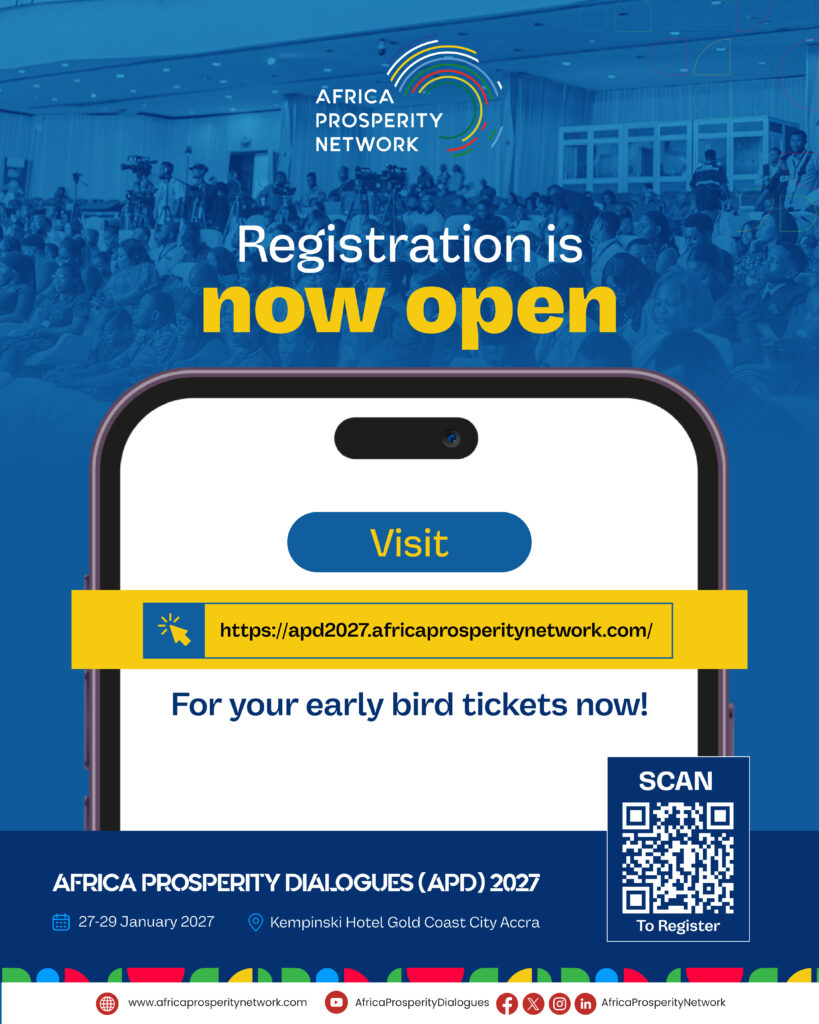
    With youth unemployment the most pressing challenge facing governments across the continent, delegates concluded that economic integration can, therefore, not be optional. They described it as the only viable path to the 15 to 20 million jobs Africa must create annually, describing the existing fragmentation not merely inefficient but economically self-defeating for Africa’s sovereign states, both individually and collectively.

    The Compact focuses on the “Make Africa Borderless Now!” movement, the APD 2026 initiative, which launches a continent-wide petition to mobilise ten million (10,000,000) signatures. The petition will be presented to the African Union Assembly in February 2027 with one clear demand: RATIFY AND IMPLEMENT NOW.

    “This Compact is the collective voice of Africa’s private sector, women and youth,” says Dr Nkosazana Clarice Dlamini-Zuma, Chairperson of the Advisory Council of the Africa Prosperity Network and architect of ‘The Africa We Want.’ 

    “The tools for prosperity already exist. The time for implementation is now,” says the former Chairperson of the AU Commission when the Agenda 2063 was launched in 2013.

    To donate or add your signature to the ten million and support the movement, visit: www.makeafricaborderlessnow.com

    -ENDS-

    For media inquiries, please contact:

    Prince Moses, Director, Communication Directorate | Africa Prosperity Network|

    E- mail: princemoses@africaprosperity.network | Accra. Ghana

    Joel Krampa, Communication Lead | Africa Prosperity Network |

    E-mail: j.krampa@africaproserity.network | Accra. Ghana

    APN Communication Directorate: comms@africaprosperity.network

    Website: www.africaprosperitynetwork.com

     Follow us: Facebook, X (Twitter), LinkedIn, YouTube, WhatsApp, TikTok

    #MABN!

    Distributed to all African and International media houses

  • Manifesto: Make Africa Borderless Now!

    Manifesto: Make Africa Borderless Now!

    In 1884, European powers gathered in Berlin to partition Africa without a single African voice. The borders they drew with rulers across rivers, deserts, and communities were designed for extraction and control, not prosperity. Decades later, newly independent states chose to preserve these colonial lines. That choice created modern Africa’s central contradiction: political independence without economic might; sovereignty without scale; and a continent of fragmented potential.

    Today, these artificial borders stifle a market of over 1.5 billion people. They restrict the movement of talent and goods, multiply costs, trap capital and restrict the job market. As Africa’s population surges toward 2.1 billion by 2040 to host the world’s largest workforce, we face a decisive choice:

    Will we grow divided and constrained, or integrated and empowered? Building a genuine single market is the most transformative project of this century, a direct path to unlocking industrialisation, competitive continental brands, and dignified prosperity for all.

    A People-Powered Movement for Implementation

    That is why the Africa Prosperity Network, along with its partners, decided to launch the “Make Africa Borderless Now!” campaign in 2026. It is a historic, grassroots movement which seeks to take the issue of Africa’s economic integration from the elitist confines of summits and treaties to be owned and driven by the people. It aims to transform, with greater urgency, the imperative of integration from a leaders’ aspiration into a people-driven demand for action. Our bold goal is to mobilise, within 12 months, over 10 million signatures from Africans and the global diaspora, presenting this mandate directly to Heads of State at the 40th African Union Summit in February 2027.

    Inspired by the success of the Jubilee 2000 debt relief movement, which secured 24 million signatures in the late 1990s, we believe in the power of unified public will to turn long-agreed treaties into tangible reality. This manifesto, and the movement it fuels, exists to close the gap between Africa’s visionary agreements and their urgent implementation.

    Security Through Integration: Dispelling the Myths

    A common fear is that free movement weakens security and invites uncontrolled migration. We argue the opposite: a borderless Africa is a more secure, better-governed Africa. To put security into perspective, countries like China and India, each, have populations comparable to Africa’s 1.5 billion people and yet have robust security systems that serve to enable free enterprise and consolidate their collective commercial power, while increasing their business competitiveness in the global economy.

    Our current patchwork of 50-plus separate border systems is itself a security weakness. Criminals exploit gaps between disconnected databases. We propose replacing the illusion of control offered by cumbersome visas with modern, integrated biometric systems. The call is for a common African Union biometric passport or digital ID. Under this model, movement is free but identification is strict and verified at ports of entry. This enables states to consolidate data, share intelligence effectively, and monitor movement in real-time. Sovereignty is not surrendered; it is exercised smarter.

    Evidence from integrated markets shows mobility follows economic opportunity, not chaos. As jobs and investment spread across a unified market, pressure on any single nation eases. True security in the 21st century comes from smart integration and data-driven governance, not from colonial-era barriers that only create the façade of control.

    The Engine of Integration: Unleashing African Enterprise

    Africa’s future will be written by its enterprises. From the SMEs that form our economic backbone to the women- and youth-led businesses driving innovation, all face the same core challenge: not a lack of ambition, but the fragmentation of small, disconnected markets.

    Enterprises are hamstrung when borders block movement, payments fail to flow, and standards multiply costs. A single, integrated African market is the essential platform on which an SME can grow into a regional champion, a woman entrepreneur can scale her business with dignity, and an African corporation can emerge as a global competitor. Every major world brand was first built on a large, integrated home market. To build our own champions, we must first unite our home.

    The 12 Action Priorities: A Practical Blueprint for a Borderless Continent

    The blueprint for integration already exists in signed treaties and protocols. These twelve action priorities represent the unfinished business of African unity, now claimed by its people.

    1. Abolish Visas for Africans in Africa

    Africa cannot integrate if its entrepreneurs cannot move. Visa restrictions raise costs, delay deals, and stifle opportunities. Abolishing visas for Africans travelling within Africa treats mobility as essential economic infrastructure, enabling businesses to explore markets, establish partnerships, and deploy talent freely across the continent.

    2. Open Africa’s Skies Now

    Closed skies keep Africa expensive and disconnected. Fully implementing the Yamoussoukro Decision and the Single African Air Transport Market will slash airfares, connect cities directly, and turbocharge trade, tourism, and logistics, expanding markets and creating jobs.

    3. Launch One African Biometric Passport & Digital ID

    Enterprises need speed, trust, and certainty. A single or common African biometric passport and interoperable digital ID will simplify travel and business establishment, support secure digital services, ensure security, and lower verification costs, turning seamless movement into a driver of secure economic activity.

    4. Activate the AfCFTA Digital Trade Protocol

    With African enterprise increasingly digital, we must activate the AfCFTA Digital Trade Protocol to create one continental digital market. This enables businesses to sell services and content across borders, scale without physical relocation, and compete globally from an African base.

    5. Make Cross-Border Payments Seamless Across Africa

    Intra-African trade requires frictionless finance. The full operationalisation of the Pan-African Payment and Settlement System (PAPSS) and continent-wide mobile-money interoperability will reduce transaction costs, keep value circulating within Africa, and save billions lost annually to foreign currency conversion.

    6. Unlock African Talent Through Mutual Skills Recognition

    African enterprises need skills, which are readily available among Africans at home and beyond. Mutual recognition of professional and vocational qualifications will allow firms to recruit continent-wide, deploy staff across markets, and build the specialised, competitive teams needed for global success.

    7. Harmonise Standards to Create One African Market

    Multiple national standards force businesses to treat Africa as 55 or so separate markets. Harmonising regulations ensures goods approved in one country can be sold across the continent, unlocking manufacturing, agro-processing, and light industry, and enabling enterprises to scale into true continental brands.

    8. Establish One African Customs Union

    The AfCFTA cannot reach its potential without a customs union. The Abuja Treaty’s 2028 deadline for this must be honoured. A digitised, unified customs system will reduce delays, boost industrialisation and cross-border trade, lower costs for SMEs, and attract global manufacturers to set up operations in Africa.

    9. Build Continental Infrastructure That Connects Africa

    Enterprises cannot scale on disconnected infrastructure. We must invest jointly in roads, rail, ports, energy, and digital networks. The Grand Ethiopian Renaissance Dam shows what is collectively possible. Innovative financing, such as the proposed One-Dollar-a-Day African Infrastructure Fund, can mobilise citizen savings, pension funds, and private capital into bankable projects that physically unite the continent.

    10. Enforce Integration Through the African Court of Justice

    Markets require rules, and rules require enforcement. Operationalising the supranational African Court of Justice, as provided for in the AU Constitutive Act, will provide a huge incentive for investors because of the certainty and protection for enterprises against arbitrary barriers. It will ensure that the single market rules and regulations have to be applied and uniformly so across member states.

    11. Put SMEs, Women, and Youth at the Centre of Trade

    Women and youth-led SMEs dominate African trade yet face the highest barriers. Full implementation of the Protocol on Women and Youth in Trade is essential to ensure access to finance, simplified procedures, safe mobility, and true continental market access for our most dynamic entrepreneurs.

    12. Negotiate as One Africa on the Global Stage

    Fragmented Africa is a price-taker; integrated Africa is a rule-maker. Negotiating as one bloc on the big issues, such as trade, digital governance, and climate action, establishes Africa’s global stature, enhancing our efforts towards self-determination and socio-economic development.

    A New Pan-Africanism: Owned and Driven by the People

    This is a new kind of Pan-Africanism. It moves from summit halls and political rhetoric into markets, factories, studios, farms, and digital platforms. It is owned and driven by the people: by the entrepreneurs, workers, creators, and youth whose future is at stake.

    The “Make Africa Borderless Now!” movement does not weaken our nations; it strengthens them by giving our enterprises the scale to generate wealth, innovation, and jobs at home. The Berlin Conference divided Africa without Africans. This generation will surely succeed if the treaties and protocols that our leaders have signed up to over the years are implemented. That will give the people and enterprises the practical tools of open markets, seamless mobility, and shared opportunity.

    The time for a united, prosperous, and borderless Africa is now. The people are ready. The plan is clear. The moment is here.

    JOIN THE MOVEMENT

    This is not a spectator’s moment. This is our collective moment to act. When the campaign launches across the continent and diaspora in 2026, we call on every African and friend of Africa to become a builder of this new reality. 

    Sign the petition. Share the demand. Mobilise your community. Let us transform 10 million signatures into a continental roar that the continent’s 50-plus governments cannot ignore.

    Let us move from debating borders to erasing them. From accepting fragmentation to demanding integration. From hoping for unity to enacting it. The lines that divide us are not our destiny. Our destiny is union. Get ready. Stand up. Speak out.

    Together, let us Make Africa Borderless Now!

  • Press Release: Day 4 of the Africa Prosperity Dialogues (APD): Gabon’s Vice President leads high-level delegation to APN Secretariat in strategic closed-door meetings

    Press Release: Day 4 of the Africa Prosperity Dialogues (APD): Gabon’s Vice President leads high-level delegation to APN Secretariat in strategic closed-door meetings

    Accra, Ghana – 8 February 2026 – The Africa Prosperity Network (APN) hosted a series of strategic closed-door meetings on the fourth day of the Africa Prosperity Dialogues (APD) 2026, headlined by a high-level visit from Gabon’s Vice President, H.E. Barro Chambier Alexandre, to the APN Secretariat.

    The Vice President led a senior Gabonese delegation that engaged with the Secretary-General of the African Continental Free Trade Area (AfCFTA), H.E. Wamkele Mene, in discussions focused on Gabon’s economic reform agenda and the country’s strategic priorities under the continental trade framework.

    In a press statement after the meeting, H.E. Wamkele Mene and H.E. Barro Chambier Alexandre spoke about the strategic trade policy discussions. The closed-door session brought together four senior officials from Gabon and four representatives from the AfCFTA Secretariat to explore critical areas, including the finalisation of Gabon’s tariff concession list, enacting necessary trade legislation, and signing the implementation decree to enable exports through the AfCFTA framework.

    Secretary-General Mene highlighted the immense opportunities available to Gabon within Africa’s single market of 1.5 billion people, urging the country to leverage the AfCFTA as it embarks on a renewed economic reform agenda following its recent political transition.”At the heart of that agenda, what I understood from the Vice President, is market diversification, leveraging the AfCFTA,” Mr Mene stated in remarks to the media following the meetings. He expressed satisfaction that Gabon is re-engaging with the African Union and reclaiming its leadership role within Central Africa.

    A Borderless Africa Gains Momentum

    In a significant show of political commitment, Vice President Alexandre affirmed Gabon’s full support for the “Make Africa Borderless Now!” movement, the groundbreaking campaign launched at APD 2026 that envisions a continent where Africans can move freely across borders without visa restrictions. The movement, which seeks to mobilise 10 million signatures in support of visa-free travel across the continent, represents a watershed moment for African integration. Citizens across the continent and throughout the diaspora are being urged to add their voices to this historic campaign by signing the petition, transforming the aspiration of a truly borderless Africa from a distant dream into an actionable mandate.

    The campaign’s twelve priority action points draw largely from existing protocols and treaties, underscoring that the infrastructure for a borderless Africa already exists; what is needed now is the political will and popular support to implement it. Secretary-General Mene addressed the continental vision during his press briefing, noting that whilst only four of the African Union’s 55 member states have ratified the Protocol on Free Movement of Persons, several countries, including Ghana, Nigeria, Rwanda, and Kenya, have taken unilateral steps to improve visa openness, demonstrating that progress is both possible and practical.

    Bilateral Commitments to Integration

    The Gabonese delegation, accompanied by APN’s Executive Chairman Gabby Asare Otchere-Darko and board members Vanessa Roux and Kweku Sakyi Addo, also held a courtesy meeting with Ghana’s Minister of Foreign Affairs and Regional Integration, Samuel Okudzeto Ablakwa.

    Minister Ablakwa expressed the Ghanaian government’s full support for the borderless campaign, revealing that Ghana had just concluded a visa-free travel agreement with Zambia earlier in the week. He also discussed the possibility of a similar bilateral agreement between Ghana and Gabon, signalling both countries’ commitment to facilitating easier movement for their citizens.

    Digital Innovation for Financial Integration

    Addressing questions on continental financial convergence, Mr Mene acknowledged that whilst a common African currency remains a key long-term vision requiring significant macroeconomic alignment, Africa could explore innovative pathways through digital instruments and emerging financial technologies.

    “In the advancements of the digital economy, there are other instruments that we can look at which can enable us to move much faster,” he said, referencing the potential of interoperable digital payment systems that would allow Africans to trade without converting currencies through the dollar, a key action point within the “Make Africa Borderless Now!” movement.

    Expanding the Global Africa Narrative

    Day 4 also featured discussions between APN Chairman Otchere-Darko and Marilyn Sophocle, President of the US-based Women Ambassadors Foundation and Howard University professor, exploring the strategic expansion of APN’s annual Global Africa Forum. Secretariat Ms Sophocle was accompanied by Pascal Meslien, a French Caribbean Africa policy consultant and businessman, and Lucrèce Meslien of Comité de la Marche ’98, a French association that advocates for the recognition of Afro-descendants in French jurisdictions.

    “We want Global Africans not to only see Africa’s integration just as a moral obligation, but also as a profitable venture,” said Mr Otchere-Darko, arguing that Africa’s global perception directly impacts the dignity of people of African descent worldwide. Ms Sophocle, also founder of the African-American and Afro-European Transatlantic Forum, proposed a partnership between APN’s Global Africa Forum, the Women Ambassadors Foundation, and the Organisation of American States to build a comprehensive platform. “The economic contribution of Global Africans towards bankable development projects will serve both as a moral good and a profitable investment,” she said.

    Mr Otchere-Darko proposed expanding the forum to a two-day event, with the New York meeting continuing to focus on the UN General Assembly, whilst a Washington, D.C. meeting would engage the Women Ambassadors Foundation, the Organisation of American States, and academia from Historically Black Colleges and Universities.

    The Africa Prosperity Dialogues 2026 continues to serve as a critical platform for advancing continental integration, economic transformation, and strategic partnerships across Africa and the global African diaspora.

    Join the Movement

    Members of the public who wish to support the vision of a borderless Africa are encouraged to sign the “Make Africa Borderless Now!” petition and add their voice to this historic continental movement.

    About the Make Africa Borderless Now! Movement

    The Make Africa Borderless Now! movement is a transformative initiative driving towards the realisation of a unified African market. By advocating for the elimination of barriers to trade, travel, and economic activity, the movement seeks to unlock Africa’s full economic potential and improve the quality of life for all Africans, both on the continent and across the diaspora.

    Africa Prosperity Network

    The Africa Prosperity Network is a leading Pan-African organisation dedicated to advancing economic integration, sustainable development, and shared prosperity across the African continent. Through strategic initiatives, thought leadership, and collaborative partnerships, the Network works to create an enabling environment for Africa’s economic transformation.

    For More Enquiries, contact:

    Africa Prosperity Network, Communication Directorate
    Tel: +233 20 136 9105
    Email: comms@africaprosperity.network
    Web: www.africaprosperitynetwork.com

    END

    SIGNED:

    Africa Prosperity Network – Communication Directorate

    Distributed to all African and international media houses

  • Africa’s Single Market Will Fail Without a Supranational Court

    Africa’s Single Market Will Fail Without a Supranational Court

    By Gabby Asare Otchere-Darko

    Picture this: over a century ago, in the stately halls of Berlin, seven European powers, Britain, France, Portugal, Germany, Belgium, Spain, and Italy, gathered to carve up Africa with rulers and pens. Between 1884 and 1914, they imposed borders that severed communities, fractured economies, and disrupted centuries-old trade routes. Only Liberia and Ethiopia escaped this colonial cartography.

    The Nigerian scholar Olyae mi Akinwumi captures this tragedy starkly: “The partition of Africa was done without any consideration for the history of the society… It inflicted irreparable damage on Africa, damage that many countries still suffer today.” These lines, drawn in European capitals, became the prison bars of our modern nations. It is at the heart of Africa’s development crisis.

    When the Organisation of African Unity was formed in 1963, Africa’s leaders chose pragmatism: preserve these colonial borders “for now,” prioritising peace over unity. Paradoxically, six decades later, those same lines remain fiercely protected, even as they undermine Africa’s economic consolidation potential.

    Now, with the African Continental Free Trade Area (AfCFTA), we stand at a historic threshold. AfCFTA promises to be the world’s largest free trade area by membership. With 1.5 billion people and $3.4 trillion in GDP, the size of this economy, if combined, is projected to double by 2035. It is the boldest attempt since independence to transform Africa’s fragmentation into continental strength. But here is the hard truth: without a supranational court to enforce its rules, AfCFTA will remain a hollow aspiration.

    The AfCFTA’s Dispute Settlement Body: Important but Insufficient

    At the heart of AfCFTA’s legal architecture is the Dispute Settlement Body (DSB), modelled more on the Organisation (WTO) system. The DSB is composed of representatives of member states and oversees panels that adjudicate disputes between states concerning trade in goods, services, and investment. In theory, it can authorise retaliatory measures if a state fails to comply with a ruling.

    But there are four critical limitations:

    1. State-to-State Focus – Only governments can bring disputes. The private sector, SMEs, traders, and investors, who are the true drivers of AfCFTA, have no standing. This leaves most cross-border trade conflicts unresolved or politicised.
    2. Ad Hoc Nature – Panels are set up on a case-by-case basis and lack permanence, which slows proceedings and undermines consistency in legal interpretations across the continent.
    3. Political Enforcement – Compliance relies heavily on peer pressure and diplomacy rather than binding enforcement mechanisms. There are no automatic penalties or sanctions to deter breaches.
    4. Fragmentation with Regional Blocs – The DSB must navigate overlaps with ECOWAS, SADC, EAC, and other regional courts and protocols, creating confusion and jurisdictional gaps.

    This system, while a step forward, is designed for isolated trade disputes, not for deep market integration. It cannot resolve the daily frictions that SMEs face at borders, nor can it guarantee the uniform application of AfCFTA rules across 54 diverse legal jurisdictions. For that, Africa needs a permanent supranational court with authority over national law.

    The Missing Judicial Pillar

    Contrast the DSB’s limitations with the European Union’s Court of Justice (CJEU). Through doctrines of primacy and direct effect, EU law overrides conflicting national law, even constitutions. Two landmark rulings illustrate this:

    • Costa v ENEL (1964): An Italian citizen challenged Italy’s nationalisation of its electricity sector, claiming it violated European Community law. The CJEU ruled that European law is supreme over conflicting national laws, even those enacted later, establishing the doctrine of primacy as the cornerstone of Europe’s single market.
    • Factortame (1990): Spanish fishermen contested the UK’s Merchant Shipping Act, which limited foreign ownership of British fishing vessels. The CJEU held that UK courts must disapply domestic laws that conflict with EU law, even if passed by Parliament, cementing the doctrine that national legislation must yield to supranational commitments.

    Without such rulings, Europe’s “four freedoms”, namely, movement of goods, services, people, and capital, would have remained aspirational slogans rather than enforceable rights.

    Lessons from the United States

    The United States offers another powerful precedent. Its single market emerged not by political consensus alone but through federal court rulings that entrenched federal supremacy over state laws.

    • McCulloch v. Maryland (1819): The Supreme Court ruled that states could not tax or obstruct federal institutions, cementing the doctrine of federal supremacy.
    • Gibbons v. Ogden (1824): The Court struck down New York’s attempt to regulate steamboat trade, affirming federal authority over interstate commerce as the cornerstone of America’s single market.
    • Heart of Atlanta Motel v. United States (1964): The Court used federal commerce powers to enforce civil rights in private businesses, showing how market integration could drive broader societal progress.

    These rulings and many others transformed 13 fractious colonies into the seamless $27 trillion economy we know today. The principle is clear: a single market requires enforceable supremacy of continental law over domestic law.

    The Cost of Weak Enforcement

    If Africa had such a court today, with binding “disapplication” powers to override conflicting national laws:

    • Free Movement Protocols would be enforceable. Ghanaians and Nigerians would not face retail restrictions or harassment when trading in each other’s markets.
    • The Single African Air Transport Market would be operational, ending fragmented bilateral air agreements that keep intra-African flights costly.
    • Visa-Free Africa would be real, allowing Africans to move, trade, and invest across borders with dignity.

    Digital trade would be accelerated. This would ensure the mandatory rollout of the Pan-African Payments and Settlement System (PAPSS), for example, rather than the voluntary or discretionary approach we have.

    PAPSS and Mobile Money: A Silent Revolution

    It must be stressed that PAPSS and continent-wide mobile money interoperability, combined, have the potential to achieve what regional blocs like ECOWAS have struggled with for decades: monetary convergence. The practical benefits of having a single currency can be achieved without having a single currency, if digital payment systems of interoperability are brought to full use in cross-border transactions in Africa.

    If African leaders acknowledge the role of the digital economy in African economies now and for the future, then we should, with greater urgency, adopt the use of distributed ledger technology and standardised API interfaces to allow instantaneous payment settlement between different currencies and from different countries, and by eliminating the need for correspondent banks.  Thus, a near future where a Ghanaian can buy a dress from a Kenyan tailor she finds on Instagram, pays in cedis, and has the seller receive shillings instantly, no dollars, no forex queues, no wahala.

    In 2024, the Africa Prosperity Network (APN) pushed this cross-border interoperability agenda with various stakeholders across regions. Through the President of Ghana, it was unanimously endorsed by the AU and regional economic communities at the 6th Midyear Coordination Meeting held in Accra on 21 July 2024. Yet even if this is to translate into a decision at the next AU Summit in Addis Ababa, it will still remain optional, with no obvious consequences for non-implementation.

    This is Africa’s greatest integration tragedy: bold commitments at summits in the form of treaties and protocols, but selective execution at home. Only a supranational court can change this dynamic.

    The 2030 Imperative

    By 2030, I believe AfCFTA must have a fully operational African Commercial Court of Justice (ACCJ) with powers to:

    • Resolve trade, competition, and free movement disputes with final authority.
    • Override conflicting national laws undermining AU commitments.
    • Provide preliminary rulings to ensure uniform interpretation across member states.
    • Grant direct access to businesses and individuals, not just states.
    • Enforce compliance through fines, sanctions, or trade remedies.

    This court would anchor AfCFTA, harmonise rules, give investors certainty, and prevent protectionist backsliding that fragments our market.

    Making Africans Believe the Market Is Real

    AfCFTA will succeed only when Africans believe it is real. When a farmer in Zambia can sell maize to Congo without arbitrary fees, when a fintech startup in Nairobi can seamlessly operate in Casablanca, when an Instagram entrepreneur in Accra can sell to Lagos without exchange headaches, then the single market becomes tangible.

    From 4-6 February 2026, Accra will host an anticipated 5,000 delegates from over 100 countries, at the Africa Prosperity Dialogues 2026 under the theme: “Empowering SMEs, Women, and Youth: Innovate. Collaborate. Trade.” But the easiest way to do so in order for these critical groups to own and drive Africa’s single market is to ensure that their cross-border ambitions are not thwarted by customs and immigration officers, protectionist unions, or inconsistent domestic regulations. Enforceable continental law is not a luxury; it is the foundation of trust and mobility in the single market.

    A Call for Courage

    Africa’s borders were drawn in European capitals. It is time to redraw them, not on maps, but in law. Ceding limited sovereignty to a continental court is not surrender; it is the price of dignity and prosperity for all Africans, including Global Africans. It is what will strengthen the collective sovereignty of Africa and Africans.

    If we are serious about building beyond a $3.4 trillion market for 1.5 billion Africans, we must be serious about the rules that bind it and the court that enforces them.

    Europe and the United States both demonstrate this truth: markets do not unify by goodwill; they unify through enforceable law. Africa can no longer do what seems convenient as against what works, boldly, decisively, and without delay.

    By 2030, the African Commercial Court of Justice must be in place. The world will not wait. Neither can we.

    -End-

    About the Author:

    Gabby Asare Otchere-Darko is one of Africa’s leading corporate lawyers. Founder and Executive Chairman of the Africa Prosperity Network and Senior Partner at ALPi Ghana (Africa Legal Associates), part of a Pan-African law group operating in 11 African countries, specialising in the single market. He also co-chairs the Commonwealth Legal Network and advocates for deeper African economic and legal integration._ He may be reached on gabby@africaprosperity.network