Category: Business

  • Africa Prosperity Network partners with Ghana National Chamber of Commerce and Industry to advance continental economic development

    Africa Prosperity Network partners with Ghana National Chamber of Commerce and Industry to advance continental economic development

    Strategic collaboration aims to strengthen business networks and drive sustainable prosperity across Africa

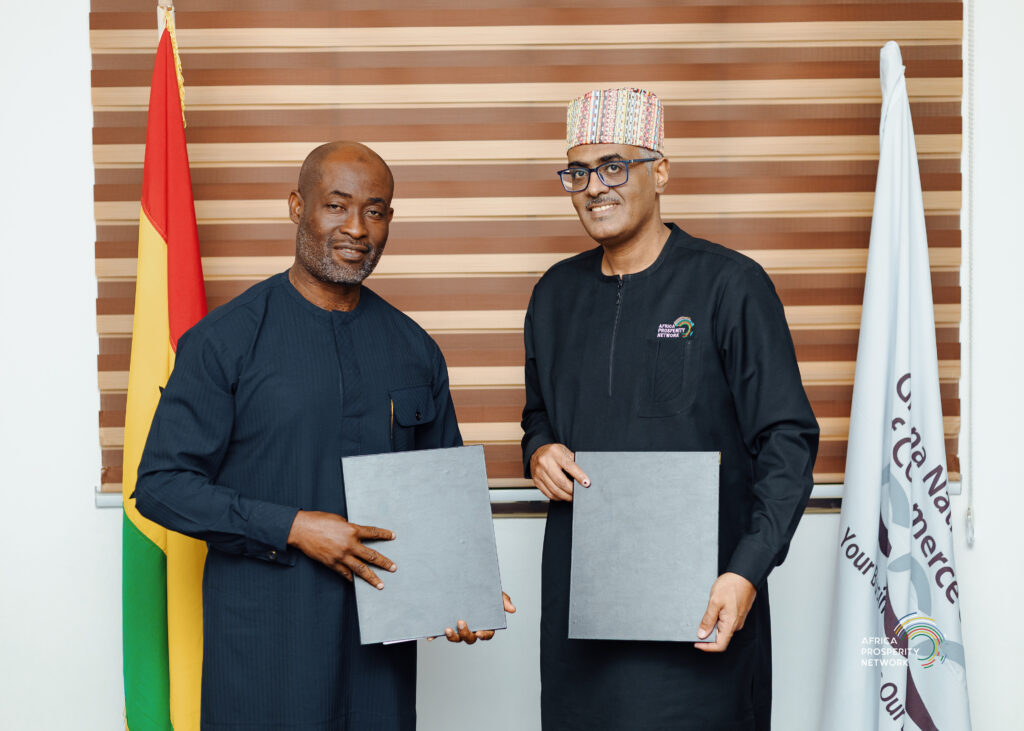
    ACCRA, GHANA – 29 July 2025 – Africa Prosperity Network (APN) today announces the signing of a memorandum of understanding (MoU) with the Ghana National Chamber of Commerce and Industry (GNCCI). This strategic partnership is a significant milestone in collaborative efforts to enhance business networks and propel economic growth across Africa.
    The MoU, formalised at the GNCCI head office in Accra, establishes a comprehensive framework for co-operation between the two organisations. A primary focus will be the fourth edition of the Africa Prosperity Dialogues, scheduled for 4-6 February 2026 at the Accra International Conference Centre.

    This partnership with GNCCI represents a pivotal moment in our mission to foster sustainable prosperity across Africa, said Sidig El Toum, chief executive officer of APN. GNCCI’s extensive network, deep understanding of Ghana’s commercial landscape and commitment to business development make them an ideal partner as we convene key decision-makers from across the continent.

    The Africa Prosperity Dialogues serve as an annual platform where business and political leaders converge to deliberate, plan and collaborate towards achieving sustainable economic development for Africa. The 2026 edition, under the theme Empowering SMEs, Women and Youth to Drive Inclusive Growth and Trade Across Africa’s Single Market, promises to be the most impactful yet, uniting influential stakeholders to address critical economic challenges and opportunities facing the continent.

    Under the terms of the partnership:

    • APN will recognise GNCCI as an institutional partner and provide executive access to APN events locally and internationally. APN will leverage its extensive network to support commerce and industry in Ghana through GNCCI initiatives.
    • GNCCI will provide technical expertise and advisory support on commerce, industry and trade matters. The Chamber will assist with fundraising and resource mobilisation, support marketing and public relations strategies, and facilitate crucial introductions to relevant enterprises within and beyond Ghana.

    We are delighted to partner with APN in this transformative initiative, said Stéphane Miezan, president of GNCCI. The Africa Prosperity Dialogues align perfectly with our mission to promote and protect commercial and industrial interests in Ghana. We must pool all our efforts to ensure our collective voice is heard, and we advocate for the Chamber to consistently have a platform to present the private sector perspective. Dr Emelia Assiakwa, first vice-president of GNCCI, added: This partnership is timely, particularly for empowering youth and women; this is the direction we must take.

    Through our dedicated Women and Youth Wing of GNCCI, we seek to build capacity, secure funding and grant access to markets for these vital groups.

    The partnership encompasses key areas, including co-organising the 2026 event, knowledge sharing, strategic media engagement and networking opportunities, benefiting both organisations’ extensive stakeholder networks.

    Both organisations recognise Ghana’s strategic role in achieving continental prosperity and the diverse opportunities the Africa Prosperity Dialogues present for strengthening intra-African trade and investment relationships.

    For media inquiries

    Africa Prosperity Network, Communication Directorate Tel: +233 20 136 6105

    Web: www.africaprosperitynetwork.com

    About Africa Prosperity Network

    The Africa Prosperity Network is a not-for-profit organisation, registered under the laws of the Republic of Ghana. APN provides a platform for leaders, particularly in business and politics across Africa, to collaborate towards achieving sustainable prosperity throughout the continent. The organisation’s flagship initiative, the Africa Prosperity Dialogues, serves as an annual forum for continental decision-makers to address critical economic development challenges and opportunities.

    About Ghana National Chamber of Commerce and Industry

    The Ghana National Chamber of Commerce and Industry (GNCCI) is a quasi-governmental institution, established under a legislative instrument (LI 611 of 1968) and Act 232 to promote and protect the interests of Ghana’s private sector. GNCCI fosters business development and supports initiatives contributing to economic growth, serving as a vital link between the private sector and government while advocating for policies that enhance the business environment.

    Distributed to all African and international media houses

  • Africa Prosperity Dialogues (APD) 2026 launched at historic Malabo Leadership Breakfast Meeting

    Africa Prosperity Dialogues (APD) 2026 launched at historic Malabo Leadership Breakfast Meeting

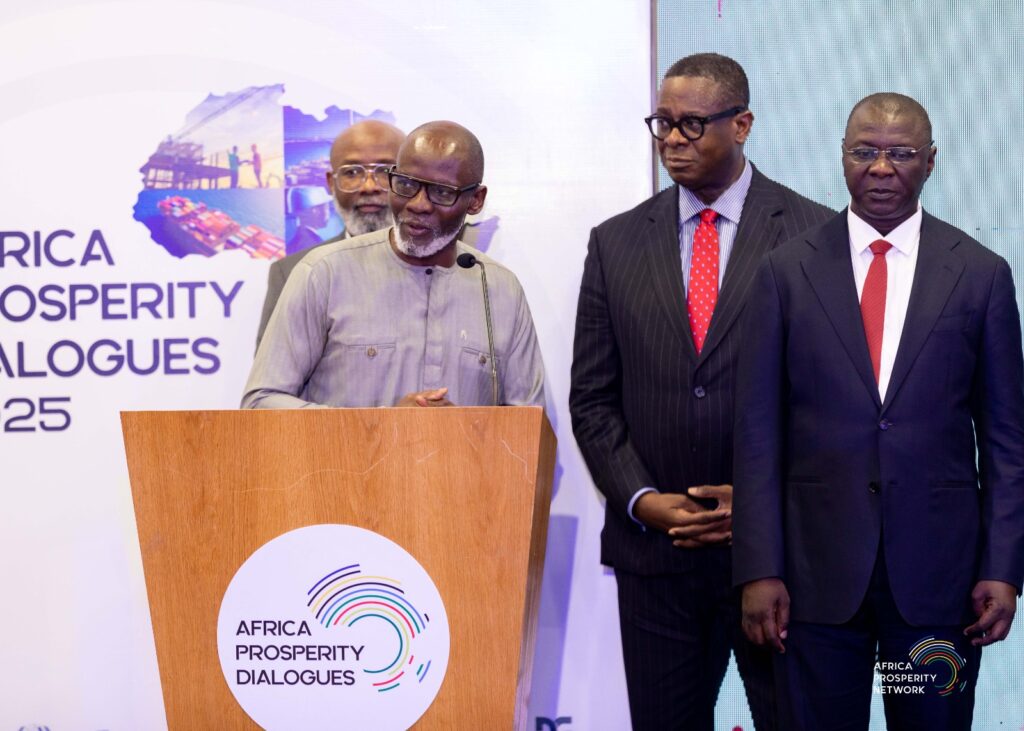
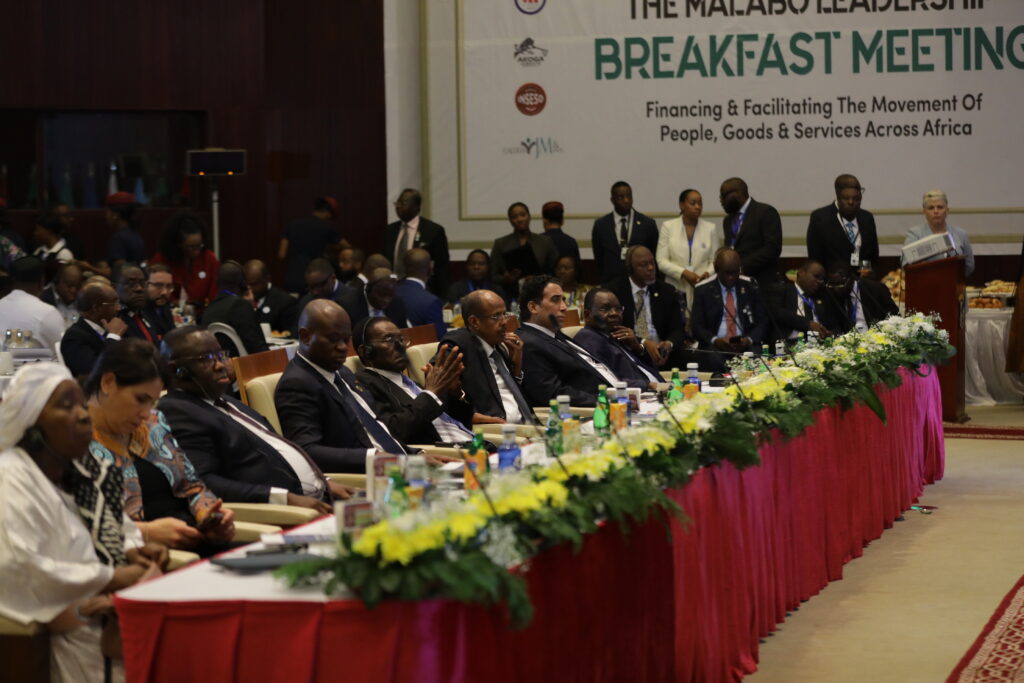
    Malabo, Equatorial Guinea – Tuesday, 15 July 2025 -The Africa Prosperity Dialogues (APD) 2026 was officially launched at the Malabo Leadership Breakfast Meeting, bringing together over 500 of Africa’s most influential political and business leaders on the sidelines of the African Union’s 7th Mid-Year Coordination Meeting. The historic gathering, held under the theme “Financing and Facilitating the Movement of People, Goods and Services Across Africa”, marked a pivotal moment in the continent’s journey towards economic integration and shared prosperity.

    High-Level Attendance

    The launch event was graced by an exceptional assembly of continental leadership, including His Excellency President Teodoro Obiang Nguema Mbasogo of Equatorial Guinea, His Excellency Brice Clotaire Oligui Nguema, President of Gabon, His Excellency Mohamed Yunus al-Menfi, Head of State of the State of Libya, and His Excellency Mahmoud Ali Youssouf, Chairperson of the African Union Commission, as well as H.E. Selma Malika Haddadi, Deputy Chairperson of the African Union Commission. The gathering also featured Madam Dr Nkosazana Dlamini-Zuma, Advisory Council Chairperson of the Africa Prosperity Network, alongside ministers of state, heads of regional economic blocs, development finance institutions, and Africa’s leading business executives.

    The meeting, organised by the Africa Prosperity Network (APN) and Invest Equatorial Guinea, in collaboration with the African Continental Free Trade Area (AfCFTA) Secretariat, demonstrated the powerful synergy between public and private sector initiatives in driving continental integration.

    Key Addresses and Vision

    President Teodoro Obiang Nguema Mbasogo – Host President

    Opening the breakfast meeting, President Obiang welcomed delegates to Malabo, emphasising the historic significance of the moment. “We are deeply pleased to welcome you to this city where African history is projected with hope towards the future. This morning of leadership is an opportunity to listen, coordinate and advance with a common vision towards the integration of the land of the African continent,” he declared.

    The President articulated three profound convictions driving Equatorial Guinea’s commitment to continental integration: “First, we believe in an Africa where integration is not limited to treaties but is reflected in the everyday life of our peoples, where Africans can move without obstacles, enriching the economic, social and cultural fabric of the continent.”

    He strongly endorsed the proposed innovative $1-a-day fund initiative, stating: “We support initiatives such as the $1 a day fund for its innovation and symbolism that shows that Africa can finance its development without mobilising its inhabitants with common objectives and transparent mechanisms.”

    Highlighting Equatorial Guinea’s progressive immigration policy, President Obiang noted: “Our country receives all immigrants as long as they have an identity. We receive immigrants from West Africa without any problem… Therefore, we believe that free movement is necessary to end the shame that African immigrants suffer when they leave for other continents.”

    H.E. Mahmoud Ali Youssouf – AU Commission Chairperson

    gratitude to the Africa Prosperity Network and Invest Equatorial Guinea for putting together such an important meeting ahead of the 7th AU Mid-Year Coordination Meeting and highlighted the challenging global environment, noting that protectionist measures have created “the greatest rupture of the international trade order since the end of the Second World War.” He outlined the consequences for Africa: “The internet has lowered its economic growth forecast from 4.2% to 3.8% for the year 2025. These measures are likely to cause the volatility of the prices of raw materials, increase the costs of employment and limit access to financing on the international financial market.”

    Referencing the continental vision, he stated: “We had the ambition, Madam Zuma, by deciding that for 2063, Africa must be a developed continent. And for this, we had to create the conditions for an economic growth of 7% every year over 50 years. Unfortunately, we have achieved only 4%. During the period of 2013-2023, we were behind. To compensate for this delay, we will now need a growth rate of 8% per year over the period of 2024-2063.”

    The Chairperson outlined six critical corridors for regional integration, including the East Africa corridor, the West Africa corridor, the Central Africa corridor, the North-South Africa corridor, the Trans-Saharan Africa corridor and the Maritime corridor, a newly proposed plan to connect island states to the continent.

    H.E. Ali Youssouf also outlined 5 Sectoral Infrastructure Priorities:

    • Transport Infrastructure: “The means of commuting, such as roads, railways and sea routes. These are the relevant pillars of African trade. I emphasise the urgent realisation of the African network of high-speed trains.”
    • Energy Infrastructure: “Access to reliable, competitive, sustainable and vital energy to support our industries and trade exchanges,” with a comprehensive energy classification including electricity, nuclear, gas, solar, coal, fuel, wind, and geothermal sources.
    • Digital Infrastructure: “Our continent must not remain on the verge of the digital revolution at this age of artificial intelligence.”
    • Aviation Infrastructure: Emphasising “the importance of making the unique market of maritime air transport effective” through the Single African Air Transport Market (SAATM).
    • Financial Infrastructure: Highlighting the Pan-African Payment and Settlement System (PAPSS) and the need for enhanced capitalisation of development banks.

    Madam Dr Nkosazana Dlamini-Zuma – Advisory Council Chairperson, Africa Prosperity Network

    Madam Dr Nkosazana Dlamini-Zuma delivered a passionate address on the transformative potential of Africa’s demographic dividend, particularly focusing on the continent’s youth and women. She highlighted critical statistics: “Africa’s future and prosperity can only be built or achieved by the Africans themselves. We are almost 1.4 billion strong, plus the diaspora, which is about 130 million plus. And together, we can build the Africa we want.”

    Using the example of a Ghanaian shea butter producer, she illustrated the market expansion potential: “Let’s take a woman in Ghana producing shea butter. If she starts thinking African, and the African continent has been changed, her market changes from 35 million plus to 1.4 billion people.”

    Kwaku Sakyi-Addo, Board Member & Executive Director, Africa Prosperity Network

    The official launch statement for APD 2026 was delivered on behalf of the Executive Chairman & Founder, Mr Gabby Asare Otchere-Darko, by Board Member & Executive Director, Mr Kwaku Sakyi-Addo, with remarkable clarity on the event’s transformative objectives. “What has been clear from this morning’s rich discussions on trade agreements, protocols, ease of travel and movements of goods and services is that it has affirmed a simple truth: Africa’s single market will only succeed if it becomes a market that allows the hundreds of millions of Africans involved in small and medium scale enterprises, our women, and our young people to effectively own and drive it.”

    The statement outlined ambitious targets: “If we achieve this, the ripple effects will be transformative. It can easily lead to 50 million jobs created by 2030, 30 million Africans lifted from poverty, and a single market that is truly inclusive, one that leaves no one behind.”

    Innovative Financing Mechanisms

    Eric Otoo presented the proposed innovative funding mechanism central to the APD vision, highlighting three key pillars driving optimism: the growing African middle class of 400-500 million people, the diaspora’s $100 billion annual remittances, and transformative technology enabling financial inclusion.

    “Imagine if at least every middle class… if even just 10 per cent contribute at least a dollar a day for a year, we’ll be able to mobilise at least $15 billion as Africans. This will be funding coming from Africans that will be utilised by Africans for the development and the growth of infrastructure and media industries across the continent,” he explained.

    The APD 2026 Vision

    The launching the fourth Africa Prosperity Dialogues (APD) 2026 under the theme “Empowering SMEs, Women & Youth in Africa’s Single Market: Innovate. Collaborate. Trade.”, saw high-level participants at the Malabo Leadership Breakfast meeting share in the bold reimagining of continental economic integration, placing small and medium enterprises (SMEs), women, and youth at the centre of Africa’s single market vision. The initiative recognises that Africa’s youngest population—60% under 35- is not merely beneficiaries of economic policy but active architects of the continent’s future.

    Key statistics underscore the urgency of this focus: women drive over 70% of cross-border trade and contribute to nearly half of Africa’s GDP, yet receive less than 2% of available venture capital. SMEs account for 80% of employment and 50% of GDP across African countries, yet most remain locked out of regional value chains.

    Policy Advocacy and Implementation

    The meeting track reinforced APN’s record of driving tangible policy outcomes, including contributions to the AU’s Digital Trade Protocol and the ongoing Nigeria-Ghana pilot programme for cross-border mobile money interoperability. The network’s advocacy efforts continue to focus on accelerating SAATM adoption, reducing aviation taxes, eliminating visa restrictions, and mobilising investment in infrastructure.

    Looking Forward

    The APD 2026 launch marks a crucial milestone in Africa’s journey towards genuine economic integration. By prioritising the empowerment of SMEs, women, and youth, the initiative promises to create a more inclusive and sustainable path to continental prosperity.

    The next Africa Prosperity Dialogues will convene in February 2026, building on the momentum generated at this historic Malabo breakfast meeting. The focus will remain steadfast on creating practical pathways for the continent’s most dynamic demographic groups to drive and benefit from Africa’s single market.

    For More Enquiries, contact

    Africa Prosperity Network, Communication Directorate
    Tel: +233 20 136 6105
    Web: www.africaprosperitynetwork.com

    Invest Equatorial Guinea, Communication Department
    Tel: +240 222 657 018
    Web: www.investguineaecuatorial.com

    About the Organisers

    Invest Equatorial Guinea serves as the nation’s premier investment promotion agency, facilitating foreign investment and trade whilst ensuring economic diversification and sustainable development. The agency provides comprehensive investor services through AfCFTA Advantage Programmes and Public-Private Partnership Frameworks.

    Africa Prosperity Network (APN) is an Accra-based nonprofit organisation dedicated to advancing Africa’s single market and Agenda 2063 through high-impact platforms, including the Africa Prosperity Dialogues. The network connects public and private sectors to accelerate continental integration and sustainable development across Africa.

    Distributed to all African and international media houses 

  • Leaders’ breakfast in Malabo: Africa discusses its economic integration and regional mobility

    Leaders’ breakfast in Malabo: Africa discusses its economic integration and regional mobility

    Malabo, Equatorial Guinea – June 18, 2025 – The African continent turns its attention to Equatorial Guinea. On Sunday, July 13, under the patronage of H.E. Teodoro Obiang Nguema Mbasogo, the Malabo Leaders’ Breakfast will be held, a high-level meeting also organised by the Africa Prosperity Network (APN) and Invest Equatorial Guinea, in collaboration with the Secretariat of the African Continental Free Trade Area (AfCFTA).

    The event, which precedes the 7th African Union Mid-Year Coordination Meeting, will bring together Heads of State, AU Commissioners, leaders of the Regional Economic Communities (RECs), global financial leaders, and strategic stakeholders from the continent, with a common goal: to break down the barriers that impede the free movement of people, goods, and services in Africa.

    A clear agenda: connecting Africa from Africa

    The main theme of the breakfast will be “Financing and facilitating the movement of people, goods, and services in Africa,” seeking to generate real proposals to accelerate continental integration.

    Under the theme “Financing and Facilitating the Movement of People, Goods, and Services Across Africa,” the event will address the challenges that still hinder continental integration, such as insufficient cross-border infrastructure and regulatory restrictions affecting the mobility of people and goods.

    “Malabo takes us from diagnosis to practice. We will translate commitments into concrete financing and implementation of policies for free movement, starting with the Dollar a Day Fund,” said Sidig El Toum, executive director of APN.

    A simple idea, a continental impact

    One of the key highlights will be the launch of the Integrated Infrastructure Growth Fund for Africa, an initiative championed by H.E. Dr. Nkosazana Dlamini Zuma during the Africa Prosperity Dialogues 2025, whose leadership of the AU Commission launched Agenda 2063.

    The proposal invites the African middle class to contribute as little as $1 a day, with the goal of generating more than $20 billion annually to finance roads, digital networks, airports, bridges, and other strategic projects that connect people and markets. With the participation of just 50 million African citizens, the initiative would accelerate key continental connectivity projects.

    Four key priorities

    The Malabo Breakfast will promote concrete actions around:

    • Positioning Equatorial Guinea as a new regional investment hub.
    • Facilitating intra-African mobility, eliminating visa barriers and reducing logistics costs.
    • Activating the Single African Air Transport Market (SAATM).
    • Proposing sustainable and innovative crowdfunding models for continental infrastructure.

    Confirmed Participants

    The event will include:

    • Heads of State and AU leaders
    • Members of the Government
    • Heads of RECs
    • Presidents of Development Finance Institutions
    • Leaders from sectors such as aviation, banking, telecommunications, fintech, construction, transportation, and logistics.

    Equatorial Guinea: Investment, Stability, and Regional Outreach

    For Equatorial Guinea, the event is also a platform to reaffirm its commitment to economic diversification, regional cooperation, sustainable development, and active integration into regional value chains, presenting the country’s Investment Agenda as a pillar of this goal.

    With modern infrastructure, access to skilled human capital, and a strategic location in the heart of Africa, Invest Equatorial Guinea is launching, positioning the country as a new hub for investment, foreign trade, and innovation in the region. It also assumes a potential role in the African Continental Free Trade Area (AfCFTA).

    “Hosting this summit reflects our commitment to continental integration. We offer investors unparalleled infrastructure, stability, and market access, demonstrating that Africa’s single market can work for everyone,” states Invest Equatorial Guinea.

    Event Details

    Date: July 13, 2025 | Time: 7:00 a.m. GMT+1

    Venue: Sipopo International Conference Center, Malabo

    Media Accreditation: j.krampa@africaprosperity.network

    Press Contact:

    Director of Communication, Africa Prosperity Network, +233 20 136 6105

    www.africaprosperitynetwork.com

    Director of Communication, Invest Equatorial Guinea, +240 222 657 018

    www.investguineaecuatorial.com

    About the Organisers

    Invest Equatorial Guinea

    The public agency that promotes foreign investment and trade in the country, ensuring economic diversification, the internationalisation of domestic companies, and the country’s sustainable development. We facilitate market access through:

    • AfCFTA Advantage Programs
    • Public-Private Partnership Frameworks
    • Comprehensive Investor Services

    (Contact: info@investguineaecuatorial.com,  https://www.investguineaecuatorial.com/) 

    Africa Prosperity Network (APN) 

    Accra-based nonprofit organisation that promotes Agenda 2063 through high-impact platforms such as the Africa Prosperity Dialogues. We connect the public and private sectors to accelerate continental integration.

    Confirmed Participants

    The event will include:

    • Heads of State and AU leaders
    • Members of the Government
    • Heads of RECs
    • Presidents of Development Finance Institutions
    • Leaders from sectors such as aviation, banking, telecommunications, fintech, construction, transportation, and logistics.

    Equatorial Guinea: Investment, Stability, and Regional Outreach

    For Equatorial Guinea, the event is also a platform to reaffirm its commitment to economic diversification, regional cooperation, sustainable development, and active integration into regional value chains, presenting the country’s Investment Agenda as a pillar of this goal.

    With modern infrastructure, access to skilled human capital, and a strategic location in the heart of Africa, Invest Equatorial Guinea is launching, positioning the country as a new hub for investment, foreign trade, and innovation in the region. It also assumes a potential role in the African Continental Free Trade Area (AfCFTA).

    “Hosting this summit reflects our commitment to continental integration. We offer investors unparalleled infrastructure, stability, and market access, demonstrating that Africa’s single market can work for everyone,” states Invest Equatorial Guinea.

    Event Details

    Date: July 13, 2025 | Time: 7:00 a.m. GMT+1

    Venue: Sipopo International Conference Center, Malabo

    Media Accreditation: j.krampa@africaprosperity.network

    Press Contact:

    Director of Communication, Africa Prosperity Network, +233 20 136 6105

    www.africaprosperitynetwork.com

    Director of Communication, Invest Equatorial Guinea, +240 222 657 018

    www.investguineaecuatorial.com

    About the Organisers

    Invest Equatorial Guinea

    The public agency that promotes foreign investment and trade in the country, ensuring economic diversification, the internationalisation of domestic companies, and the country’s sustainable development. We facilitate market access through:

    • AfCFTA Advantage Programs
    • Public-Private Partnership Frameworks
    • Comprehensive Investor Services

    (Contact: info@investguineaecuatorial.com,  https://www.investguineaecuatorial.com/) 

    Africa Prosperity Network (APN) 

    Accra-based nonprofit organisation that promotes Agenda 2063 through high-impact platforms such as the Africa Prosperity Dialogues. We connect the public and private sectors to accelerate continental integration.

    (Contact: info@africaprosperitynetwork.com) 

  • Africa Prosperity Network and the Canada-Africa Chamber of Business forge strategic partnership on the eve of the Africa CEO forum in Abidjan

    Africa Prosperity Network and the Canada-Africa Chamber of Business forge strategic partnership on the eve of the Africa CEO forum in Abidjan

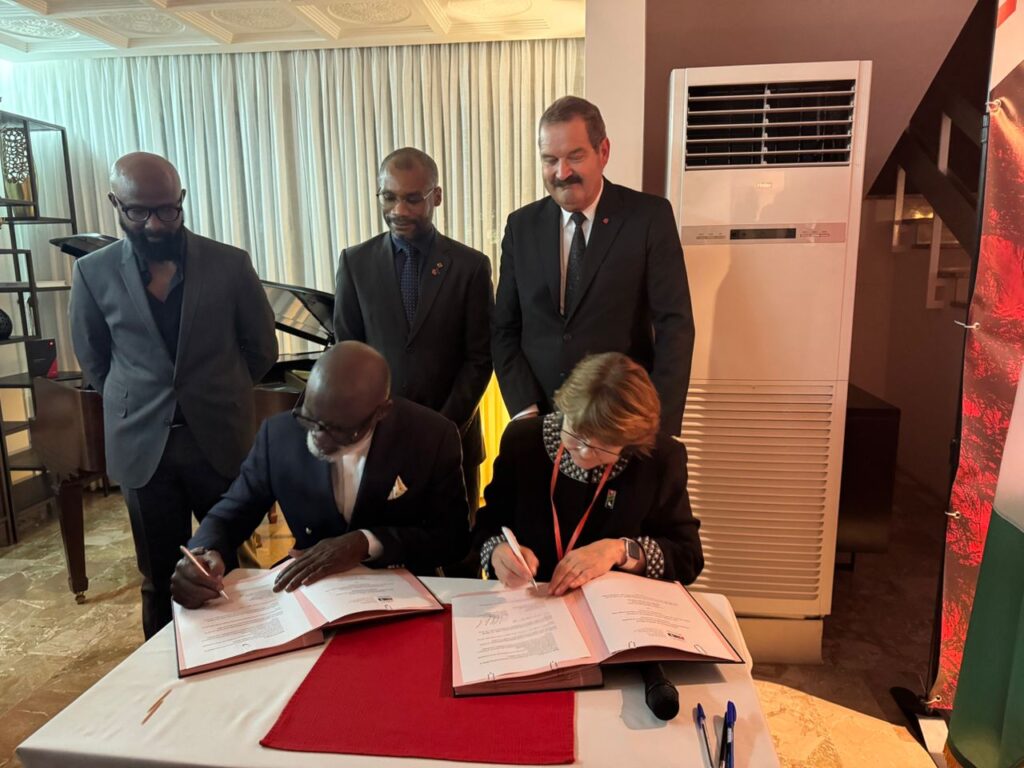
    Abidjan, Côte D’Ivoire, 13 May 2025—The Africa Prosperity Network (APN) and the Canada-Africa Chamber of Business wish to announce the signing of a Memorandum of Understanding (MoU) during the Africa CEO Forum in Abidjan. This marks a significant milestone in strengthening economic partnerships between Africa and Canada.

    The MoU was formalised during a prestigious reception hosted at the Canadian Embassy, with signatories Gabby Asare Otchere-Darko, Founder & Chairperson of the Africa Prosperity Network, and Paula Caldwell St-Onge, Chairperson of the Board of Directors of the Canada-Africa Chamber of Business. The ceremony was honoured by the presence of H.E. Anderson Blanc, Canada’s Ambassador to Côte d’Ivoire.

    Speaking at the signing ceremony, Mr Otchere-Darko further highlighted the mutual benefits of the partnership: “We recognise that back in 2018, Canada embarked on an ambitious project to globally connect the Canadian market and grow her exports by 50% by 2025. This target has faced challenges, partly due to the COVID-19 pandemic, because of Canada’s primary focus on trade diversification geared towards the Asia-Pacific region. This is understandable as the region’s growing middle class is well-documented. But, we believe that for Canada to achieve its trade diversification ambitions, it must look more intently towards Africa,” Mr Otchere-Darko suggested strongly.

    “Africa is serious about building its single market of 1.5 billion people and a fast-growing middle class. In 2011, the African Development Bank estimated that the middle class in Africa comprised over 34% of the population, a figure that has grown significantly since then. We anticipate this reaching half a billion people by 2030, demonstrating the substantial consumer capacity for trade. Canada’s diversification strategy needs to prioritise Africa, and we are confident this collaboration will help facilitate that process,” the Founder of APN concluded.

    Retired Ambassador St-Onge, who previously served as Director General for Pan African Affairs in the Government of Canada, emphasised the practical implications of the agreement: “This MoU includes tangible commitments to reciprocity between our organisations’ extensive programme offerings and establishes a framework for new collaborative initiatives that will directly support the acceleration of Africa-Canada trade and investment.”

    “I would like to extend special thanks to former Board Chair Sebastian Spio-Garbrah for his leadership in bringing this initiative to fruition,” added St-Onge during her remarks at the Opening Reception of the Canada Programme during the Africa CEO Forum, where the Canada-Africa Chamber served as an official partner with private sector support.

    H.E. Anderson Blanc, Canada’s Ambassador to Côte d’Ivoire, welcomed the partnership: “This MoU represents the type of private sector leadership that complements our diplomatic efforts to strengthen Canada-Africa relations. We are pleased to witness this commitment to structured collaboration between two organisations that share the goal of sustainable economic development through increased trade and investment.”

    About The Africa Prosperity Network

    The Africa Prosperity Network (APN) is a private non-profit organisation founded to advance the vision of “Africa We Want,” as outlined in the African Union’s Agenda 2063. It strives to promote Africa’s progress, independent of external aid. The Africa Prosperity Dialogues (APD) series offers a strategic platform where movers and shakers across Africa elevate the continent’s economic integration objectives from ambition to real action.

    Set in Accra, the APD is a one-of-a-kind event where African leaders from diverse areas of national endeavour gather each year to expedite, among other things, the implementation of the agreed initiatives within the AfCFTA trade bloc and shape the Africa Agenda for Action.

    For more information, visit: www.africaprosperitynetwork.com

    About The Canada-Africa Chamber of Business

    Founded in 1994, the Chamber is based in Toronto with members located throughout Canada and African markets. The Chamber is an independent, not-for-profit organisation with strong working links with both Canadian and African businesses and governments. ‘Our membership rates are provided thanks to the generous support of several existing private sector members who sponsor the Chamber,’ says Chamber President Garreth Bloor.

    “We do not receive government grant funding and thank our generous supporters for ensuring we can deliver our mission – as a proudly independent Not-for-Profit organisation, dedicated to accelerating trade and investment through world-class networking and information-sharing events.

    APN Communication Directorate:                               Media Contact:                                                                                 

    Joel Krampa                                                                  Haba-Maria Konaré          

    Communication Lead                                                    Office of the President

    Tel: +233201369105                                                     Tel: +1.437.780.8340

     Email: j.krampa@africaprosperit.network                   Email: haba-maria@canadaafrica.ca  

    For general inquiries:                                                    For general inquiries:

    info@africaprosperity.network                                     press@canadaafrica.ca

    Signed

    APN, Communication Directorate To all Media Houses

  • Africa Prosperity Dialogues 2025 to focus on bridging continent’s infrastructure gap

    Africa Prosperity Dialogues 2025 to focus on bridging continent’s infrastructure gap

    Africa Prosperity Dialogues (APD 2025) will focus on unearthing innovative ways through which African heads of state, business leaders, and the private sector, can combine forces to bridge the continent’s infrastructure deficit and shore up the levels of intra-Africa trade. 

    The APD 2025 will be held in Accra, Ghana from Thursday, 30 January to Saturday, 1 February 2025, on the theme; “Delivering Africa’s Prosperity Through Infrastructure: Invest, Integrate, Connect,” and it is expected to attract over one thousand participants from across the continent. 

    Africa’s future

    Addressing participants at the launch of the Africa Prosperity Dialogues 2025 at the Secretariat of the Africa Continental Free Trade Area (AfCFTA), Africa Trade House, in Accra on Monday, 13 May 2024, Executive Chairman of Africa Prosperity Network (APN), organisers of the Africa Prosperity Dialogues (APD), Gabby Asare Otchere Darko, said investing in continent’s infrastructure space is pivotal to achieving the vision set out in the AfCFTA agreement.   

    “Despite the continent’s potential, its infrastructure gap serves as a more potent blockade. The success of AfCFTA hinges on key enablers, such as energy, water, R&D, ICT, transport & logistics, and the digital economy. This calls for substantial investments in infrastructure, that will yield even greater rewards, enabling our efforts to create a larger pool of good jobs with good pay. 

    “We stand at a critical juncture in history, where unlocking prosperity, now more than ever, depends on prioritising investment in infrastructure, connecting our people through infrastructure, and integrating our economies to create and spread opportunities and prosperity to every community,” Mr Otchere-Darko said in his opening statement.

    “This is where we must now direct our collaborative efforts if we are serious about allowing Africans to do business across Africa and for our young people, who will build Africa, to see their future in Africa. At APN, we envision an Africa where every bridge built serves as a flyover to opportunity, and every road paved leads to prosperity. 

    “[We intend] to use the next APDs to show what is being done, what has to be done, and what we must commit to having done in the areas of infrastructure to facilitate the free movement of people, goods, and services. Our future as a people rests heavily on our ability to reimagine how to fund and link infrastructural developments and our boldness to get on with it” Otchere-Darko added.

    Continental Challenge

    Dr Mohammed Amin Adam, Ghana’s Minister for Finance in his remarks at the launch ceremony pointed out that “an estimated 546 million people are now living in poverty, and 149 million “non-poor” Africans are at risk of falling into it. 

    Furthermore, Dr Amin Adam said the UNECA estimates that the annual Sustainable Development Goal financing gap for developing countries has increased by $1.7 trillion” and these indicators demonstrate the fact that the continent’s work is cut out for her. 

    “The challenges we face, from infrastructure deficits to economic disparities, require collective action and partnership on a continental scale. Therefore, the theme of next year’s Africa Prosperity Dialogues, “Delivering Africa’s Prosperity through Infrastructure: Invest. Integrate. Connect.” resonates deeply with Ghana’s vision for a more interconnected and prosperous Africa and AU agenda 2063.

    “Africa’s infrastructure deficit impedes economic growth and development. Inadequate networks of road, rail, air, and waterways make transport costs in Africa among the highest in the world. The African Development Bank estimates that closing the continent’s infrastructure gap will require a minimum of $130 billion annually,” Mr Mohammed Amin Adam, remarked. 

    “Moreover, deficient infrastructure in today’s Africa has been found to sap growth by as much as 2% a year. Quite frankly, we have a continental problem that requires a continental solution. As such, we must redouble our efforts to invest in critical infrastructure projects, including transportation, energy, and digital connectivity, to unlock Africa’s full potential for trade and investment,” Ghana’s Finance Minister further remarked. 

    The financing gap

    The president for Private Sector, Infrastructure & Industrialisation at the African Development Bank Mr Solomon Quaynor, in his key partner message at the launch of APD 2025 indicated that to address the African continent’s infrastructure shortfall, the continent needs about US$130 to US$170 billion a year with a financing gap of US$70 to a US$110 billion.

    “This financing gap is increased as we aim to ensure that all infrastructure today is climate change resilient or compliant. So, closing this gap remains the single important step we can take to structurally boost our economic development, make it more inclusive and competitive, and attain the Africa we want,” Mr Quaynor said.     

    Funding resources

    The United Nations (UN) Resident Coordinator for Ghana, Mr Charles Abani, on his part, observed that Africa must find the funding resources to be able to bridge the 170 billion dollar financing gap that is currently the reality of the continent of Africa. 

    The African continent, according to Mr Abani, must prioritise projects that have a high impact on economic growth, job creation, and poverty reduction. 

    “We must leverage technology and innovation to drive efficiency, sustainability, and importantly, inclusivity in our infrastructure development and lastly, we must bring everybody on board. If you want to go fast, they say, go alone, if you want to go far, go together,” Mr Abani said.   

    Digital infrastructure

    High Commissioner of Rwanda to Ghana, H. E. Rosemary Mbabazi in her statement noted that African countries must prioritise the development of digital infrastructure to boost digital trade on the continent. 

    Ms Mbabazi observed that while it is important to build all the other infrastructure needs of all the continent, digital infrastructure if developed, can serve as a critical launch pad to propel trade in Africa. 

    She pointed out that to achieve the levels of digital trade required, several key elements should be given attention. First, is the regulatory environment, second, is connectivity that will ensure widespread access to high-speed internet, particularly in rural areas. 

    Third, digital Identity infrastructure, fourth, digital payments, and lastly, establishing a robust cyber security environment on the continent that will protect businesses and their customers against cyber threats.     

    Panel discussion

    As part of the launch, a three-member panel conversation on the theme; “The Infrastructure Gab – Addressing the Bane of Africans Doing Business within Africa,” was held. 

    The panel comprised the Group CEO of Telecel, Mr Moh Damush; Executive Director/CEO Africa for United Bank for Africa, Mrs Marufatu Abiola Bawuah, and Director General of the Social Security and National Insurance Trust (SSNIT), Ghana, Mr Kofi Osafo-Marfo; and Ghana’s Minister for Railway Development. Mr John Peter Amewu.

    The panel of experts in their submissions pointed out that to make progress in the continent’s quest to build its infrastructure, there is a need for a joint effort on the part of all stakeholders such as government, businesses, the private sector, and the investor community, to bridge the infrastructure gap.  

    Africa Prosperity Network (APN)

    The Africa Prosperity Network (APN) is a non-profit organisation founded to advance the vision of “The Africa We Want” as outlined in the African Union’s Agenda 2063, striving to promote Africa’s progress, independent of external aid.

    Africa Prosperity Dialogues (APD)

    The Africa Prosperity Dialogues series offers a strategic platform where the movers and shakers of the African economy elevate the economic integration objectives from ambitions to real actions. 

    Set in Accra, Ghana, the APD is a one-of-a-kind event where African leaders from diverse areas of national endeavour gather each year to expedite, among other things, the implementation of the agreed initiatives within the AfCFTA trade bloc, and shape the Africa Agenda for Action. 

    APD brings into practical focus, the continent’s critical challenges and industrialisation priorities and advance aggressively the commercial and infrastructural interventions to achieve the vision of an Africa Beyond Aid.

  • Using mobile money to buy and sell across Africa – A fast track to economic integration

    Using mobile money to buy and sell across Africa – A fast track to economic integration

    For over sixty decades, from the Mali Empire through to the OAU Summit of May 1963 and incrementally to date, African unity has remained but a collective dream. One that has been sustained more by a recognition of its essence rather than a conviction for its manifestation. In 2021, with the coming into being of the African Continental Free Trade Area (AfCFTA), Africa began taking clear, deliberate steps of greater conviction towards building the world’s largest single market, in terms of member states. The challenges are, of course, many and varied. 

    But, if there is one practical instrument that can now ensure that the desire to bring our 55 nations and 1.4 billion people together, then that should be our telecommunication handset. By that, I mean, the exponential heights of financial inclusion to which the technology of mobile money has  taken Africa. In short, Africa has, at long last, discovered a fast track to unification and that is the digital economy.

    Africa is witnessing a remarkable digital revolution in current times, particularly in the financial sector. Mobile money, a service that allows people to transfer money and make payments using their mobile phones, has become a necessity of daily life for millions of Africans. As of 2023, over 500 million consumers registered for mobile money across the continent, and the value of mobile money transactions reached $834 billion in 2022, according to AfDB. 

    Interoperability across different digital platforms (across mobile network providers and between telcos and financial institutions) within country has largely contributed to this astonishing growth. But imagine, how huge these transactions volumes can get if we have cross-border interoperability up and down the continent?

    Interoperability in mobile money means that users can send and receive money seamlessly across different mobile networks and financial services providers. That has been largely achieved; albeit, in country. Our focus now is how to make it regional and continental, dismantling the old colonial borders of divide and rule. This is not just a technical upgrade—it offers a game-changer of a shift to driving economic integration, reducing transaction costs, incentivising investments in transport and logistics and enhancing the efficiency and density of cross-border trade. 

    It will mean opening up a market of 1.4 billion consumers to businesses in Africa, particularly micro-small and medium-size enterprises (MSMEs).  It will create millions of job opportunities for young people in Africa. The single market offers a vital key to spreading opportunities and prosperity across Africa for Africans. And, the ability for hundreds of millions of Africans to participate in this massive market via the mere ease of one’s hand-held device will be truly revolutionary.  That is why African leaders struggling with the growing youth bulge should embrace this cutting edge solution to what young Africans see as limited opportunities on our continent.  

    The technology to make it happen exists. The supply and demand matrix to make it work is already with us. What is required is the political will among African leaders and the courage among central bank governors, especially, to make it happen.

    Imagine a trader in Accra effortlessly receiving payments in her local currency from a buyer in Nairobi, who paid with his own local currency using his mobile wallet? Or, Moroccan entrepreneurs sourcing goods from South Africa with just a few taps on their mobile phone. This vision is not far-fetched; it is within reach and the mission is to get us there. 

    You may wonder, what is the use in buying a product in Africa if the logistics to get it from seller to buyer from state to state is not there? The answer is obviously in ensuring greater investments in cross-border transport infrastructures. But, investors require incentives and there can be no greater incentive to an investor than the huge demand that can be created for African goods and services for African consumers with the facilitation of cross-border mobile interoperability.  Where there is supply and demand, investor money will follow. 

    The AfCFTA’s digital trade protocol recognises the immense opportunity of interoperability in achieving its goals. Therefore, through harmonising regulations and collaboration among member states, and with clear statements of intent from leadership, the existing protocol can facilitate an integrated digital marketplace. This is crucial for boosting intra-African trade, which currently stands at a mere 15% compared to Europe’s 68% and Asia’s 59%, according to the Afreximbank.

    Several initiatives are already underway. For example, the Pan-African Payment and Settlement System (PAPSS), launched by Afreximbank, aims to facilitate instant cross-border payments in local currencies across Africa. This system, if fully adopted, could significantly reduce the reliance on foreign currencies for intra-African trade, lowering transaction costs and mitigating exchange rate risks. 

    Also essential is the creation of sector-specific technical and operational standards. These standards will ensure that different mobile money platforms can communicate effectively and securely. Such standardisation can be driven by a coalition of stakeholders, including telecom operators, financial institutions, and regulatory bodies. Setting clear guidelines can pave the way for an integrated and efficient mobile money ecosystem. This can support the growth of small and medium-sized enterprises (SMEs), which are the backbone of African economies, by providing them with more accessible and affordable financial services.

    Collaboration is another key factor. Encouraging different sectors to share best practices and learnings from interoperability initiatives can accelerate progress. For instance, the success stories from the agricultural sector can inform strategies in the retail sector, creating a ripple effect of innovation and improvement. Customised interoperability solutions tailored to different sectors can also enhance usability and adoption. Each sector has unique requirements and challenges, and a one-size-fits-all approach may not be effective. Developing solutions that address the specific needs of each sector can ensure that interoperability initiatives are practical and impactful. 

    Finally, implementing feedback mechanisms is essential for continuous improvement. Interoperability is not a one-time achievement but an ongoing process. Achieving full interoperability requires concerted efforts from decision-makers and various stakeholders, including governments, regulators, mobile network operators, fintech and financial institutions. Policymakers must create an enabling environment  for cross-border mobile money interoperability by developing and enforcing regulations that promote free market, enhances national security, promotes both economic growth and stability and protect consumer interests. Mobile network operators and fintech companies must invest in the needed technology and infrastructure, while also ensuring that their services are secure and user-friendly.

    Scaling up interoperability in mobile money transactions across Africa can address this imbalance by democratising financial access, enabling more inclusive economic participation, and fostering intra-continental trade. Facilitating seamless transactions and reducing barriers to commerce, mobile money interoperability empowers young and enterprising Africans, especially, to harness their economic potential, access the wider market, retain more value within their communities, and reduce dependency on exploitative external systems. 

    This digital financial integration can be a powerful tool in promoting equitable growth and shared prosperity across the continent. This is the motivation that underpins the symposium that is being held on Friday, 5 July 2024 at the Labadi Beach Hotel Accra, Ghana, under the theme: “Scaling Up Interoperability — Using Mobile Money to Buy and Sell Across Africa”. The symposium is a useful  step towards unlocking the full potential of the AfCFTA.

    Perhaps even more critical after the Accra Symposium, is the African Union’s Mid-Year Coordination Meeting in Accra, also to be held this month. This year’s AU Mid-Year Summit has an agenda item promoted by the Champion of the African Union Financial Institutions and President of the Republic of Ghana, Nana Addo Dankwa Akufo-Addo. 

    President Akufo-Addo, in February 2024 championed the push for continent-wide mobile money interoperability at the 37th Ordinary Session of the Assembly of Heads of State and Government of the African Union, when he presented the ‘Peduase Action Compact 2024’ from the Africa Prosperity Dialogues (APD) 2024 held last January, to his colleague heads of state and government in Addis Ababa. 

    Again, at the maiden 3i Africa Summit 2024 held in Accra last May, we once again saw a palpable desire among speakers and participants for individuals and businesses to have the freedom and ability to make and receive payments across the African continent. 

    All these underscore the growing commitment of Africa’s political and business leaders to deepen financial inclusion and intra-African trade.  As a critical milestone towards a digitally and economically integrated Africa, the upcoming Mobile Interoperability Symposium on Friday July 5 will culminate in an outcome document to be presented at the AU Mid-Year Coordination Meeting in Accra on 21-22 June 2024. 

    The Africa Prosperity Network is calling on policymakers, industry leaders, all stakeholders, especially Africa’s large pool of MSMEs and all Pan-Africanists to join forces in the advocacy to realise what will effectively be Africa’s common currency for transactions: a continent-wide single payment system, as facilitated by mobile money interoperability.

    Together we can unlock the full potential of mobile money and deepen development and prosperity across the continent. The time to act is now, and with concerted efforts, we can build a more inclusive and prosperous Africa.

    The author is the Founder and Executive Chairman of the Africa Prosperity Network, (the organisers of the annual Africa Prosperity Dialogues), dedicated to providing a platform for Africa’s political, business and thought leaders to work together with urgency to realise the single market agenda in Africa and as a necessary pathway to promoting opportunities and prosperity across Africa for all Africans.