Category: Africa

  • Press Release: Smart Africa, Africa Prosperity Network and eHealth Innovation Centre Unite at GITEX Africa to Drive Borderless Digital Healthcare Across the Continent

    Press Release: Smart Africa, Africa Prosperity Network and eHealth Innovation Centre Unite at GITEX Africa to Drive Borderless Digital Healthcare Across the Continent

    Accra, Ghana – 9 April 2026 – At GITEX Africa 2026 in Marrakech on Thursday, a high-level meeting brought together key African leaders in digital transformation and healthcare to advance discussions on building a borderless e-health ecosystem across the continent.
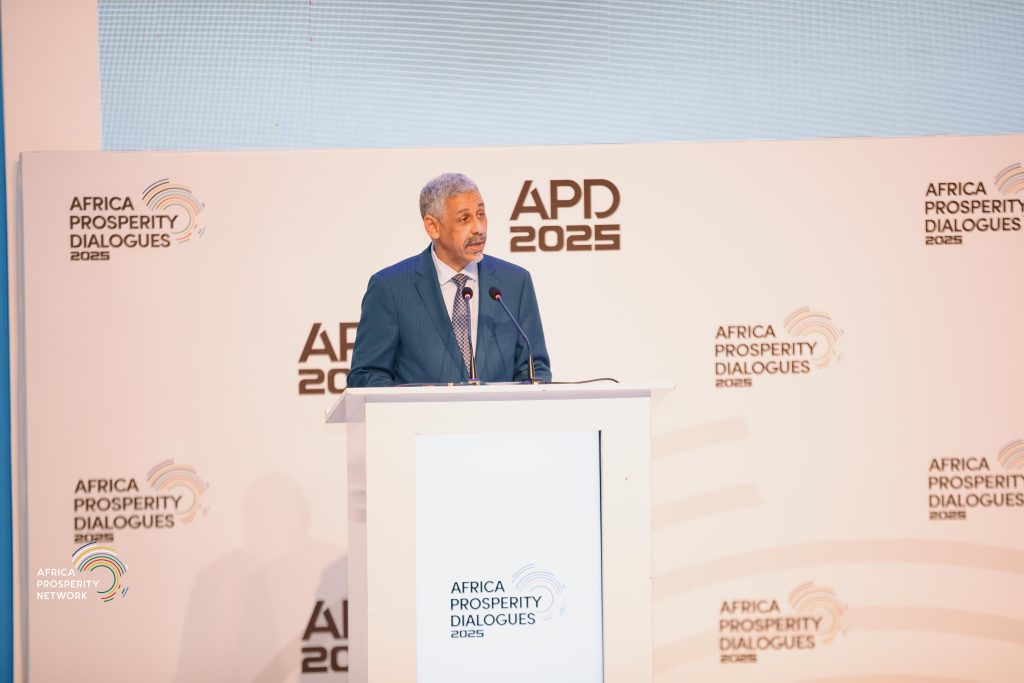
    The meeting with Lacina Koné, CEO of Smart Africa, featured Gabby Asare Otchere-Darko, Founder and Executive Chairman of the Africa Prosperity Network (APN); Prof. Anass Doukkali, President of the eHealth Innovation Centre (CleS) and former Health Minister of Morocco, Hicham El Achgar, Vice President of CleS and board member of APN; alongside Ralph Oyini, Director of Digital Transformation and Services, and Thelma Quaye, Director of Digital Infrastructure, Skills and Empowerment (Gender), both of Smart Africa.

    Discussions centred on the digital infrastructure and policy frameworks required to enable seamless, cross-border healthcare delivery in Africa. A borderless e-health system would allow patients’ medical records to be securely accessed across countries, enable telemedicine without regulatory barriers, support interoperable insurance systems, and ensure continuity of care wherever individuals travel on the continent.

    They noted that Africa already possesses the foundational legal and institutional frameworks to support this vision. The African Continental Free Trade Area provides the basis for cross-border trade in services, including digital health. The AU Free Movement Protocol enables the movement of patients and healthcare professionals, while the AfCFTA Digital Trade Protocol establishes rules for trusted digital transactions, interoperability, and data flows. Complementing these is the AU Convention on Cyber Security and Personal Data Protection, which provides essential safeguards for data privacy and cybersecurity, particularly critical in handling sensitive medical information.

    A key enabler identified was the development of a continent-wide, interoperable digital identity system. Through the Smart Africa Trust Alliance (SATA) initiative, efforts are underway to create a secure and mutually recognised digital ID framework for all Africans and AU Member States. Such a system would allow patients, healthcare providers, and institutions to authenticate identities and exchange data securely across borders, building trust and reducing fraud in digital health ecosystems.

    The meeting also highlighted the pivotal role of the eHealth Innovation Centre (CleS) as Morocco’s national digital health hub. Operating through a multi-stakeholder model, CleS is driving digital health transformation through policy advisory, capacity building, innovation support, and ecosystem coordination. Its partnerships with global institutions such as the World Health Organisation, HIMSS, and IHE Catalyst ensure alignment with international standards. Key initiatives include interoperability and digital maturity frameworks, AI implementation in healthcare, and a Digital Health Observatory to guide national progress.

    The engagement underscored that while Africa’s frameworks for integration are largely in place, accelerated implementation and coordination remain critical. Participants agreed that aligning trade, mobility, digital policy, and identity systems could unlock a truly borderless healthcare ecosystem, positioning Africa to deliver accessible, technology-driven healthcare for its 1.5 billion people.

    To donate or add your signature to the ten million and support the movement, visit: www.makeafricaborderlessnow.com

    -ENDS-

    For media inquiries, please contact:

    Prince Moses, Director, Communication Directorate | Africa Prosperity Network| E- mail: princemoses@africaprosperity.network | Accra. Ghana

    Joel Krampa, Communication Lead | Africa Prosperity Network | E-mail: j.krampa@africaproserity.network | Accra. Ghana

    APN Communication Directorate: comms@africaprosperity.network

    Website: www.africaprosperitynetwork.com

     Follow us: Facebook, X (Twitter), LinkedIn, YouTube, WhatsApp, TikTok

    #MABN!

    Distributed to all African and International media houses

  • Empowering Africa’s SMEs, Women and Youth to Trade and Thrive

    Empowering Africa’s SMEs, Women and Youth to Trade and Thrive

    By Dr Sidi Ould Tah, President, African Development Bank Group

    Africa is, at its core, an entrepreneurial continent; innovative, resourceful, and primed to create solutions wherever gaps exist. More than 90 per cent of its businesses are Micro, Small and Medium-sized Enterprises (MSMEs). Collectively, they account for over 80 per cent of employment across the continent.

    Every day, millions of Africans rise with extraordinary ambition and confidence and dedicate themselves to their work, leveraging the tools available to them – Short Message Service (SMS), the internet, social media, point-of-sale terminals, and more to build businesses, create jobs, and generate real economic value that sustains households and entire communities.

    They do this despite formidable challenges. Giving up is rarely an option. Instead, while doing their very best, with boundless tenacity and indomitable spirit, they also look to governments, financial institutions, and development partners to provide the enabling support required for scale: securing access to affordable credit, providing reliable electricity, assisting with processes to formalise their businesses, enhancing facilitation of cross-border opportunities, and providing more transparent, less onerous tax systems.

    Often, it turns out, even modest interventions can go a very long way.

    The African MSMEs landscape is overwhelmingly young and female – yet these very demographics face the steepest obstacles. Africa is the world’s youngest continent, with half its population under 20 and nearly two-thirds under 35. By 2030, two out of every five young people in the world will be African – a clear signal that Africa’s future will shape the world’s future, and that the 21st century can indeed belong to Africa.

    Against this backdrop, we have no choice but to convert this demographic reality into an economic advantage for our young people, the continent, and the global economy. The alternative is unthinkable, as hundreds of millions of frustrated and unemployed youths pose far-reaching implications for continental and global peace and security.

    It is for this reason that the focus of the 2026 Africa Prosperity Dialogues on the intersection of youth, women, and SMEs is both timely and necessary. The Dialogues recognise a simple truth: Africa’s growth must be driven by the engines it already possesses in abundance, that is, MSMEs, youth, and women. And these engines must operate at full capacity to generate all the benefits that are available from being the world’s largest free trade area in terms of the number of participating countries. Operating at full capacity means investing in skills and education, with a focus on Science, Technology, Engineering, and Mathematics (STEM) knowledge and digital skills, preparing our youth to flourish in this rapidly evolving Fourth Industrial Revolution.

    Synergy, Scale, Speed, and Sustainability

    At the African Development Bank Group, these are all priorities we are pursuing with urgency and purpose. Guided by our Four Cardinal Points strategic vision, emphasising a “4S” approach of Synergy, Scale, Speed, and Sustainability. It is principally designed to unleash Africa’s full potential.

    The first Cardinal Point is unlocking Africa’s full capacity to mobilise and deploy capital through both traditional and innovative financial models and tapping underutilised sources of financing such as pension funds, sovereign wealth funds, and domestic savings.

    The second is rebuilding Africa’s financial sovereignty by reforming and consolidating financial systems. As capital is unlocked, we must also strengthen the frameworks that manage that capital by lowering risk, reducing borrowing costs, and ensuring Africans have greater control over how their resources are invested. Anchored to this strategic vision is the New African Financial Architecture (NAFA), a coordinated, private-sector-led ecosystem designed to support Africa in financing its own development.

    The third Cardinal Point focuses on turning the continent’s burgeoning demography into an economic dividend. As I have noted above, Africa’s youth, women, and MSMEs are not challenges to be managed; they are engines of growth to be unleashed. We must move millions of African MSMEs out of the informal sector to tap into the benefits of formalisation, which allows them to access finance and social protection while fostering a culture of domestic resource mobilisation.

    By removing barriers and providing the appropriate catalysts, we empower them to flourish, and when they thrive, the continent thrives.

    The fourth Cardinal Point is building resilient infrastructure and driving value addition. The Africa we envision rests on modern, durable transport, power networks, strong digital connectivity, robust education and health systems designed to withstand environmental threats. It also means processing and manufacturing more of what we produce, rather than exporting raw materials. For example, the African Development Bank’s African Economic Outlook projects that investing in local battery processing and manufacturing hubs could generate 32 billion USD in additional exports annually, add 24 billion USD to GDP, and create 2.3 million jobs.

    Together, these four Cardinal Points are aligned with the African Union’s Agenda 2063 and the United Nations Sustainable Development Goals (SDGs).

    They also align with the ambition of the Africa Prosperity Network to build a vibrant and self-sustaining continental market under the African Continental Free Trade Area (AfCFTA) framework – one of the surest pathways to enduring prosperity. We already know that intra-African trade remains below 20 per cent – the lowest of any continent; and that by trading more with one another and integrating our markets through the African Continental Free Trade Area, we can expand opportunity, build resilience, and loosen the grip of poverty on millions of our people.

    On a more positive note, in December 2025, the African Development Fund’s 17th replenishment (ADF-17) secured a record 11 billion USD to empower Africa’s 37 most vulnerable nations by 2028. This cycle marks a strategic evolution toward a “co-investment” platform, prioritising youth, women SMEs, and human capital as the essential pillars for the continent’s demographic and economic transformation.

    We must all do more. Under the umbrella of our envisioned new financial architecture, there is space for all who are committed to Africa’s progress.

  • Press Release: Why Africa’s creators must lead the movement to build Africa’s 1.5 billion-consumer single market

    Press Release: Why Africa’s creators must lead the movement to build Africa’s 1.5 billion-consumer single market

    By Gabby Asare Otchere-Darko

    Accra, Ghana – 24 March 2026 – Last night, a leading African influencer, Wode Maya, visited our home with his wife and baby. Over tea, we spoke candidly about the real obstacle facing creators like him: monetising a platform that already commands enormous reach.
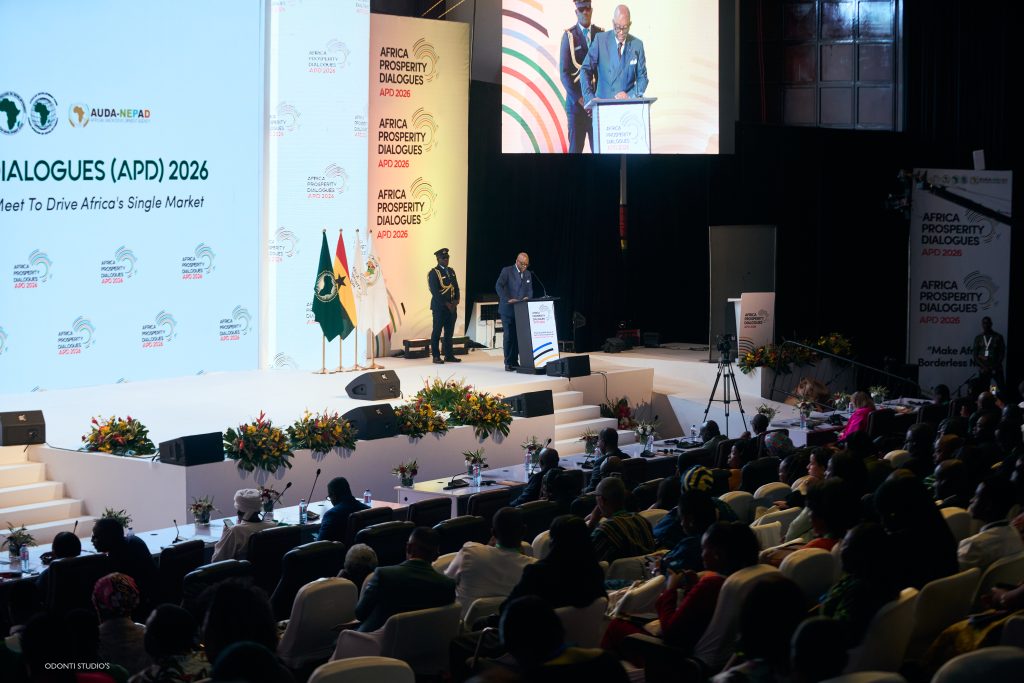
    Wode Maya is a Ghanaian aeronautical engineer-turned-YouTuber known for promoting Africa through authentic storytelling. With millions of followers, he travels across the continent and the Caribbean, reshaping global perceptions of these regions through culture, tourism, and enterprise.

    He has more than 3 million followers on Facebook, most of them in Africa, yet his primary income comes from a YouTube audience largely based outside the continent. At first glance, this feels unfair. But it is not a failure of talent or effort. The explanation is simple: ARPU, the average revenue per user.

    Creators earn when businesses advertise to their audiences. And, businesses advertise where purchasing power exists. In markets where followers can be easily converted into customers, advertising flows and creators monetise.

    This is why ARPU is the quiet engine of the global digital economy. It determines what each follower is truly worth. In the United States or Europe, a follower represents real, bankable demand, supported by seamless payment systems, integrated digital marketplaces, and consumers with the ability to spend. Every view carries economic weight.

    In Africa, the passion, engagement, and scale are immense. But the systems that convert attention into income remain fragmented across borders, currencies, and payment infrastructures. A creator may command millions of followers, yet those followers are locked within small, disconnected markets.

    This is why African musicians can reach tens of millions of listeners across the continent but earn disproportionately less than what they receive from much smaller audiences abroad. The issue is not influence but rather the structure of the markets.

    Interestingly, Africa neither lacks demand nor the purchasing power. The continent’s 1.5 billion people include roughly 400 million middle-class consumers, larger than the entire population of the United States and approaching Europe’s population of 450 million. The potential for creators like Wode Maya to earn significantly more for their hard work than they do currently exists.

    The financial backbone of this digital activity is equally compelling. In 2024, global mobile money transactions reached approximately $1.68 trillion, up from $1 trillion in 2021. Africa alone accounted for about $1.1 trillion, around 65% of global transaction value and 74% of transaction volumes. This is extraordinary. Africa already dominates mobile money globally.

    Yet here lies the paradox: most of that $1.1 trillion circulates within national borders. A Ghanaian wallet operates in Ghana; a Kenyan system in Kenya and parts of East Africa at best; a Nigerian platform in Nigeria. They do not fully connect.

    Now imagine if they did. A creator in Ghana could sell instantly to Kenya. A fan in Nigeria could pay a musician in Rwanda in local currency. A business in Côte d’Ivoire could advertise online to target consumers in South Africa and with that businesses in Africa will be motivated to place adverts on the internet. Once businesses can sell easily across Africa, they will advertise more aggressively. And, when they advertise, creators earn. The constraint is simply to do with the incentive deficit presented by our small, fragmented economies.

    Africa by 2024 had 1.1 billion registered mobile money accounts, which is 53 per cent of all global accounts.  Our $1.1 trillion mobile money ecosystem and over a billion account holders are spread across 55 countries, with multiple currencies, disconnected payment systems, and uneven logistics. Compare this with the United States, the European Union, China, or India, which have markets unified by integrated payment systems and digital trade frameworks that convert online audiences into customers.

    In those markets, scale drives monetisation. In Africa, our fragmentation rather suppresses revenue. What we, therefore, need is a functioning continental architecture of a single market that transforms Africa’s demographic and digital potential into real economic value. This is what our influencers must understand and appreciate: why they need economic integration to scale.

    This is because a connected Africa would look like this: seamless payments through PAPSS and interoperable mobile money; free movement of people, capital, cultures and services; integrated digital trade; and goods moving across borders with ease.

    The GSMA projects that with fully integrated payment systems, Africa’s $1.1 trillion mobile money market could expand rapidly to $2–3 trillion, a huge incentive for advertisers. With that expansion would come jobs, scalable African platforms, and globally competitive creators.

    The African Union has already built many of the rails for that ride. Except our political leaders have simply refused to connect many of them. The policy framework already exists. The Abuja Treaty of 1991 set the goal of a single African economic community by 2028. Since then, we have adopted the AfCFTA, the Free Movement Protocol, the Digital Trade Protocol, the Investment Protocol, etc. Our leaders know what to do. Sadly, they appear to be in no rush to implement the needful.

    Yet, the path forward requires courage. Simply put: leadership. We have known what to do for more than three decades since the Abuja Treaty. We have signed, we have articulated, but implementation has been slow. Caution, inertia and territorialism have arrested momentum. The real gap is not clever ideas or accessible markets, it is the political will to act with urgency and to align every sector behind a shared goal: a single, digitised, borderless Africa.

    This is why creators must lead. Africa’s influencers, musicians, developers, and digital entrepreneurs are not merely content distributors; they are market-makers, culture shapers, and agenda setters. They stand to gain the most from a borderless Africa because their work is inherently transnational. The vitality of their brands depends on a seamless, scalable market; their success mirrors the health of the continent’s digital economy.

    This is why this appeal is to creators. We need you to help mobilise millions of Africans, people of African descent and friends of Africa, to demand of our leaders to implement the treaties and protocols they have already adopted, which will combine to create the single market that Africans need. 

    For creators, the implications of a borderless Africa, as set out in the 12-point agenda of Africa Prosperity Network’s “Make Africa Borderless Now! Movement”, matter directly to you: those who produce content, music, software, and services.

    Cross-border payments would convert followers into paying customers in real time. Free movement of people would enable tours, collaborations, and scale. Digital trade integration would open doors for selling content and services across borders. Streamlined logistics and harmonised standards would remove friction for goods, enabling scale. These are the practical foundations of monetisation and it is why the Make Africa Borderless Now! Movement must be owned and driven by the continent’s creators.

    China and India, with similar population sizes like Africa, did not rise as digital giants because they were inherently more innovative. They rose because they invest, confident of their unified, connected, borderless economic environment and size.

    In short, Africa could also build its own version of a vast, thriving marketplace, an ecosystem where ARPU rises not because Africans become wealthier overnight, but because the market enables transactions at scale. When systems integrate, it changes everything. Payments become reliable, commerce grows, and logistics catches up. Continent-wide advertising by African businesses becomes the norm, digital markets deepen, and global platforms begin to reprice Africa more fairly. That is when our creators can earn directly from their biggest audiences: African consumers. That is why we need you, as creators, to be at the forefront of demanding action from our leaders.

    This is the logic behind the Make Africa Borderless Now! Movement, launched in February 2026. Our goal is simple: secure 10 million signatures by February 2027 and present them to African leaders at the next AU Summit. To stress, the demand is equally simple: implement what has already been agreed. It is not about politics. It is about unlocking the full value of Africa’s creators by removing the barriers that keep followers as numbers instead of customers.

    So please, be the champions of this movement. Sign. Share. Mobilise. The day Africa becomes a single market of 1.5 billion people is the day every follower becomes a customer. It is the day Africa’s creators begin to earn their true value.

    If you act with urgency, you, as a creator, will become the lead champion redefining Africa’s growth and prosperity.  Your followers will not just be fans. They will be customers, partners, and participants in Africa’s agenda for a continent of shared prosperity.

    I invite all creators across Africa and the diaspora to become ambassadors of the Make Africa Borderless Now! campaign.

    The author is the Founder and Executive Chairman of Africa Prosperity Network, organisers of the Make Africa Borderless Now! movement. He may be reached at gabby@africaprosperity.network. For More information, please click: www.makeafricaborderlessnow.com

    To donate or add your signature to the ten million and support the movement, visit: www.makeafricaborderlessnow.com

    -ENDS-

    For media inquiries, please contact:

    Prince Moses, Director, Communication Directorate | Africa Prosperity Network| E- mail: princemoses@africaprosperity.network | Accra. Ghana

    Joel Krampa, Communication Lead | Africa Prosperity Network | E-mail: j.krampa@africaproserity.network | Accra. Ghana

    APN Communication Directorate: comms@africaprosperity.network

    Website: www.africaprosperitynetwork.com

     Follow us: Facebook, X (Twitter), LinkedIn, YouTube, WhatsApp, TikTok

    #MABN!

    Distributed to all African and International media houses

  • SMEs, Youth and Women at the heart of Africa’s Single Market

    SMEs, Youth and Women at the heart of Africa’s Single Market

    By H.E. Alexandre Barro Chambrier, Vice-President of the Republic of Gabon

    Africa finds itself today at a decisive crossroads of its economic sovereignty. It is no longer a time for diagnoses, but a time for courageous decisions, implementation, and measurable results. The African Continental Free Trade Area is more than a trade agreement: it is a structured political choice, a project of collective sovereignty, and a generational promise made to African youth. Yet, despite this historic potential, intra-African trade still represents only about 15 – 18% of the continent’s total trade, while it exceeds 60% in Europe and over 50% in Asia. Intra-community trade within the Central African Economic and Monetary Community (CEMAC) and Economic Community of Central African States (ECCAS), remains very low and speaks to the scale of the challenge before us.
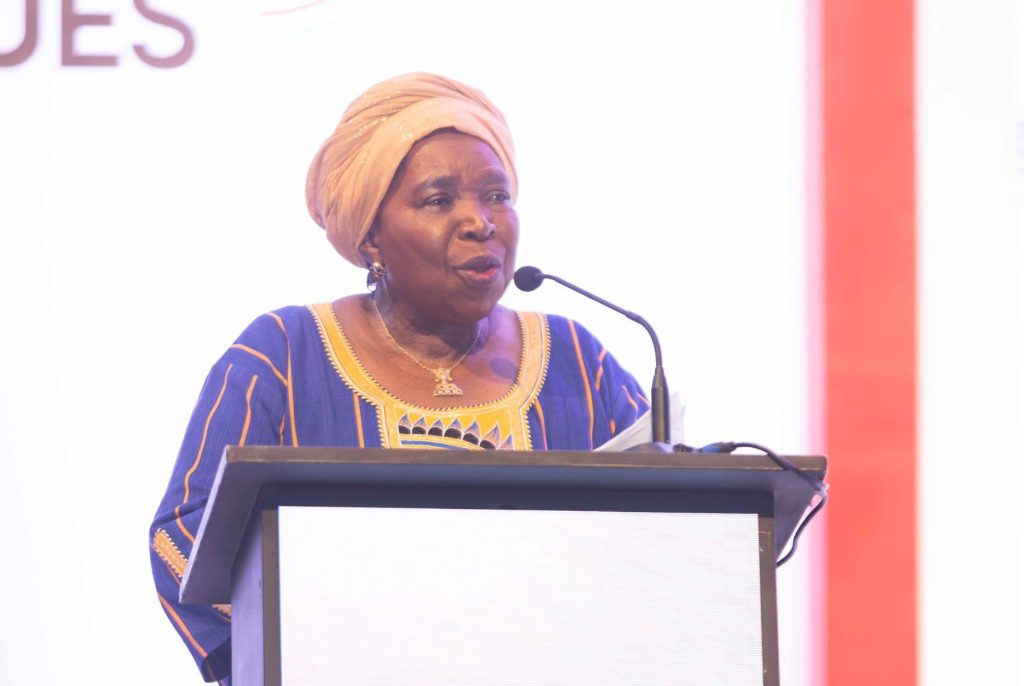
    The Africa Prosperity Dialogues have championed a progressive and coherent rise in our collective ambition. In 2023, it was about moving from ambition to action. In 2024, the focus was on the need to produce in Africa and add value. In 2025, we recognised that infrastructure is the indispensable foundation of the single market. In 2026, we are taking a decisive step by placing productive African human capital at the heart of integration.

    This trajectory echoes Kwame Nkrumah’s visionary warning that “Africa must unite or perish”. Today, this unity can no longer be only political; it must be economic, productive, and inclusive. The dialogues confirm an obvious truth: a single market without competitive SMEs, without fully integrated women entrepreneurs, and without productive youth would remain a legal architecture without a tangible economic reality.

    African SMEs represent about 80% of jobs on the continent, but less than 20% of them participate today in cross-border trade. This gap is not an entrepreneurial failure; it reflects a deficit of access. Non-tariff barriers remain numerous and in various forms, such as complex customs procedures, divergent standards and certifications, prolonged border delays, or lack of information about the rules of origin and preferential tariffs. The AfCFTA remains a legal text for many African SMEs, rather than an operational economic tool. Initiatives launched in Accra, such as direct SME-investor matchmaking spaces and dedicated negotiation mechanisms, mark a turning point. The single market is starting to function as a real market.

    The second major issue is the ratification and effective implementation of the AfCFTA protocol on women and youth. These groups constitute the majority of informal cross-border traders and continue to face limited access to public markets, persistent financing difficulties, and harassment at borders. According to available estimates, full implementation of this protocol could unlock over 15 billion USD in untapped economic value. Investing in women and youth is not a social choice; it is a rational economic choice, a choice of competitiveness, growth, and stability.

    Given that Africa is the youngest continent in the world, failure to transform this human capital into productivity would turn a strategic asset into structural vulnerability.

    Gabon is one of the pioneering countries that ratified the AfCFTA Agreement. Our country has seen an acceleration since 2023 in local transformation and is actively developing value chains around wood, manganese, and iron, with a clear ambition to make these resources an engine of sustainable, inclusive growth and job creation. To strengthen these value chains, Gabon is acting on several complementary levers, through investment in transport, energy, communication infrastructure, adoption of modern technologies to improve productivity, establishment of financing mechanisms adapted to business needs, simplification of administrative procedures, and improvement of the regulatory framework.

    Due to its geographical position, Gabon also aspires to become a major gateway to Central Africa. With an 800-kilometre Atlantic coastline, a growing role in regional maritime trade, and an affirmed vocation as an air and logistics hub for the CEMAC sub-region, our country intends to contribute fully to regional and continental integration.

    Since February 2026, the Gabonese Government has implemented a national AfCFTA strategy specifically dedicated to supporting local businesses, particularly SMEs, towards intra-African export. This development is part of the profound reshaping of the development model we have committed ourselves to since the adoption of the new Gabonese Constitution.

    Indeed, African SMEs lack neither ideas nor audacity. What they lack is effective access to financing, public markets, regional value chains, logistics, and economic information. The AfCFTA must become an accelerator for SMEs and not a space reserved for already structured large companies.

    Gabon calls for an AfCFTA resolutely oriented towards execution, an ambitious African public-private partnership, and continental cooperation based on trust, responsibility, and results. History will not judge our intentions; it will judge our ability to transform the African single market into a reality experienced by our peoples and not a deferred promise.

  • A Borderless Africa where Women, Youth and SMEs lead the Africa We Want

    A Borderless Africa where Women, Youth and SMEs lead the Africa We Want

    By H.E. Dr Nkosazana Dlamini Zuma, Chairperson, Advisory Council, Africa Prosperity Network 

    The annual, three-day Africa Prosperity Dialogues have comfortably emerged as the Boardroom of Africa, a place where vision meets execution, where declarations are transformed into action, and where Africa’s prosperity and narratives are shaped by Africans themselves.

    Empowering SMEs, Women & Youth in Africa’s Single Market is crucial for the attainment of Agenda 2063, The Africa We Want, which is an integrated, prosperous and peaceful Africa, driven by its own citizens, representing a dynamic force in the international arena. This is aligned with Aspiration 6 of Agenda 2063, which recognises that Africa’s development must be driven by its people, drawing on the full potential of its women and youth.

    The Africa Prosperity Network was established to bring Africa’s leaders, businesses and citizens together to shape our collective future. It has convened heads of state, business leaders and innovators; built bridges between policy and enterprise; and advanced campaigns to remove barriers to trade and mobility. These include advocacy for mobile money interoperability, now adopted through the Pan-African Payment and Settlement System, and the Dollar-a-Day initiative to mobilise citizen financing for Africa’s infrastructure, which is currently under discussion with AUDA-NEPAD.

    Our success as African leaders will not be measured by summits held or documents signed. It will be measured by jobs created, businesses scaled, borders opened, and rising prosperity for women and youth. It will be measured by whether Africa builds world-class infrastructure, takes away the need for guns, and ensures that children have access to quality education, healthcare, and a better quality of life. Our collective success will also be measured by whether we deliver a skills revolution, particularly in science, technology, engineering and mathematics, so that Africans can innovate and drive the continent toward lasting prosperity and peace.

    Supporting Women, Youth and SMEs

    Women contribute nearly 50% of Africa’s GDP (UNECA, 2021), yet face systemic exclusion from finance, markets and trade networks. Closing gender gaps in trade could increase intra-African trade by 15% annually (AfCFTA Secretariat).

    Youth make up 60% of Africa’s population (World Bank, 2023), yet unemployment remains structurally high. Empowering young entrepreneurs could create up to 50 million jobs by 2030 (AfDB, 2021). It is therefore important to harness our youthful dividend by investing in quality education and skills training aligned with future job markets. We must create an enabling environment for entrepreneurship and innovation through supportive policies and access to finance. Also, we need to foster good governance, political stability, and inclusive economic policies to ensure young people meaningfully contribute to and benefit from the continent’s growth.

    SMEs account for 80% of employment and 50% of GDP (Afreximbank, 2022), yet only one in five participates in cross-border trade due to regulatory, financial and logistical barriers (ITC, 2021). This is a glorified system failure. Addressing it requires tailored financial products that reflect the realities of entrepreneurs; deliberate integration of women and youth-led enterprises into regional value chains and sustained investment in skills development and digital tools.

    A Borderless Africa

    To deepen intra-African trade, which currently stands at just 15% compared to intra-Euro trade, which sits at 60-70%, Africa must open its borders. The Make Africa Borderless Now! movement reflects this urgency. This must, of course, be done responsibly, with due regard for security, regulation and public safety.

    Greater mobility strengthens tourism, integration, and mutual understanding among Africans. It brings us closer to realising the vision articulated by Kwame Nkrumah, who reminded us that “Divided we are weak; united, Africa could become one of the greatest forces for good in the world.”

    Countries such as Botswana, Namibia and Zambia introduced the Borderless Africa Alliance in 2023-2024 with an announcement made in 2025. Under the alliance, citizens of the member countries can cross borders using only their national identity cards instead of passports. It is worthy to note that this has not resulted in disproportionate increases in crime.

    It is of the essence that we commit to inclusive innovation, meaningful collaboration, and expanded trade. Simplified trade regimes must move from pilot projects to continental norms. Cross-border payments, logistics and digital trade platforms must be designed for small businesses; not only for large banks and corporates. Integration must reduce costs, not add layers. Governments must decisively remove tariff and non-tariff barriers. The private sector must procure from SMEs, women and youth at scale. And financial institutions must be transparent and accountable for how much of their capital truly reaches those who drive inclusive growth.

    Building the Africa we want cannot be the responsibility of governments and businesses alone. It is a shared responsibility. Every African: policy-maker, investor, entrepreneur, academic, worker and citizen has a role to play. Integration begins with mindset: the understanding that Africa’s prosperity is a collective project, and that each of us is both a beneficiary and a builder of the future we seek.

  • Opinion: Why Ghana’s President Must Champion Africa’s Court Of Justice In Arusha

    Opinion: Why Ghana’s President Must Champion Africa’s Court Of Justice In Arusha

    The Africa Prosperity Network (APN) warmly welcomes the announcement that President John Dramani Mahama was in Arusha, Tanzania, to address the opening of the 2026 judicial year of the African Court on Human and Peoples’ Rights, marking the Court’s 20th anniversary.

    It will be the first time a sitting President of the Republic of Ghana has addressed the Court. The theme: “20 Years of Service in Protecting Human and Peoples’ Rights in Africa” is both reflective and forward-looking. But how forward-looking will we allow it to be?

    The timing is significant. President Mahama will assume the Chairmanship of the African Union next February. And 2027 will be just one year before the 2028 deadline our leaders set for themselves under the 1991 Abuja Treaty to establish the African Economic Community, Africa’s much-anticipated but widely frustrated single market.

    His visit to Arusha, including his bilateral engagement with President Samia Suluhu Hassan of Tanzania—also in line with Ghana’s push for visa-free travel between Ghana and all other AU Member States—therefore carries symbolic and strategic weight. It is an opportunity not merely to celebrate history but to help shape Africa’s future.

    Yet this anniversary should also prompt sober, deeper reflection on another milestone that passed quietly three years ago: the 20th anniversary of the 2003 Protocol on the Court of Justice of the African Union, adopted in Maputo. That Protocol envisioned something transformative: an African Court of Justice to enforce Union law. More than two decades later, that vision remains largely unrealised.

    A single market is not merely an economic arrangement; it is a legal order. When states agree to remove tariffs, guarantee free movement, recognise qualifications, and protect the right of establishment, they create shared rights and binding obligations. Those rights must be interpreted uniformly, enforced consistently, and must have supremacy over any conflicting domestic law.

    Without a supranational judicial authority to give binding interpretations of African Union law, each Member State will interpret integration commitments through its own courts and political lenses.

    The result is fragmentation: legal uncertainty, regulatory divergence, and uneven implementation. A continental market of 1.5 billion consumers cannot function if 55 jurisdictions apply the same treaty differently. The missing piece in Africa’s integration project is therefore enforcement.

    The Abuja Treaty set out a 34-year roadmap toward economic union, culminating in 2028. But we all attest to the reality that integration does not succeed on political declarations alone. It requires a constitutional backbone. Under Article 18 of the AU Constitutive Act, African leaders provided for the establishment of an African Court of Justice—a supranational court to enforce AU law, including uniform application of single market rules once adopted and ratified.

    Subsequent protocols strengthened this vision, beginning with the Protocol on the Statute of the African Union Court of Justice and Human Rights (2008). This created the framework for merging the Court of Justice with the existing Human Rights Court into a single institution with multiple sections.

    Six years later, the 2014 Malabo Protocol went further, proposing an expanded jurisdiction over criminal cases. Yet none of these instruments has secured sufficient ratifications to bring the full court architecture into force. For instance, to date, only about eight AU Member States have ratified the 2008 Protocol—far below the minimum 15 ratifications required for it to enter into force.

    In essence, the political decision has been taken. The legal framework exists. What is missing is implementation. Markets require rules. Rules require enforcement, and integration requires uniformity and certainty.

    Investors, whether African or global, need assurance that treaty commitments cannot be undermined arbitrarily at the national level or by a competitor. Entrepreneurs, SMEs, and professionals must know that their rights to trade, move, and establish businesses across borders are protected, regardless of domestic political shifts.

    Our leaders must appreciate that a supranational African Court of Justice would not diminish sovereignty; it would strengthen it collectively. Member States would be compelled to ensure that commitments they have voluntarily undertaken are honoured consistently.

    Just as national supreme courts safeguard constitutional order within states, Africa’s version of a Supreme Court would safeguard the constitutional order of the Union itself. Without such an institution, integration risks remaining aspiration rather than enforceable reality—or at best, tot-tot in delivery.

    Today, Africa’s greatest human rights challenge is mass poverty. Mass poverty cannot be defeated without scale. And scale requires integration of markets, infrastructure, capital, and labour.

    The undeniable truth—which we must quickly come to terms with—is that our continent, rich in resources and human talent, has not been able to transform itself sustainably into a land of opportunity and shared prosperity while remaining legally, psychologically, and infrastructurally fragmented.

    If we fail to operationalise the supranational court envisaged in our own constitutional framework, then Africa’s single market will remain a promise struggling for fulfilment.

    This is why Item 10 of the Make Africa Borderless Now! Movement, launched by APN on 6 February 2026, calls for:

    “Operationalising a supranational African Court of Justice to enforce AU law and single market rules uniformly across member states.”

    We are mobilising 10 million signatures to present to African leaders, urging them to implement the treaties and protocols they themselves have adopted.

    Arusha should therefore mark more than a celebration. It should mark resolve. Let the commemoration of 20 years of human rights protection now evolve into the enforcement of economic integration rights. Let us complete the judicial architecture necessary to protect Africa’s single market.

    History reminds us that sovereignty is best defended through unity. As we celebrate the Battle of Adwa of 1 March 1896, we must recall that it demonstrated that consolidated strength defeats fragmentation. In the 21st century, Africa’s consolidated strength must include a functioning supranational court.

    The presence of Ghana’s Nkrumaist leader, President Mahama, in Arusha offered a rare opportunity for leadership to move the continent from promise to protection, from aspiration to enforcement.

    Let us therefore do what is necessary to give Africa’s single market a legal shield by supporting APN’s advocacy for the implementation of the various AU treaties and protocols that will deliver the single market.

    We invite you to:

    1. Sign the petition.
    2. Get 20 others to sign.
    3. Help us present 10 million signatures to our leaders in Addis Ababa in 2027.

    For more information, visit: www.makeafricaborderlessnow.com


    About the Author

    Gabby Asare Otchere-Darko is a Senior Partner at Africa Law Practice International Group (ALPi Ghana), and Founder and Executive Chairman of the Africa Prosperity Network, organisers of the annual Africa Prosperity Dialogues.

  • Celebrating Ghana’s 69th Independence with Ideological Convergence on Africa’s Economic Integration

    Celebrating Ghana’s 69th Independence with Ideological Convergence on Africa’s Economic Integration

    By Gabby Asare Otchere-Darko

    On 6 March, I will be joined by Samia Nkrumah and others, including the architect of the African Union’s Agenda 2063, Dr Nkosazana Dlamini-Zuma, former MP, Ras Mubarak, Amb Ayanda Ngwane, Founder & Chief Executive Officer, Ayanda Media Network and MD BRICS TV West and Central Africa Bureau and two big Ghanaian voices from Africa’s creative industry (Stonebwoy and Sarkodie), for a webinar reflecting on Ghana’s 69 years of independence in the light of the vision of Ghana’s independence leader, Kwame Nkrumah, for a United States of Africa.

    Our discussion, celebrating Ghana as the first Sub-Saharan nation to win freedom from colonial rule, will focus on how we achieve Africa’s common market dream with far greater urgency.  We will look at two historic approaches to African integration: the gradualist path that defined the operations of the Organisation of African Unity (OAU) in 1963, and the clearer, more structured commitment African leaders set for themselves when they adopted the 1991 Abuja Treaty, establishing the African Economic Community and subsequently the more integration-focused African Union in 2002 and the disappointing reality over lack of collective leadership courage for unity.

    But what many people have noticed from the flyer promoting the 6 March event is something else entirely: the image of Samia Nkrumah, an Nkrumaist in both blood and ideology, and myself, a Danquaist in both blood and ideology, appearing on the same platform and seemingly on the same side of an issue.

    For much of Ghana’s political history (certainly before the emergence of JJ Rawlings), Ghana’s national debate was framed around two intellectual traditions embodied by two towering figures: Kwame Nkrumah and JB Danquah.

    The Nkrumaist tradition is deeply Pan-Africanist and socialist in orientation. It holds that Ghana’s independence would be meaningless unless it formed part of a broader political unification of Africa. Nkrumah’s famous directive, “Seek ye first the political kingdom”, was continental in scope. His vision was a Union Government of Africa: a United States of Africa with a single currency, a common military, and a unified foreign policy.

    The “Danquaists”, (or more aptly, the Danquah–Dombo–Busia tradition, by contrast) have historically been more Ghana-focused. It emphasises liberal democracy, human rights, and free-market economics, with a strong focus on building stable institutions within the nation-state. Danquah believed Ghana, and West Africa, he added, should first succeed as democratic and economically viable states before deeper continental political integration could realistically occur.

    What both traditions can agree on today, however, is this: after sixty-nine years of independence, Africa’s progress toward integration is far below what either vision imagined.

    For an Nkrumaist and a Danquaist to stand publicly on the same side of an issue might once have seemed almost unthinkable. Yet today, such convergence is both necessary and inevitable. It was Nana Akufo-Addo, whose great uncle was Danquah, who, in Kigali in 2018, fought for Ghana to be the headquarters of the African Continental Free Trade Area Secretariat, pushing Ghana’s wholesome commitment to the single market project. That this unity is forged around the unification of Africa, the cause Nkrumah championed above all others, is a powerful testament to the gravity of the moment.

    A few weeks ago, I visited Sam Jonah, who accepted the invitation of the Africa Prosperity Network to be a leading champion of the Make Africa Borderless Now! Movement. He could not, however, avoid a friendly jab at me: “We finally welcome you to Nkrumaism!” I responded, “As far as the Africa we want is concerned!”

    The rational, pragmatic case for African economic integration has now become so compelling that it increasingly transcends the ideological divides of the past, and this must be celebrated. It is precisely why the focus of the 6 March webinar, a review of progress under the 1991 Abuja Treaty, is where the rubber truly meets the road.

    African leaders are often brilliant at signing treaties and issuing grand declarations at summits. Yet they have been far less successful at the difficult and often unglamorous work of harmonising laws, simplifying customs procedures, investing in cross-border infrastructure, and dismantling the bureaucratic and corruption networks that thrive on border inefficiencies.

    The timeline is striking. In 1991, African leaders adopted the treaty establishing the African Economic Community (AEC). When it came into force in 1994, they set themselves a 34-year roadmap culminating in 2028, by which time Africa was expected to have achieved a functioning common market and key pillars of economic integration, including an African Central Bank.

    That deadline is now just two years away. Yet the reality is shamelessly sobering. The African Continental Free Trade Area (AfCFTA), which began trading in 2021 and is meant to accelerate the Abuja Treaty vision, remains far from fulfilling its potential. Implementation has been slow. Non-tariff barriers remain pervasive. The “guided trade initiative” has yet to translate into large-scale, continent-wide trade flows.

    A true customs union, with a common external tariff, remains distant. The free movement of people, a cornerstone of Nkrumah’s vision, continues to face resistance from many states. The ECOWAS model of free movement remains the exception rather than the continental norm. And, the dream of a common African currency appears further away than ever, with some of us seeking quick, practical refuge in continent-wide mobile money interoperability and tents such as PAPSS.

    Our webinar will therefore examine a difficult but necessary question: why has urgency been so lacking? Part of the answer lies in political psychology.

    Many post-colonial leaders built their legitimacy and authority around the nation-state. Ceding power to supranational institutions has often been perceived as a loss of sovereignty and personal authority. But should that still be the case today?

    Sadly, too many leaders remain trapped in a 1960s mindset of defending borders, rather than embracing the 21st-century necessity of transcending them and seeing a borderless Africa as a better guarantee for sovereignty through peace, security, stability and prosperity.

    The 2028 deadline for the full implementation of the Abuja Treaty was a benchmark set by African leaders themselves over three decades ago. To arrive within two years of that milestone with so many pillars incomplete is not merely a failure of planning. It is a failure of political will.

    Looking at Ghana’s symbolism, there is also a hopeful signal in the fact that heirs of both the Nkrumah and Danquah traditions can now stand together on this question. It suggests that the ideological battle is now joint in achieving our common destiny as best manifest through our continent’s unity. Reality has settled the debate.

    The question before Africa today is no longer whether integration is necessary, but how to generate the political urgency required to honour the commitments African leaders made to themselves and to their people in Abuja more than three decades ago.

    The window for the 2028 goal may be closing. But the urgency of the African integration project has never been greater.

    The author is the Founder and Executive Chairman of the Africa Prosperity Network. gabby@africaprosperity.network

  • Africa’s Prosperity must go global: SMEs, Women, and Youth at the heart of AfCFTA.

    Africa’s Prosperity must go global: SMEs, Women, and Youth at the heart of AfCFTA.

    By H.E. John Dramani Mahama, President, Republic of Ghana 

    Africa stands at a historic crossroads. SMEs account for more than 80% of employment, yet fewer than 20% engage in cross-border trade. Women lead nearly 30% of registered businesses but face systemic barriers. Youth, who make up 60% of our population, are innovating daily but struggle to scale. These figures are not just statistics; they are the untapped engines of Africa’s prosperity.
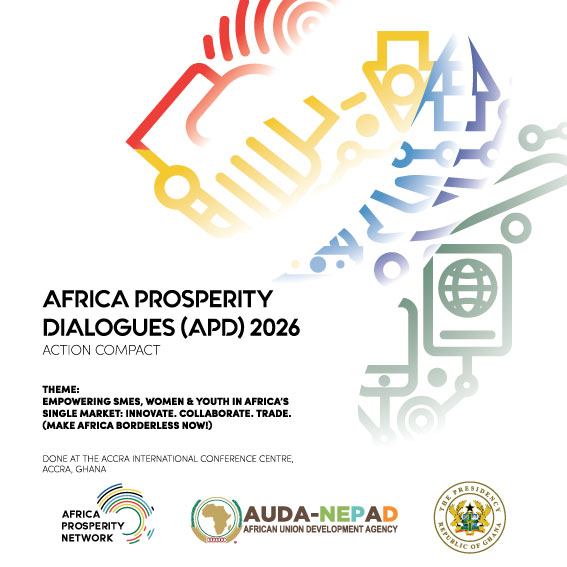
    At the Africa Prosperity Dialogues (APD) in Accra last year, I reminded leaders that AfCFTA is not merely about free trade; it is about creating an environment that supports Africa’s industries and businesses. This year, as we convene APD 2026 under the theme “Empowering SMEs, Women & Youth in Africa’s Single Market: Innovate. Collaborate. Trade,” I reaffirm that Africa’s prosperity must not only be continental, it must be global.

    SMEs are the backbone of Africa’s economy. According to UNECA, AfCFTA could increase intra-African trade by 52%. Ghana’s SMEs in agribusiness, textiles, and fintech have shown that when integrated into regional value chains, they create jobs at scale and drive industrialisation. But, the next step is global competitiveness. Our SMEs must not only trade across African borders, they must export to the world. AfCFTA must be the launchpad for Africa’s global brands.

    Women entrepreneurs are Africa’s most resilient innovators, yet they remain locked out of finance and networks. Closing gender gaps could add trillions to global GDP, but this requires bold action. That is why I have consistently championed the creation of a Women’s Development Bank (WDB) in Ghana. This institution will provide low-interest loans, financial literacy, and tailored business support to women entrepreneurs. It is designed to dismantle systemic barriers, unlock economic potential, and empower women as leaders and nation-builders. Women’s economic empowerment is often framed as a social good, but it is fundamentally an economic strategy. For AfCFTA to deliver on its promise, inclusion, particularly of women, must be non-negotiable.

    Africa’s youth are our greatest asset. With 60% of our population under 25, we hold the world’s largest youth dividend. In Ghana, I have made it clear that agriculture must be the engine that harnesses this energy. My vision is to move our agriculture sector from subsistence to a powerhouse, modernised, mechanised, and globally competitive sector. By investing in irrigation, storage, processing, and digital platforms, and by providing mentorship and capital, we will empower young farmers and agripreneurs to scale their enterprises. AfCFTA must be the ecosystem that allows Ghana’s agriculture to flourish across the continent and into global markets.

    Critics often contend that Africa’s integration agenda is overly ambitious, citing infrastructure gaps and political complexities. These concerns are legitimate, but they are not insurmountable. Ghana’s role as host of the AfCFTA Secretariat in Accra demonstrates our unwavering commitment to continental integration. The Pan-African Payment and Settlement System (PAPSS) is already transforming cross-border trade by reducing currency barriers and transaction costs. The Single African Air Transport Market (SAATM) is lowering the cost of movement and strengthening connectivity. At the same time, digital platforms are enabling small and medium-sized enterprises to reach customers far beyond national borders. Integration succeeds not by chance, but by collective political will, sustained investment, and deliberate action and Africa is moving in that direction.

    The strategic imperative before us is unmistakable: the AfCFTA must succeed; fully, inclusively, and competitively on the global stage. This demands deliberate action. Governments must align policies and dismantle the barriers that fragment our markets. Financial institutions must move beyond one-size-fits-all financing and design instruments that unlock capital for SMEs, women, and youth. Private investors must recognise Africa’s entrepreneurs not as risks to be avoided, but as partners in value, creation while civil society continues to hold us – leaders and institutions alike – accountable. Africa’s single market is more than an economic framework; it is a promise of shared prosperity. Yet that promise will remain unfulfilled unless SMEs, women, and young people are empowered not merely to participate, but to lead.

    As President of Ghana, I call on African leaders, businesses, and citizens to move decisively from aspiration to action. We must innovate boldly, collaborate intentionally, and trade seamlessly across our borders. The AfCFTA must not remain a declaration agreed in conference halls; it must become a lived reality that expands opportunity for our African people. This is how we take Africa global; by building competitive brands, resilient industries, and world-class innovations that can stand confidently on the international stage.

    Africa’s future will not be shaped by promises alone. It will be built by our entrepreneurs, powered by our women, and driven by our youth. The moment to act is not tomorrow. It is now.

    This op-ed by H.E. John Dramani Mahama, President of the Republic Ghana, draws on extracts from his speeches and public addresses delivered at key platforms including the Africa Prosperity Dialogues 2025, engagements with young entrepreneurs, and policy statements on Africa’s industrialisation and women’s empowerment.  

  • Press Release: APN Demands Visa-Free Africa as 6,530 Delegates Back 12-Point Borderless Compact

    Press Release: APN Demands Visa-Free Africa as 6,530 Delegates Back 12-Point Borderless Compact

    Accra, Ghana – 25 February 2026 – The Africa Prosperity Network (APN), organisers of the annual Africa Prosperity Dialogues, has today released the APD 2026 Action Compact, a bold 12-point blueprint demanding urgent implementation of Africa’s integration agenda. The Compact distils the outcomes of the three-day Africa Prosperity Dialogues held from 4–6 February 2026 at the Accra International Conference Centre.

    Among its key demands is visa-free travel for Africans across all African Union (AU) member states. It also calls for seamless cross-border trade, including enabling Africans to buy and sell across borders using mobile money wallets, which the SMEs stressed would be a major, practical step to significantly boost intra-African trade.

    The Compact emerged from high-level Presidential and Business Leaders Dialogues, plenary sessions, roundtables, panel discussions, and 12 executive breakfast meetings, specifically tailored to address the concerns and aspirations of SMEs, women and youth entrepreneurs. They were all convened under the official theme of APD 2026: “Empowering SMEs, Women and Youth in Africa’s Single Market: Innovate. Collaborate. Trade.”

    Finalised on 6 February, this “People’s Compact” captures the collective voice of 6,530 participants, who travelled to Accra from 51 African nations and 40 others. 

    Across every session, one conclusion was unmistakable: empowering SMEs, women and youth will not come from fresh AU declarations, but from implementing the treaties and protocols already signed.

    Delegates pointed to the Treaty Establishing the African Economic Community (Abuja Treaty of 1991), the Agreement Establishing the AfCFTA (2018), the Protocol on Free Movement of Persons, and the AfCFTA Protocols on Digital Trade and on Women and Youth in Trade as ready-made examples of instruments awaiting full execution. The framework exists. What is missing is delivery.

    Speakers noted that although the Free Movement Protocol was adopted in 2018, only four member states have ratified it, far short of the 15 required for entry into force. Without free movement, businesses cannot scale across Africa, and the promise of a true single market for 1.5 billion people remains constrained, they argued.

    With youth unemployment the most pressing challenge facing governments across the continent, delegates concluded that economic integration can, therefore, not be optional. They described it as the only viable path to the 15 to 20 million jobs Africa must create annually, describing the existing fragmentation not merely inefficient but economically self-defeating for Africa’s sovereign states, both individually and collectively.

    The Compact focuses on the “Make Africa Borderless Now!” movement, the APD 2026 initiative, which launches a continent-wide petition to mobilise ten million (10,000,000) signatures. The petition will be presented to the African Union Assembly in February 2027 with one clear demand: RATIFY AND IMPLEMENT NOW.

    “This Compact is the collective voice of Africa’s private sector, women and youth,” says Dr Nkosazana Clarice Dlamini-Zuma, Chairperson of the Advisory Council of the Africa Prosperity Network and architect of ‘The Africa We Want.’ 

    “The tools for prosperity already exist. The time for implementation is now,” says the former Chairperson of the AU Commission when the Agenda 2063 was launched in 2013.

    To donate or add your signature to the ten million and support the movement, visit: www.makeafricaborderlessnow.com

    -ENDS-

    For media inquiries, please contact:

    Prince Moses, Director, Communication Directorate | Africa Prosperity Network|

    E- mail: princemoses@africaprosperity.network | Accra. Ghana

    Joel Krampa, Communication Lead | Africa Prosperity Network |

    E-mail: j.krampa@africaproserity.network | Accra. Ghana

    APN Communication Directorate: comms@africaprosperity.network

    Website: www.africaprosperitynetwork.com

     Follow us: Facebook, X (Twitter), LinkedIn, YouTube, WhatsApp, TikTok

    #MABN!

    Distributed to all African and International media houses

  • Press Release: Air Algérie Group and Africa Prosperity Network advance “Make Africa Borderless Now!” agenda

    Press Release: Air Algérie Group and Africa Prosperity Network advance “Make Africa Borderless Now!” agenda

    Partnership Supports Free Movement of People, Goods and Services Across Africa

    Addis Ababa, Ethiopia, February 2026 — The Africa Prosperity Network (APN) and Air Algérie Group have signed a Co-operation Framework Agreement in Addis Ababa, reinforcing their shared commitment to the Make Africa Borderless Now!” movement.

    The partnership recognises air connectivity as a critical enabler of the free movement of people, goods, and services, which is central to the successful implementation of the African Continental Free Trade Area (AfCFTA) and Africa’s broader economic integration efforts.

    Through this collaboration, the parties will support initiatives that enhance intra-African mobility, facilitate participation in the Africa Prosperity Dialogues (APD) and other related convening platforms, as well as strengthen trade and cargo movements across Africa. The Agreement also provides a platform for policy dialogue, capacity building, and advocacy aimed at breaking down barriers to trade, travel, and economic activity.

    The signing of this agreement underscores the growing momentum behind the Make Africa Borderless Now! movement and the shared resolve of African institutions to translate integration commitments into practical, continent-wide impact.

    Join the Movement

    Members of the public who wish to support the vision of a borderless Africa are encouraged to sign the “Make Africa Borderless Now!” petition and add their voice to this historic continental movement.

    ————–

    About the Make Africa Borderless Now! Movement

    The Make Africa Borderless Now! movement is a transformative initiative driving towards the realisation of a unified African market. By advocating for the elimination of barriers to trade, travel, and economic activity, the movement seeks to unlock Africa’s full economic potential and improve the quality of life for all Africans, both on the continent and across the diaspora.

    —————-

    Africa Prosperity Network

    The Africa Prosperity Network is a leading Pan-African organisation dedicated to advancing economic integration, sustainable development, and shared prosperity across the African continent. Through strategic initiatives, thought leadership, and collaborative partnerships, the Network works to create an enabling environment for Africa’s economic transformation.

    ————–

    For More Enquiries, contact:

    Africa Prosperity Network, Communication Directorate

    Tel: +233 20 136 9105

    Email: comms@africaprosperity.network
    Web: www.africaprosperitynetwork.com

    END

    SIGNED:

    Africa Prosperity Network – Communication Directorate

    Distributed to all African and international media houses