Category: Make Africa Borderless Now!

  • SMEs, Youth and Women at the heart of Africa’s Single Market

    SMEs, Youth and Women at the heart of Africa’s Single Market

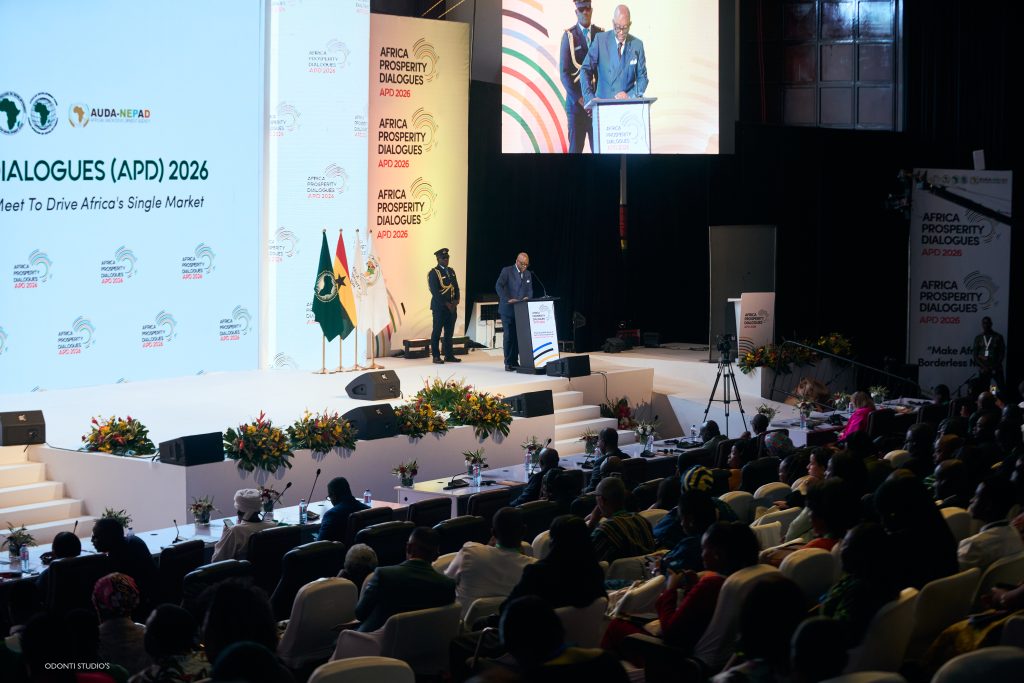
    By H.E. Alexandre Barro Chambrier, Vice-President of the Republic of Gabon

    Africa finds itself today at a decisive crossroads of its economic sovereignty. It is no longer a time for diagnoses, but a time for courageous decisions, implementation, and measurable results. The African Continental Free Trade Area is more than a trade agreement: it is a structured political choice, a project of collective sovereignty, and a generational promise made to African youth. Yet, despite this historic potential, intra-African trade still represents only about 15 – 18% of the continent’s total trade, while it exceeds 60% in Europe and over 50% in Asia. Intra-community trade within the Central African Economic and Monetary Community (CEMAC) and Economic Community of Central African States (ECCAS), remains very low and speaks to the scale of the challenge before us.
    The Africa Prosperity Dialogues have championed a progressive and coherent rise in our collective ambition. In 2023, it was about moving from ambition to action. In 2024, the focus was on the need to produce in Africa and add value. In 2025, we recognised that infrastructure is the indispensable foundation of the single market. In 2026, we are taking a decisive step by placing productive African human capital at the heart of integration.

    This trajectory echoes Kwame Nkrumah’s visionary warning that “Africa must unite or perish”. Today, this unity can no longer be only political; it must be economic, productive, and inclusive. The dialogues confirm an obvious truth: a single market without competitive SMEs, without fully integrated women entrepreneurs, and without productive youth would remain a legal architecture without a tangible economic reality.

    African SMEs represent about 80% of jobs on the continent, but less than 20% of them participate today in cross-border trade. This gap is not an entrepreneurial failure; it reflects a deficit of access. Non-tariff barriers remain numerous and in various forms, such as complex customs procedures, divergent standards and certifications, prolonged border delays, or lack of information about the rules of origin and preferential tariffs. The AfCFTA remains a legal text for many African SMEs, rather than an operational economic tool. Initiatives launched in Accra, such as direct SME-investor matchmaking spaces and dedicated negotiation mechanisms, mark a turning point. The single market is starting to function as a real market.

    The second major issue is the ratification and effective implementation of the AfCFTA protocol on women and youth. These groups constitute the majority of informal cross-border traders and continue to face limited access to public markets, persistent financing difficulties, and harassment at borders. According to available estimates, full implementation of this protocol could unlock over 15 billion USD in untapped economic value. Investing in women and youth is not a social choice; it is a rational economic choice, a choice of competitiveness, growth, and stability.

    Given that Africa is the youngest continent in the world, failure to transform this human capital into productivity would turn a strategic asset into structural vulnerability.

    Gabon is one of the pioneering countries that ratified the AfCFTA Agreement. Our country has seen an acceleration since 2023 in local transformation and is actively developing value chains around wood, manganese, and iron, with a clear ambition to make these resources an engine of sustainable, inclusive growth and job creation. To strengthen these value chains, Gabon is acting on several complementary levers, through investment in transport, energy, communication infrastructure, adoption of modern technologies to improve productivity, establishment of financing mechanisms adapted to business needs, simplification of administrative procedures, and improvement of the regulatory framework.

    Due to its geographical position, Gabon also aspires to become a major gateway to Central Africa. With an 800-kilometre Atlantic coastline, a growing role in regional maritime trade, and an affirmed vocation as an air and logistics hub for the CEMAC sub-region, our country intends to contribute fully to regional and continental integration.

    Since February 2026, the Gabonese Government has implemented a national AfCFTA strategy specifically dedicated to supporting local businesses, particularly SMEs, towards intra-African export. This development is part of the profound reshaping of the development model we have committed ourselves to since the adoption of the new Gabonese Constitution.

    Indeed, African SMEs lack neither ideas nor audacity. What they lack is effective access to financing, public markets, regional value chains, logistics, and economic information. The AfCFTA must become an accelerator for SMEs and not a space reserved for already structured large companies.

    Gabon calls for an AfCFTA resolutely oriented towards execution, an ambitious African public-private partnership, and continental cooperation based on trust, responsibility, and results. History will not judge our intentions; it will judge our ability to transform the African single market into a reality experienced by our peoples and not a deferred promise.

  • A Borderless Africa where Women, Youth and SMEs lead the Africa We Want

    A Borderless Africa where Women, Youth and SMEs lead the Africa We Want

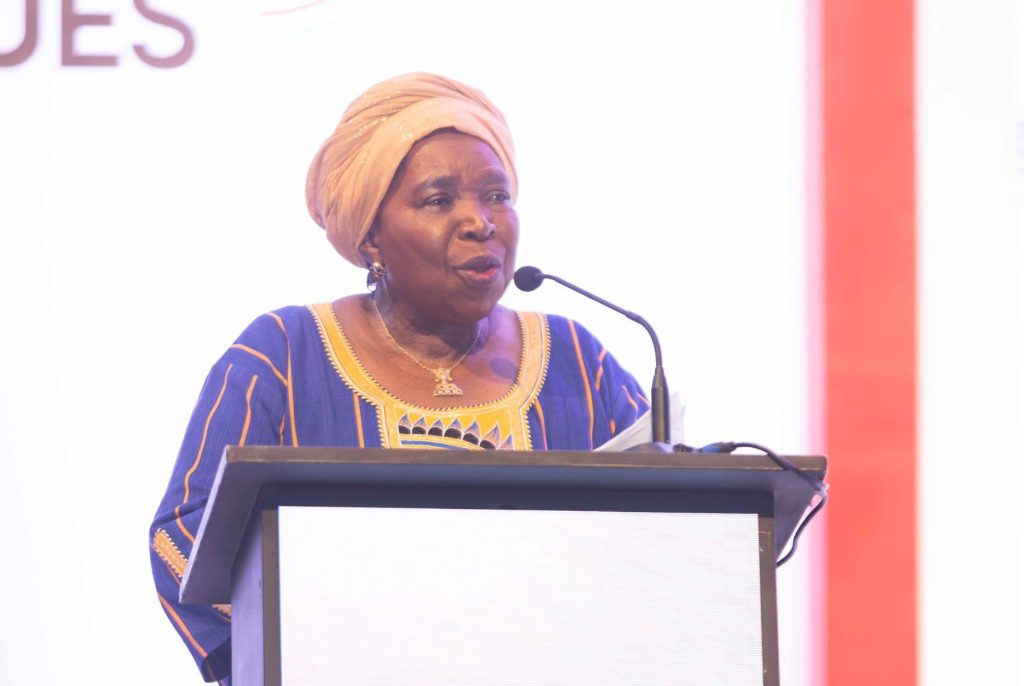
    By H.E. Dr Nkosazana Dlamini Zuma, Chairperson, Advisory Council, Africa Prosperity Network 

    The annual, three-day Africa Prosperity Dialogues have comfortably emerged as the Boardroom of Africa, a place where vision meets execution, where declarations are transformed into action, and where Africa’s prosperity and narratives are shaped by Africans themselves.

    Empowering SMEs, Women & Youth in Africa’s Single Market is crucial for the attainment of Agenda 2063, The Africa We Want, which is an integrated, prosperous and peaceful Africa, driven by its own citizens, representing a dynamic force in the international arena. This is aligned with Aspiration 6 of Agenda 2063, which recognises that Africa’s development must be driven by its people, drawing on the full potential of its women and youth.

    The Africa Prosperity Network was established to bring Africa’s leaders, businesses and citizens together to shape our collective future. It has convened heads of state, business leaders and innovators; built bridges between policy and enterprise; and advanced campaigns to remove barriers to trade and mobility. These include advocacy for mobile money interoperability, now adopted through the Pan-African Payment and Settlement System, and the Dollar-a-Day initiative to mobilise citizen financing for Africa’s infrastructure, which is currently under discussion with AUDA-NEPAD.

    Our success as African leaders will not be measured by summits held or documents signed. It will be measured by jobs created, businesses scaled, borders opened, and rising prosperity for women and youth. It will be measured by whether Africa builds world-class infrastructure, takes away the need for guns, and ensures that children have access to quality education, healthcare, and a better quality of life. Our collective success will also be measured by whether we deliver a skills revolution, particularly in science, technology, engineering and mathematics, so that Africans can innovate and drive the continent toward lasting prosperity and peace.

    Supporting Women, Youth and SMEs

    Women contribute nearly 50% of Africa’s GDP (UNECA, 2021), yet face systemic exclusion from finance, markets and trade networks. Closing gender gaps in trade could increase intra-African trade by 15% annually (AfCFTA Secretariat).

    Youth make up 60% of Africa’s population (World Bank, 2023), yet unemployment remains structurally high. Empowering young entrepreneurs could create up to 50 million jobs by 2030 (AfDB, 2021). It is therefore important to harness our youthful dividend by investing in quality education and skills training aligned with future job markets. We must create an enabling environment for entrepreneurship and innovation through supportive policies and access to finance. Also, we need to foster good governance, political stability, and inclusive economic policies to ensure young people meaningfully contribute to and benefit from the continent’s growth.

    SMEs account for 80% of employment and 50% of GDP (Afreximbank, 2022), yet only one in five participates in cross-border trade due to regulatory, financial and logistical barriers (ITC, 2021). This is a glorified system failure. Addressing it requires tailored financial products that reflect the realities of entrepreneurs; deliberate integration of women and youth-led enterprises into regional value chains and sustained investment in skills development and digital tools.

    A Borderless Africa

    To deepen intra-African trade, which currently stands at just 15% compared to intra-Euro trade, which sits at 60-70%, Africa must open its borders. The Make Africa Borderless Now! movement reflects this urgency. This must, of course, be done responsibly, with due regard for security, regulation and public safety.

    Greater mobility strengthens tourism, integration, and mutual understanding among Africans. It brings us closer to realising the vision articulated by Kwame Nkrumah, who reminded us that “Divided we are weak; united, Africa could become one of the greatest forces for good in the world.”

    Countries such as Botswana, Namibia and Zambia introduced the Borderless Africa Alliance in 2023-2024 with an announcement made in 2025. Under the alliance, citizens of the member countries can cross borders using only their national identity cards instead of passports. It is worthy to note that this has not resulted in disproportionate increases in crime.

    It is of the essence that we commit to inclusive innovation, meaningful collaboration, and expanded trade. Simplified trade regimes must move from pilot projects to continental norms. Cross-border payments, logistics and digital trade platforms must be designed for small businesses; not only for large banks and corporates. Integration must reduce costs, not add layers. Governments must decisively remove tariff and non-tariff barriers. The private sector must procure from SMEs, women and youth at scale. And financial institutions must be transparent and accountable for how much of their capital truly reaches those who drive inclusive growth.

    Building the Africa we want cannot be the responsibility of governments and businesses alone. It is a shared responsibility. Every African: policy-maker, investor, entrepreneur, academic, worker and citizen has a role to play. Integration begins with mindset: the understanding that Africa’s prosperity is a collective project, and that each of us is both a beneficiary and a builder of the future we seek.

  • Opinion: Why Ghana’s President Must Champion Africa’s Court Of Justice In Arusha

    Opinion: Why Ghana’s President Must Champion Africa’s Court Of Justice In Arusha

    The Africa Prosperity Network (APN) warmly welcomes the announcement that President John Dramani Mahama was in Arusha, Tanzania, to address the opening of the 2026 judicial year of the African Court on Human and Peoples’ Rights, marking the Court’s 20th anniversary.

    It will be the first time a sitting President of the Republic of Ghana has addressed the Court. The theme: “20 Years of Service in Protecting Human and Peoples’ Rights in Africa” is both reflective and forward-looking. But how forward-looking will we allow it to be?

    The timing is significant. President Mahama will assume the Chairmanship of the African Union next February. And 2027 will be just one year before the 2028 deadline our leaders set for themselves under the 1991 Abuja Treaty to establish the African Economic Community, Africa’s much-anticipated but widely frustrated single market.

    His visit to Arusha, including his bilateral engagement with President Samia Suluhu Hassan of Tanzania—also in line with Ghana’s push for visa-free travel between Ghana and all other AU Member States—therefore carries symbolic and strategic weight. It is an opportunity not merely to celebrate history but to help shape Africa’s future.

    Yet this anniversary should also prompt sober, deeper reflection on another milestone that passed quietly three years ago: the 20th anniversary of the 2003 Protocol on the Court of Justice of the African Union, adopted in Maputo. That Protocol envisioned something transformative: an African Court of Justice to enforce Union law. More than two decades later, that vision remains largely unrealised.

    A single market is not merely an economic arrangement; it is a legal order. When states agree to remove tariffs, guarantee free movement, recognise qualifications, and protect the right of establishment, they create shared rights and binding obligations. Those rights must be interpreted uniformly, enforced consistently, and must have supremacy over any conflicting domestic law.

    Without a supranational judicial authority to give binding interpretations of African Union law, each Member State will interpret integration commitments through its own courts and political lenses.

    The result is fragmentation: legal uncertainty, regulatory divergence, and uneven implementation. A continental market of 1.5 billion consumers cannot function if 55 jurisdictions apply the same treaty differently. The missing piece in Africa’s integration project is therefore enforcement.

    The Abuja Treaty set out a 34-year roadmap toward economic union, culminating in 2028. But we all attest to the reality that integration does not succeed on political declarations alone. It requires a constitutional backbone. Under Article 18 of the AU Constitutive Act, African leaders provided for the establishment of an African Court of Justice—a supranational court to enforce AU law, including uniform application of single market rules once adopted and ratified.

    Subsequent protocols strengthened this vision, beginning with the Protocol on the Statute of the African Union Court of Justice and Human Rights (2008). This created the framework for merging the Court of Justice with the existing Human Rights Court into a single institution with multiple sections.

    Six years later, the 2014 Malabo Protocol went further, proposing an expanded jurisdiction over criminal cases. Yet none of these instruments has secured sufficient ratifications to bring the full court architecture into force. For instance, to date, only about eight AU Member States have ratified the 2008 Protocol—far below the minimum 15 ratifications required for it to enter into force.

    In essence, the political decision has been taken. The legal framework exists. What is missing is implementation. Markets require rules. Rules require enforcement, and integration requires uniformity and certainty.

    Investors, whether African or global, need assurance that treaty commitments cannot be undermined arbitrarily at the national level or by a competitor. Entrepreneurs, SMEs, and professionals must know that their rights to trade, move, and establish businesses across borders are protected, regardless of domestic political shifts.

    Our leaders must appreciate that a supranational African Court of Justice would not diminish sovereignty; it would strengthen it collectively. Member States would be compelled to ensure that commitments they have voluntarily undertaken are honoured consistently.

    Just as national supreme courts safeguard constitutional order within states, Africa’s version of a Supreme Court would safeguard the constitutional order of the Union itself. Without such an institution, integration risks remaining aspiration rather than enforceable reality—or at best, tot-tot in delivery.

    Today, Africa’s greatest human rights challenge is mass poverty. Mass poverty cannot be defeated without scale. And scale requires integration of markets, infrastructure, capital, and labour.

    The undeniable truth—which we must quickly come to terms with—is that our continent, rich in resources and human talent, has not been able to transform itself sustainably into a land of opportunity and shared prosperity while remaining legally, psychologically, and infrastructurally fragmented.

    If we fail to operationalise the supranational court envisaged in our own constitutional framework, then Africa’s single market will remain a promise struggling for fulfilment.

    This is why Item 10 of the Make Africa Borderless Now! Movement, launched by APN on 6 February 2026, calls for:

    “Operationalising a supranational African Court of Justice to enforce AU law and single market rules uniformly across member states.”

    We are mobilising 10 million signatures to present to African leaders, urging them to implement the treaties and protocols they themselves have adopted.

    Arusha should therefore mark more than a celebration. It should mark resolve. Let the commemoration of 20 years of human rights protection now evolve into the enforcement of economic integration rights. Let us complete the judicial architecture necessary to protect Africa’s single market.

    History reminds us that sovereignty is best defended through unity. As we celebrate the Battle of Adwa of 1 March 1896, we must recall that it demonstrated that consolidated strength defeats fragmentation. In the 21st century, Africa’s consolidated strength must include a functioning supranational court.

    The presence of Ghana’s Nkrumaist leader, President Mahama, in Arusha offered a rare opportunity for leadership to move the continent from promise to protection, from aspiration to enforcement.

    Let us therefore do what is necessary to give Africa’s single market a legal shield by supporting APN’s advocacy for the implementation of the various AU treaties and protocols that will deliver the single market.

    We invite you to:

    1. Sign the petition.
    2. Get 20 others to sign.
    3. Help us present 10 million signatures to our leaders in Addis Ababa in 2027.

    For more information, visit: www.makeafricaborderlessnow.com


    About the Author

    Gabby Asare Otchere-Darko is a Senior Partner at Africa Law Practice International Group (ALPi Ghana), and Founder and Executive Chairman of the Africa Prosperity Network, organisers of the annual Africa Prosperity Dialogues.

  • Celebrating Ghana’s 69th Independence with Ideological Convergence on Africa’s Economic Integration

    Celebrating Ghana’s 69th Independence with Ideological Convergence on Africa’s Economic Integration

    By Gabby Asare Otchere-Darko

    On 6 March, I will be joined by Samia Nkrumah and others, including the architect of the African Union’s Agenda 2063, Dr Nkosazana Dlamini-Zuma, former MP, Ras Mubarak, Amb Ayanda Ngwane, Founder & Chief Executive Officer, Ayanda Media Network and MD BRICS TV West and Central Africa Bureau and two big Ghanaian voices from Africa’s creative industry (Stonebwoy and Sarkodie), for a webinar reflecting on Ghana’s 69 years of independence in the light of the vision of Ghana’s independence leader, Kwame Nkrumah, for a United States of Africa.
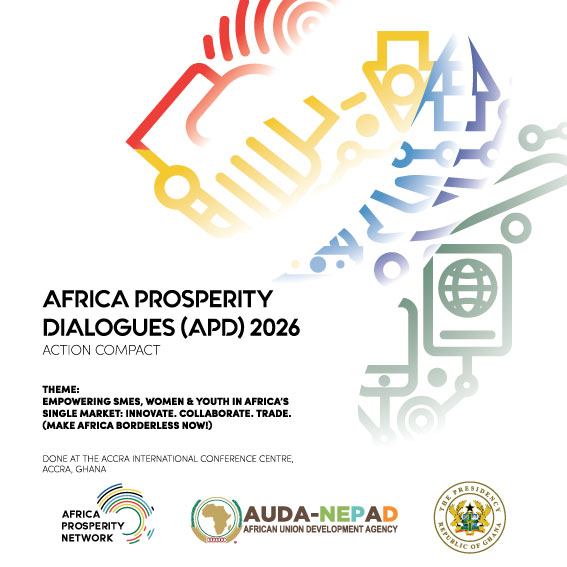
    Our discussion, celebrating Ghana as the first Sub-Saharan nation to win freedom from colonial rule, will focus on how we achieve Africa’s common market dream with far greater urgency.  We will look at two historic approaches to African integration: the gradualist path that defined the operations of the Organisation of African Unity (OAU) in 1963, and the clearer, more structured commitment African leaders set for themselves when they adopted the 1991 Abuja Treaty, establishing the African Economic Community and subsequently the more integration-focused African Union in 2002 and the disappointing reality over lack of collective leadership courage for unity.

    But what many people have noticed from the flyer promoting the 6 March event is something else entirely: the image of Samia Nkrumah, an Nkrumaist in both blood and ideology, and myself, a Danquaist in both blood and ideology, appearing on the same platform and seemingly on the same side of an issue.

    For much of Ghana’s political history (certainly before the emergence of JJ Rawlings), Ghana’s national debate was framed around two intellectual traditions embodied by two towering figures: Kwame Nkrumah and JB Danquah.

    The Nkrumaist tradition is deeply Pan-Africanist and socialist in orientation. It holds that Ghana’s independence would be meaningless unless it formed part of a broader political unification of Africa. Nkrumah’s famous directive, “Seek ye first the political kingdom”, was continental in scope. His vision was a Union Government of Africa: a United States of Africa with a single currency, a common military, and a unified foreign policy.

    The “Danquaists”, (or more aptly, the Danquah–Dombo–Busia tradition, by contrast) have historically been more Ghana-focused. It emphasises liberal democracy, human rights, and free-market economics, with a strong focus on building stable institutions within the nation-state. Danquah believed Ghana, and West Africa, he added, should first succeed as democratic and economically viable states before deeper continental political integration could realistically occur.

    What both traditions can agree on today, however, is this: after sixty-nine years of independence, Africa’s progress toward integration is far below what either vision imagined.

    For an Nkrumaist and a Danquaist to stand publicly on the same side of an issue might once have seemed almost unthinkable. Yet today, such convergence is both necessary and inevitable. It was Nana Akufo-Addo, whose great uncle was Danquah, who, in Kigali in 2018, fought for Ghana to be the headquarters of the African Continental Free Trade Area Secretariat, pushing Ghana’s wholesome commitment to the single market project. That this unity is forged around the unification of Africa, the cause Nkrumah championed above all others, is a powerful testament to the gravity of the moment.

    A few weeks ago, I visited Sam Jonah, who accepted the invitation of the Africa Prosperity Network to be a leading champion of the Make Africa Borderless Now! Movement. He could not, however, avoid a friendly jab at me: “We finally welcome you to Nkrumaism!” I responded, “As far as the Africa we want is concerned!”

    The rational, pragmatic case for African economic integration has now become so compelling that it increasingly transcends the ideological divides of the past, and this must be celebrated. It is precisely why the focus of the 6 March webinar, a review of progress under the 1991 Abuja Treaty, is where the rubber truly meets the road.

    African leaders are often brilliant at signing treaties and issuing grand declarations at summits. Yet they have been far less successful at the difficult and often unglamorous work of harmonising laws, simplifying customs procedures, investing in cross-border infrastructure, and dismantling the bureaucratic and corruption networks that thrive on border inefficiencies.

    The timeline is striking. In 1991, African leaders adopted the treaty establishing the African Economic Community (AEC). When it came into force in 1994, they set themselves a 34-year roadmap culminating in 2028, by which time Africa was expected to have achieved a functioning common market and key pillars of economic integration, including an African Central Bank.

    That deadline is now just two years away. Yet the reality is shamelessly sobering. The African Continental Free Trade Area (AfCFTA), which began trading in 2021 and is meant to accelerate the Abuja Treaty vision, remains far from fulfilling its potential. Implementation has been slow. Non-tariff barriers remain pervasive. The “guided trade initiative” has yet to translate into large-scale, continent-wide trade flows.

    A true customs union, with a common external tariff, remains distant. The free movement of people, a cornerstone of Nkrumah’s vision, continues to face resistance from many states. The ECOWAS model of free movement remains the exception rather than the continental norm. And, the dream of a common African currency appears further away than ever, with some of us seeking quick, practical refuge in continent-wide mobile money interoperability and tents such as PAPSS.

    Our webinar will therefore examine a difficult but necessary question: why has urgency been so lacking? Part of the answer lies in political psychology.

    Many post-colonial leaders built their legitimacy and authority around the nation-state. Ceding power to supranational institutions has often been perceived as a loss of sovereignty and personal authority. But should that still be the case today?

    Sadly, too many leaders remain trapped in a 1960s mindset of defending borders, rather than embracing the 21st-century necessity of transcending them and seeing a borderless Africa as a better guarantee for sovereignty through peace, security, stability and prosperity.

    The 2028 deadline for the full implementation of the Abuja Treaty was a benchmark set by African leaders themselves over three decades ago. To arrive within two years of that milestone with so many pillars incomplete is not merely a failure of planning. It is a failure of political will.

    Looking at Ghana’s symbolism, there is also a hopeful signal in the fact that heirs of both the Nkrumah and Danquah traditions can now stand together on this question. It suggests that the ideological battle is now joint in achieving our common destiny as best manifest through our continent’s unity. Reality has settled the debate.

    The question before Africa today is no longer whether integration is necessary, but how to generate the political urgency required to honour the commitments African leaders made to themselves and to their people in Abuja more than three decades ago.

    The window for the 2028 goal may be closing. But the urgency of the African integration project has never been greater.

    The author is the Founder and Executive Chairman of the Africa Prosperity Network. gabby@africaprosperity.network

  • Press Release: APN Demands Visa-Free Africa as 6,530 Delegates Back 12-Point Borderless Compact

    Press Release: APN Demands Visa-Free Africa as 6,530 Delegates Back 12-Point Borderless Compact

    Accra, Ghana – 25 February 2026 – The Africa Prosperity Network (APN), organisers of the annual Africa Prosperity Dialogues, has today released the APD 2026 Action Compact, a bold 12-point blueprint demanding urgent implementation of Africa’s integration agenda. The Compact distils the outcomes of the three-day Africa Prosperity Dialogues held from 4–6 February 2026 at the Accra International Conference Centre.
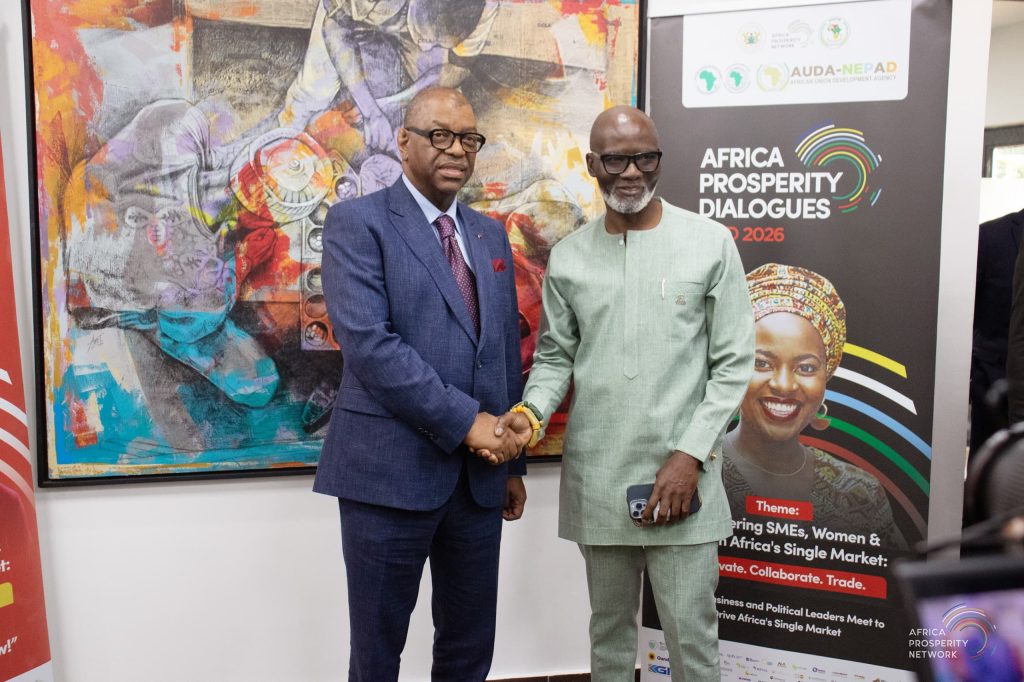
    Among its key demands is visa-free travel for Africans across all African Union (AU) member states. It also calls for seamless cross-border trade, including enabling Africans to buy and sell across borders using mobile money wallets, which the SMEs stressed would be a major, practical step to significantly boost intra-African trade.

    The Compact emerged from high-level Presidential and Business Leaders Dialogues, plenary sessions, roundtables, panel discussions, and 12 executive breakfast meetings, specifically tailored to address the concerns and aspirations of SMEs, women and youth entrepreneurs. They were all convened under the official theme of APD 2026: “Empowering SMEs, Women and Youth in Africa’s Single Market: Innovate. Collaborate. Trade.”

    Finalised on 6 February, this “People’s Compact” captures the collective voice of 6,530 participants, who travelled to Accra from 51 African nations and 40 others. 

    Across every session, one conclusion was unmistakable: empowering SMEs, women and youth will not come from fresh AU declarations, but from implementing the treaties and protocols already signed.

    Delegates pointed to the Treaty Establishing the African Economic Community (Abuja Treaty of 1991), the Agreement Establishing the AfCFTA (2018), the Protocol on Free Movement of Persons, and the AfCFTA Protocols on Digital Trade and on Women and Youth in Trade as ready-made examples of instruments awaiting full execution. The framework exists. What is missing is delivery.

    Speakers noted that although the Free Movement Protocol was adopted in 2018, only four member states have ratified it, far short of the 15 required for entry into force. Without free movement, businesses cannot scale across Africa, and the promise of a true single market for 1.5 billion people remains constrained, they argued.

    With youth unemployment the most pressing challenge facing governments across the continent, delegates concluded that economic integration can, therefore, not be optional. They described it as the only viable path to the 15 to 20 million jobs Africa must create annually, describing the existing fragmentation not merely inefficient but economically self-defeating for Africa’s sovereign states, both individually and collectively.

    The Compact focuses on the “Make Africa Borderless Now!” movement, the APD 2026 initiative, which launches a continent-wide petition to mobilise ten million (10,000,000) signatures. The petition will be presented to the African Union Assembly in February 2027 with one clear demand: RATIFY AND IMPLEMENT NOW.

    “This Compact is the collective voice of Africa’s private sector, women and youth,” says Dr Nkosazana Clarice Dlamini-Zuma, Chairperson of the Advisory Council of the Africa Prosperity Network and architect of ‘The Africa We Want.’ 

    “The tools for prosperity already exist. The time for implementation is now,” says the former Chairperson of the AU Commission when the Agenda 2063 was launched in 2013.

    To donate or add your signature to the ten million and support the movement, visit: www.makeafricaborderlessnow.com

    -ENDS-

    For media inquiries, please contact:

    Prince Moses, Director, Communication Directorate | Africa Prosperity Network|

    E- mail: princemoses@africaprosperity.network | Accra. Ghana

    Joel Krampa, Communication Lead | Africa Prosperity Network |

    E-mail: j.krampa@africaproserity.network | Accra. Ghana

    APN Communication Directorate: comms@africaprosperity.network

    Website: www.africaprosperitynetwork.com

     Follow us: Facebook, X (Twitter), LinkedIn, YouTube, WhatsApp, TikTok

    #MABN!

    Distributed to all African and International media houses

  • Press Release: Air Algérie Group and Africa Prosperity Network advance “Make Africa Borderless Now!” agenda

    Press Release: Air Algérie Group and Africa Prosperity Network advance “Make Africa Borderless Now!” agenda

    Partnership Supports Free Movement of People, Goods and Services Across Africa

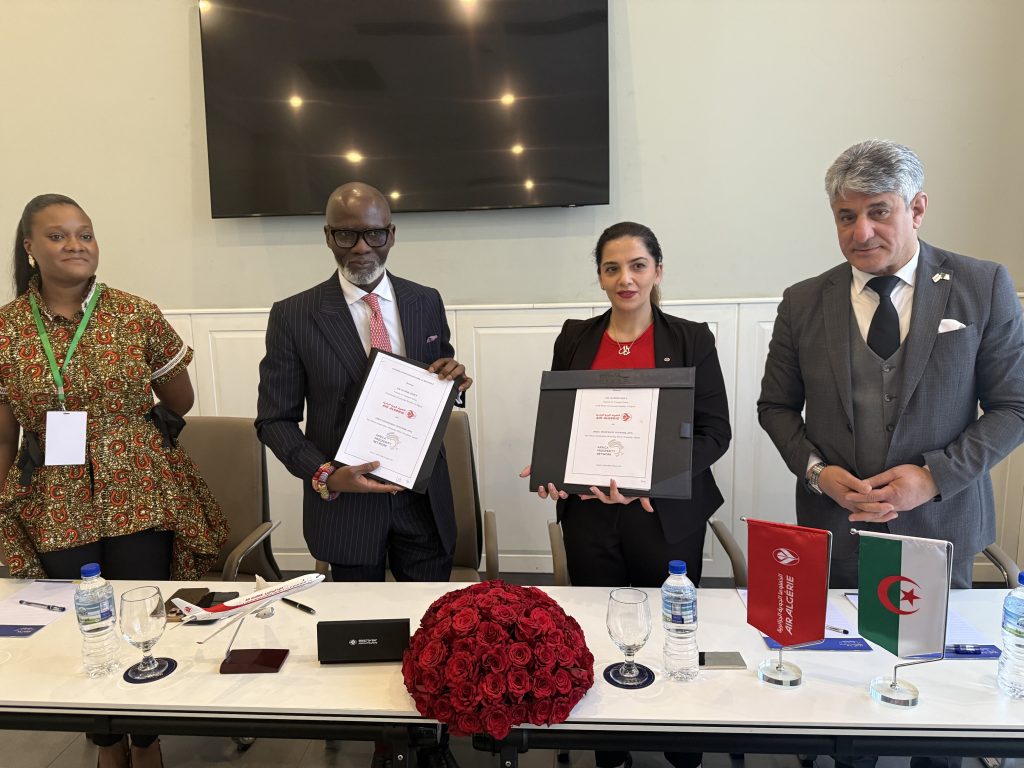
    Addis Ababa, Ethiopia, February 2026 — The Africa Prosperity Network (APN) and Air Algérie Group have signed a Co-operation Framework Agreement in Addis Ababa, reinforcing their shared commitment to the Make Africa Borderless Now!” movement.
    The partnership recognises air connectivity as a critical enabler of the free movement of people, goods, and services, which is central to the successful implementation of the African Continental Free Trade Area (AfCFTA) and Africa’s broader economic integration efforts.

    Through this collaboration, the parties will support initiatives that enhance intra-African mobility, facilitate participation in the Africa Prosperity Dialogues (APD) and other related convening platforms, as well as strengthen trade and cargo movements across Africa. The Agreement also provides a platform for policy dialogue, capacity building, and advocacy aimed at breaking down barriers to trade, travel, and economic activity.

    The signing of this agreement underscores the growing momentum behind the Make Africa Borderless Now! movement and the shared resolve of African institutions to translate integration commitments into practical, continent-wide impact.

    Join the Movement

    Members of the public who wish to support the vision of a borderless Africa are encouraged to sign the “Make Africa Borderless Now!” petition and add their voice to this historic continental movement.

    ————–

    About the Make Africa Borderless Now! Movement

    The Make Africa Borderless Now! movement is a transformative initiative driving towards the realisation of a unified African market. By advocating for the elimination of barriers to trade, travel, and economic activity, the movement seeks to unlock Africa’s full economic potential and improve the quality of life for all Africans, both on the continent and across the diaspora.

    —————-

    Africa Prosperity Network

    The Africa Prosperity Network is a leading Pan-African organisation dedicated to advancing economic integration, sustainable development, and shared prosperity across the African continent. Through strategic initiatives, thought leadership, and collaborative partnerships, the Network works to create an enabling environment for Africa’s economic transformation.

    ————–

    For More Enquiries, contact:

    Africa Prosperity Network, Communication Directorate

    Tel: +233 20 136 9105

    Email: comms@africaprosperity.network
    Web: www.africaprosperitynetwork.com

    END

    SIGNED:

    Africa Prosperity Network – Communication Directorate

    Distributed to all African and international media houses

  • Press Release: Africa Prosperity Network and Ethiopian Airlines discuss Make Africa Borderless Now! agenda

    Press Release: Africa Prosperity Network and Ethiopian Airlines discuss Make Africa Borderless Now! agenda

    Talks Aim at Collaboration on Free Movement of People, Goods and Services Across Africa

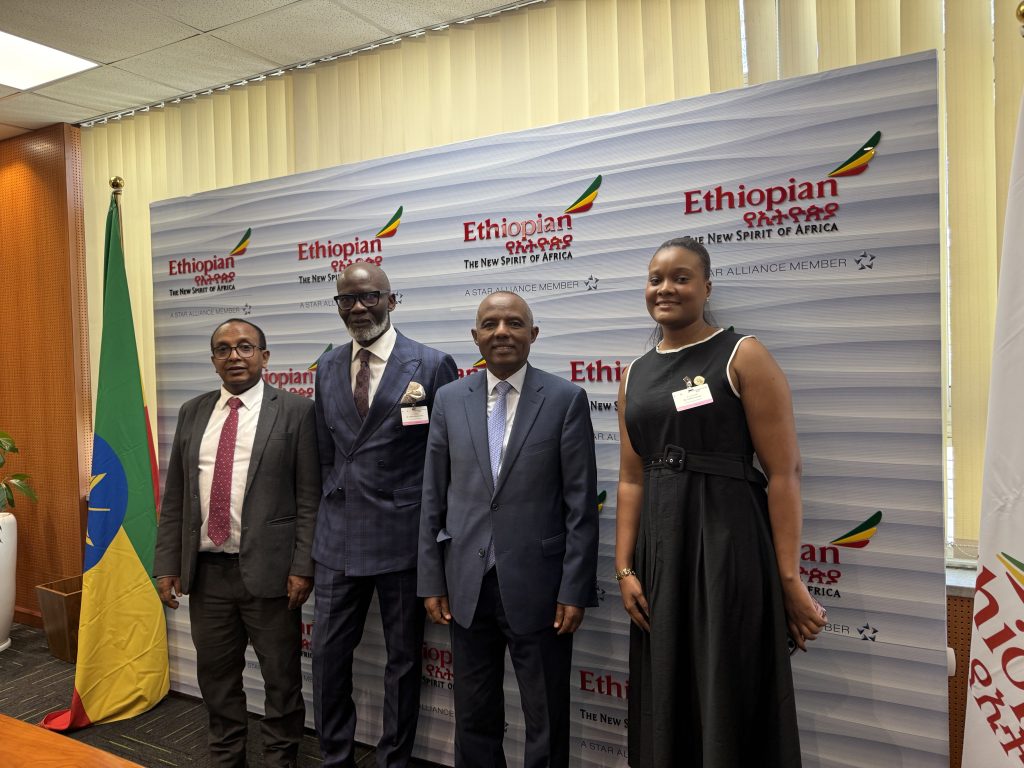
    Addis Ababa, Ethiopia, February 2026 — The Africa Prosperity Network (APN) and Ethiopian Airlines Monday held talks at the Headquarters of Ethiopian Airlines in Addis Ababa to explore a strategic collaboration aimed at advancing the Make Africa Borderless Now! agenda.

    The campaign seeks to persuade African governments to implement the various economic integration-focused treaties and protocols which they have already adopted but remain slow to implement.

    These include the Free Movement of Persons, Right of Residence and Right of Establishment Protocol and the Single Africa Air Transport Market Protocol, both adopted in 2018.

    The discussions, which build on engagements that began last year, focused on how the two parties can work together to promote the free movement of people, goods, and services across Africa, with air transport recognised as a critical enabler of the continent’s economic integration and a key driver of the African Continental Free Trade Area (AfCFTA).

    During the meeting, which both sides described as positive, APN invited Africa’s biggest airline to become a major partner in the movement launched in Accra this February to mobilise 10 million signatures calling for, among others, free movement across Africa, a visa-free travel for Africans across Africa, and implementation of the AfCFTA Digital Trade Protocol.

    Mr Gabby Asare Otchere-Darko, the Executive Chairman, APN, stressed the need to get African central banks and regulators to enable continent-wide mobile money interoperability to allow Africans to buy and sell across borders simply using their mobile money wallets.

    Mesfin Tasew, the Group CEO of Ethiopian Airlines, welcomed it, saying it would give a major boost to intra-African trade and air cargo volumes in Africa.

    The engagement reflects the growing momentum behind the Make Africa Borderless Now! movement and the shared commitment to translating Africa’s integration ambitions into practical, continent-wide outcomes. Further meetings are expected to define the scope of the potential collaboration.

    —————–

    About the Make Africa Borderless Now! Movement

    The Make Africa Borderless Now! movement is a transformative initiative driving towards the realisation of a unified African market. By advocating for the elimination of barriers to trade, travel, and economic activity, the movement seeks to unlock Africa’s full economic potential and improve the quality of life for all Africans, both on the continent and across the diaspora.

    —————-

    Africa Prosperity Network

    The Africa Prosperity Network is a leading Pan-African organisation dedicated to advancing economic integration, sustainable development, and shared prosperity across the African continent. Through strategic initiatives, thought leadership, and collaborative partnerships, the Network works to create an enabling environment for Africa’s economic transformation.

    ————–

    For More Enquiries, contact:

    Africa Prosperity Network, Communication Directorate

    Tel: +233 20 136 9105

    Email: comms@africaprosperity.network
    Web: www.africaprosperitynetwork.com

    END

    SIGNED:

    Africa Prosperity Network – Communication Directorate

    Distributed to all African and international media houses

  • Manifesto: Make Africa Borderless Now!

    Manifesto: Make Africa Borderless Now!

    In 1884, European powers gathered in Berlin to partition Africa without a single African voice. The borders they drew with rulers across rivers, deserts, and communities were designed for extraction and control, not prosperity. Decades later, newly independent states chose to preserve these colonial lines. That choice created modern Africa’s central contradiction: political independence without economic might; sovereignty without scale; and a continent of fragmented potential.
    Today, these artificial borders stifle a market of over 1.5 billion people. They restrict the movement of talent and goods, multiply costs, trap capital and restrict the job market. As Africa’s population surges toward 2.1 billion by 2040 to host the world’s largest workforce, we face a decisive choice:

    Will we grow divided and constrained, or integrated and empowered? Building a genuine single market is the most transformative project of this century, a direct path to unlocking industrialisation, competitive continental brands, and dignified prosperity for all.

    A People-Powered Movement for Implementation

    That is why the Africa Prosperity Network, along with its partners, decided to launch the “Make Africa Borderless Now!” campaign in 2026. It is a historic, grassroots movement which seeks to take the issue of Africa’s economic integration from the elitist confines of summits and treaties to be owned and driven by the people. It aims to transform, with greater urgency, the imperative of integration from a leaders’ aspiration into a people-driven demand for action. Our bold goal is to mobilise, within 12 months, over 10 million signatures from Africans and the global diaspora, presenting this mandate directly to Heads of State at the 40th African Union Summit in February 2027.

    Inspired by the success of the Jubilee 2000 debt relief movement, which secured 24 million signatures in the late 1990s, we believe in the power of unified public will to turn long-agreed treaties into tangible reality. This manifesto, and the movement it fuels, exists to close the gap between Africa’s visionary agreements and their urgent implementation.

    Security Through Integration: Dispelling the Myths

    A common fear is that free movement weakens security and invites uncontrolled migration. We argue the opposite: a borderless Africa is a more secure, better-governed Africa. To put security into perspective, countries like China and India, each, have populations comparable to Africa’s 1.5 billion people and yet have robust security systems that serve to enable free enterprise and consolidate their collective commercial power, while increasing their business competitiveness in the global economy.

    Our current patchwork of 50-plus separate border systems is itself a security weakness. Criminals exploit gaps between disconnected databases. We propose replacing the illusion of control offered by cumbersome visas with modern, integrated biometric systems. The call is for a common African Union biometric passport or digital ID. Under this model, movement is free but identification is strict and verified at ports of entry. This enables states to consolidate data, share intelligence effectively, and monitor movement in real-time. Sovereignty is not surrendered; it is exercised smarter.

    Evidence from integrated markets shows mobility follows economic opportunity, not chaos. As jobs and investment spread across a unified market, pressure on any single nation eases. True security in the 21st century comes from smart integration and data-driven governance, not from colonial-era barriers that only create the façade of control.

    The Engine of Integration: Unleashing African Enterprise

    Africa’s future will be written by its enterprises. From the SMEs that form our economic backbone to the women- and youth-led businesses driving innovation, all face the same core challenge: not a lack of ambition, but the fragmentation of small, disconnected markets.

    Enterprises are hamstrung when borders block movement, payments fail to flow, and standards multiply costs. A single, integrated African market is the essential platform on which an SME can grow into a regional champion, a woman entrepreneur can scale her business with dignity, and an African corporation can emerge as a global competitor. Every major world brand was first built on a large, integrated home market. To build our own champions, we must first unite our home.

    The 12 Action Priorities: A Practical Blueprint for a Borderless Continent

    The blueprint for integration already exists in signed treaties and protocols. These twelve action priorities represent the unfinished business of African unity, now claimed by its people.

    1. Abolish Visas for Africans in Africa

    Africa cannot integrate if its entrepreneurs cannot move. Visa restrictions raise costs, delay deals, and stifle opportunities. Abolishing visas for Africans travelling within Africa treats mobility as essential economic infrastructure, enabling businesses to explore markets, establish partnerships, and deploy talent freely across the continent.

    2. Open Africa’s Skies Now

    Closed skies keep Africa expensive and disconnected. Fully implementing the Yamoussoukro Decision and the Single African Air Transport Market will slash airfares, connect cities directly, and turbocharge trade, tourism, and logistics, expanding markets and creating jobs.

    3. Launch One African Biometric Passport & Digital ID

    Enterprises need speed, trust, and certainty. A single or common African biometric passport and interoperable digital ID will simplify travel and business establishment, support secure digital services, ensure security, and lower verification costs, turning seamless movement into a driver of secure economic activity.

    4. Activate the AfCFTA Digital Trade Protocol

    With African enterprise increasingly digital, we must activate the AfCFTA Digital Trade Protocol to create one continental digital market. This enables businesses to sell services and content across borders, scale without physical relocation, and compete globally from an African base.

    5. Make Cross-Border Payments Seamless Across Africa

    Intra-African trade requires frictionless finance. The full operationalisation of the Pan-African Payment and Settlement System (PAPSS) and continent-wide mobile-money interoperability will reduce transaction costs, keep value circulating within Africa, and save billions lost annually to foreign currency conversion.

    6. Unlock African Talent Through Mutual Skills Recognition

    African enterprises need skills, which are readily available among Africans at home and beyond. Mutual recognition of professional and vocational qualifications will allow firms to recruit continent-wide, deploy staff across markets, and build the specialised, competitive teams needed for global success.

    7. Harmonise Standards to Create One African Market

    Multiple national standards force businesses to treat Africa as 55 or so separate markets. Harmonising regulations ensures goods approved in one country can be sold across the continent, unlocking manufacturing, agro-processing, and light industry, and enabling enterprises to scale into true continental brands.

    8. Establish One African Customs Union

    The AfCFTA cannot reach its potential without a customs union. The Abuja Treaty’s 2028 deadline for this must be honoured. A digitised, unified customs system will reduce delays, boost industrialisation and cross-border trade, lower costs for SMEs, and attract global manufacturers to set up operations in Africa.

    9. Build Continental Infrastructure That Connects Africa

    Enterprises cannot scale on disconnected infrastructure. We must invest jointly in roads, rail, ports, energy, and digital networks. The Grand Ethiopian Renaissance Dam shows what is collectively possible. Innovative financing, such as the proposed One-Dollar-a-Day African Infrastructure Fund, can mobilise citizen savings, pension funds, and private capital into bankable projects that physically unite the continent.

    10. Enforce Integration Through the African Court of Justice

    Markets require rules, and rules require enforcement. Operationalising the supranational African Court of Justice, as provided for in the AU Constitutive Act, will provide a huge incentive for investors because of the certainty and protection for enterprises against arbitrary barriers. It will ensure that the single market rules and regulations have to be applied and uniformly so across member states.

    11. Put SMEs, Women, and Youth at the Centre of Trade

    Women and youth-led SMEs dominate African trade yet face the highest barriers. Full implementation of the Protocol on Women and Youth in Trade is essential to ensure access to finance, simplified procedures, safe mobility, and true continental market access for our most dynamic entrepreneurs.

    12. Negotiate as One Africa on the Global Stage

    Fragmented Africa is a price-taker; integrated Africa is a rule-maker. Negotiating as one bloc on the big issues, such as trade, digital governance, and climate action, establishes Africa’s global stature, enhancing our efforts towards self-determination and socio-economic development.

    A New Pan-Africanism: Owned and Driven by the People

    This is a new kind of Pan-Africanism. It moves from summit halls and political rhetoric into markets, factories, studios, farms, and digital platforms. It is owned and driven by the people: by the entrepreneurs, workers, creators, and youth whose future is at stake.

    The “Make Africa Borderless Now!” movement does not weaken our nations; it strengthens them by giving our enterprises the scale to generate wealth, innovation, and jobs at home. The Berlin Conference divided Africa without Africans. This generation will surely succeed if the treaties and protocols that our leaders have signed up to over the years are implemented. That will give the people and enterprises the practical tools of open markets, seamless mobility, and shared opportunity.

    The time for a united, prosperous, and borderless Africa is now. The people are ready. The plan is clear. The moment is here.

    JOIN THE MOVEMENT

    This is not a spectator’s moment. This is our collective moment to act. When the campaign launches across the continent and diaspora in 2026, we call on every African and friend of Africa to become a builder of this new reality. 

    Sign the petition. Share the demand. Mobilise your community. Let us transform 10 million signatures into a continental roar that the continent’s 50-plus governments cannot ignore.

    Let us move from debating borders to erasing them. From accepting fragmentation to demanding integration. From hoping for unity to enacting it. The lines that divide us are not our destiny. Our destiny is union. Get ready. Stand up. Speak out.

    Together, let us Make Africa Borderless Now!

  • Press Release: Day 4 of the Africa Prosperity Dialogues (APD): Gabon’s Vice President leads high-level delegation to APN Secretariat in strategic closed-door meetings

    Press Release: Day 4 of the Africa Prosperity Dialogues (APD): Gabon’s Vice President leads high-level delegation to APN Secretariat in strategic closed-door meetings

    Accra, Ghana – 8 February 2026 – The Africa Prosperity Network (APN) hosted a series of strategic closed-door meetings on the fourth day of the Africa Prosperity Dialogues (APD) 2026, headlined by a high-level visit from Gabon’s Vice President, H.E. Barro Chambier Alexandre, to the APN Secretariat.

    The Vice President led a senior Gabonese delegation that engaged with the Secretary-General of the African Continental Free Trade Area (AfCFTA), H.E. Wamkele Mene, in discussions focused on Gabon’s economic reform agenda and the country’s strategic priorities under the continental trade framework.

    In a press statement after the meeting, H.E. Wamkele Mene and H.E. Barro Chambier Alexandre spoke about the strategic trade policy discussions. The closed-door session brought together four senior officials from Gabon and four representatives from the AfCFTA Secretariat to explore critical areas, including the finalisation of Gabon’s tariff concession list, enacting necessary trade legislation, and signing the implementation decree to enable exports through the AfCFTA framework.

    Secretary-General Mene highlighted the immense opportunities available to Gabon within Africa’s single market of 1.5 billion people, urging the country to leverage the AfCFTA as it embarks on a renewed economic reform agenda following its recent political transition.”At the heart of that agenda, what I understood from the Vice President, is market diversification, leveraging the AfCFTA,” Mr Mene stated in remarks to the media following the meetings. He expressed satisfaction that Gabon is re-engaging with the African Union and reclaiming its leadership role within Central Africa.

    A Borderless Africa Gains Momentum

    In a significant show of political commitment, Vice President Alexandre affirmed Gabon’s full support for the “Make Africa Borderless Now!” movement, the groundbreaking campaign launched at APD 2026 that envisions a continent where Africans can move freely across borders without visa restrictions. The movement, which seeks to mobilise 10 million signatures in support of visa-free travel across the continent, represents a watershed moment for African integration. Citizens across the continent and throughout the diaspora are being urged to add their voices to this historic campaign by signing the petition, transforming the aspiration of a truly borderless Africa from a distant dream into an actionable mandate.

    The campaign’s twelve priority action points draw largely from existing protocols and treaties, underscoring that the infrastructure for a borderless Africa already exists; what is needed now is the political will and popular support to implement it. Secretary-General Mene addressed the continental vision during his press briefing, noting that whilst only four of the African Union’s 55 member states have ratified the Protocol on Free Movement of Persons, several countries, including Ghana, Nigeria, Rwanda, and Kenya, have taken unilateral steps to improve visa openness, demonstrating that progress is both possible and practical.

    Bilateral Commitments to Integration

    The Gabonese delegation, accompanied by APN’s Executive Chairman Gabby Asare Otchere-Darko and board members Vanessa Roux and Kweku Sakyi Addo, also held a courtesy meeting with Ghana’s Minister of Foreign Affairs and Regional Integration, Samuel Okudzeto Ablakwa.

    Minister Ablakwa expressed the Ghanaian government’s full support for the borderless campaign, revealing that Ghana had just concluded a visa-free travel agreement with Zambia earlier in the week. He also discussed the possibility of a similar bilateral agreement between Ghana and Gabon, signalling both countries’ commitment to facilitating easier movement for their citizens.

    Digital Innovation for Financial Integration

    Addressing questions on continental financial convergence, Mr Mene acknowledged that whilst a common African currency remains a key long-term vision requiring significant macroeconomic alignment, Africa could explore innovative pathways through digital instruments and emerging financial technologies.

    “In the advancements of the digital economy, there are other instruments that we can look at which can enable us to move much faster,” he said, referencing the potential of interoperable digital payment systems that would allow Africans to trade without converting currencies through the dollar, a key action point within the “Make Africa Borderless Now!” movement.

    Expanding the Global Africa Narrative

    Day 4 also featured discussions between APN Chairman Otchere-Darko and Marilyn Sophocle, President of the US-based Women Ambassadors Foundation and Howard University professor, exploring the strategic expansion of APN’s annual Global Africa Forum. Secretariat Ms Sophocle was accompanied by Pascal Meslien, a French Caribbean Africa policy consultant and businessman, and Lucrèce Meslien of Comité de la Marche ’98, a French association that advocates for the recognition of Afro-descendants in French jurisdictions.

    “We want Global Africans not to only see Africa’s integration just as a moral obligation, but also as a profitable venture,” said Mr Otchere-Darko, arguing that Africa’s global perception directly impacts the dignity of people of African descent worldwide. Ms Sophocle, also founder of the African-American and Afro-European Transatlantic Forum, proposed a partnership between APN’s Global Africa Forum, the Women Ambassadors Foundation, and the Organisation of American States to build a comprehensive platform. “The economic contribution of Global Africans towards bankable development projects will serve both as a moral good and a profitable investment,” she said.

    Mr Otchere-Darko proposed expanding the forum to a two-day event, with the New York meeting continuing to focus on the UN General Assembly, whilst a Washington, D.C. meeting would engage the Women Ambassadors Foundation, the Organisation of American States, and academia from Historically Black Colleges and Universities.

    The Africa Prosperity Dialogues 2026 continues to serve as a critical platform for advancing continental integration, economic transformation, and strategic partnerships across Africa and the global African diaspora.

    Join the Movement

    Members of the public who wish to support the vision of a borderless Africa are encouraged to sign the “Make Africa Borderless Now!” petition and add their voice to this historic continental movement.

    About the Make Africa Borderless Now! Movement

    The Make Africa Borderless Now! movement is a transformative initiative driving towards the realisation of a unified African market. By advocating for the elimination of barriers to trade, travel, and economic activity, the movement seeks to unlock Africa’s full economic potential and improve the quality of life for all Africans, both on the continent and across the diaspora.

    Africa Prosperity Network

    The Africa Prosperity Network is a leading Pan-African organisation dedicated to advancing economic integration, sustainable development, and shared prosperity across the African continent. Through strategic initiatives, thought leadership, and collaborative partnerships, the Network works to create an enabling environment for Africa’s economic transformation.

    For More Enquiries, contact:

    Africa Prosperity Network, Communication Directorate
    Tel: +233 20 136 9105
    Email: comms@africaprosperity.network
    Web: www.africaprosperitynetwork.com

    END

    SIGNED:

    Africa Prosperity Network – Communication Directorate

    Distributed to all African and international media houses

  • Africa Prosperity Network Announces Winner of Historic “Make Africa Borderless Now!” Logo Design Competition

    Africa Prosperity Network Announces Winner of Historic “Make Africa Borderless Now!” Logo Design Competition

    Pan-African Movement Receives Over 1,000 Entries from All Six Regions of Africa

    Accra, Ghana, 2 February 2026 — The Africa Prosperity Network is delighted to announce that a winning design has been selected for the Make Africa Borderless Now! movement logo, following an overwhelming response from creative talent across the continent and the global African diaspora.

    The competition, which was announced on 14 January 2026 with an initial deadline for winner announcement set for 26 January 2026, attracted an exceptional 1,041 entries from designers representing all six regions of Africa: East, West, North, South, Central, and Global Africa (the diaspora). Due to the overwhelming response to the call for entries and our commitment to giving each design thorough consideration, the announcement date was extended to ensure a comprehensive and fair evaluation process. This remarkable participation demonstrates the widespread enthusiasm for the movement’s vision of a unified, borderless Africa with seamless trade, travel, and economic integration.

    The rigorous, multi-stage selection process carefully evaluated each submission based on creative excellence, conceptual clarity, and alignment with the Make Africa Borderless Now! vision. The competition progressed through four competitive rounds:

    • First Round: 541 entries advanced from the initial submissions
    • Second Round: 80 designs shortlisted for detailed evaluation
    • Third Round: 10 finalists selected for final consideration
    • Final Round: 5 exceptional designs competed for the top honour

    The Africa Prosperity Network Board of Directors determined the final winner. Having carried the majority of votes in both the final and penultimate rounds, the winning design stood out for its exceptional ability to capture every aspect of the Make Africa Borderless Now! concept. The clarity expressed in both the visual design and the winner’s accompanying description powerfully speaks to the single market agenda, embodying the campaign’s vision for unrestricted movement of people, goods, services, and capital across the African continent.

    The winning logo will be officially unveiled on the third day of the Africa Prosperity Dialogues 2026 at the Accra International Conference Centre, Ghana, during the formal launch of the “Make Africa Borderless Now!” movement. This momentous occasion will mark the beginning of a continent-wide movement to accelerate African economic integration and prosperity.

    About the Make Africa Borderless Now! Movement

    The Make Africa Borderless Now! movement is a transformative initiative driving towards the realisation of a unified African market. By advocating for the elimination of barriers to trade, travel, and economic activity, the movement seeks to unlock Africa’s full economic potential and improve the quality of life for all Africans, both on the continent and across the diaspora.

    Africa Prosperity Network

    The Africa Prosperity Network is a leading Pan-African organisation dedicated to advancing economic integration, sustainable development, and shared prosperity across the African continent. Through strategic initiatives, thought leadership, and collaborative partnerships, the Network works to create an enabling environment for Africa’s economic transformation.

    For More Enquiries, contact:

    Africa Prosperity Network, Communication Directorate
    Tel: +233 20 136 9105
    Email: comms@africaprosperity.network
    Web: www.africaprosperitynetwork.com

    END

    SIGNED:

    Africa Prosperity Network – Communication Directorate